Professional pest management solutions for warehouses, storage racks, loading bays, receiving areas, dispatch zones, utility spaces and building perimeters.
Govt. Approved License No.: JDA/BU/PL/PE19-2039892/2020-2021
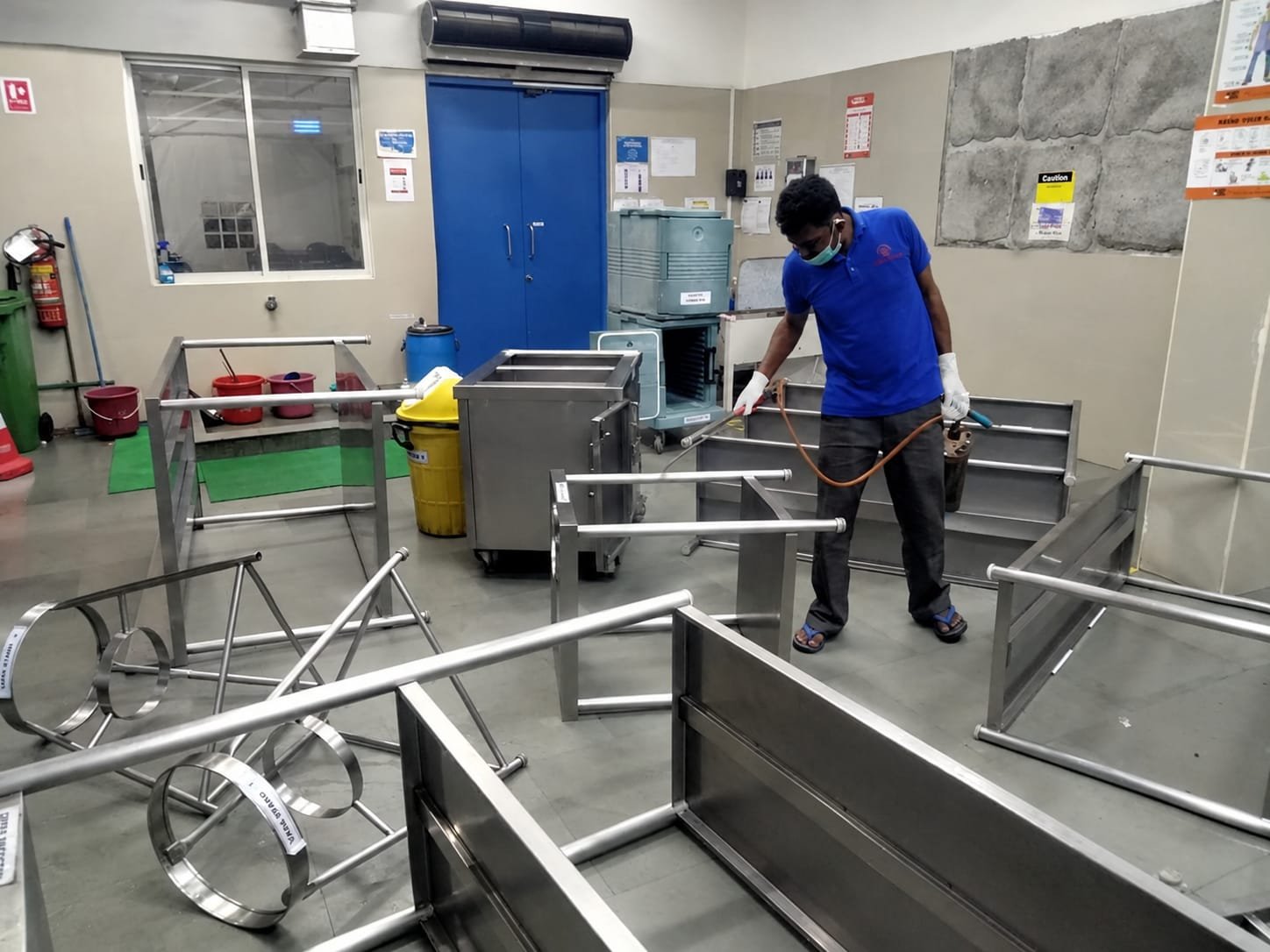
Warehouses can provide pests with shelter, undisturbed harbourage and access to stored materials. Storage racks, cartons, pallets, loading bays, false ceilings, utility areas and building perimeters can become pest activity zones if they are not regularly inspected and maintained.
An effective warehouse pest management programme should focus on early detection, identification of entry points and harbourage areas, protection of stored goods, structural exclusion and regular monitoring across receiving, storage and dispatch operations.
Rodents and other pests can damage packaging, cartons and stored materials, potentially affecting usable inventory.
Pest activity around stored goods and material-handling areas can create hygiene and contamination concerns.
Rodents may gnaw cartons, plastic packaging and other materials while attempting to reach food or nesting material.
Rodents may damage electrical cables, communication wiring and insulation within warehouse facilities.
Recurring pest activity may require stock inspection, additional cleaning, corrective maintenance and pest-control treatment.
Incoming pallets, cartons and packaging may introduce pests or move pest activity between warehouse areas.
Inspection beneath, behind and between storage racks for droppings, gnaw marks, harbourage and pest movement routes.
Inspection of loading doors, dock areas, shutters and surrounding gaps that may allow rodents and other pests to enter.
Inspection of incoming pallets, cartons and material-handling zones for signs of pest introduction.
Inspection around outgoing goods, staging spaces and access doors where pest movement may occur.
Inspection of wooden and other pallets that may provide shelter or support termite and rodent activity.
Inspection of accessible ceiling voids, service ducts and utility routes that may allow rodents to move through the facility.
Inspection of drains and moisture-prone locations that may support cockroach, fly and other pest activity.
Inspection around sinks, appliances, food-storage cabinets and waste bins where pests may find food and moisture.
Inspection of waste-storage locations and surrounding spaces that may attract rodents, cockroaches and flies.
Inspection around external walls, doors, vegetation, drainage points and structural gaps for possible pest entry.
Inspect storage racks, loading areas, receiving zones, dispatch areas, utility spaces, drains and external surroundings.
Identify pest species, activity levels and evidence such as droppings, gnaw marks, nesting or insect activity.
Locate structural entry points, harbourage areas, food sources, moisture and conditions contributing to pest activity.
Identify warehouse sections with increased pest pressure, including loading zones, storage areas and building perimeters.
Apply suitable pest-control measures according to the identified pest, activity level and warehouse conditions.
Recommend sealing gaps, improving door protection, organising storage and reducing conditions that support pest entry.
Monitor pest activity at identified locations to detect changes and evaluate ongoing control measures.
Conduct scheduled follow-up inspections and maintain service observations where included in the pest-management programme.
Warehouse pest prevention requires structural exclusion, organised storage, sanitation, incoming-stock inspection and regular pest monitoring.
Inspect incoming pallets, cartons and goods for signs of pest activity
Keep storage racks organised and accessible for inspection
Maintain suitable clearance around walls where operationally practical
Remove unnecessary cardboard and damaged packaging
Seal gaps around doors, pipes, cables and utility openings
Maintain loading doors and shutters to reduce pest entry
Clean food spills and staff pantry areas promptly
Keep waste containers covered and remove waste regularly
Repair leaking pipes and drainage problems
Monitor false ceilings and utility areas for rodent movement
Reduce vegetation and clutter around the warehouse perimeter
Inspect wooden pallets and timber for termite activity
Monitor receiving and dispatch zones for rodent signs
A structured pest-management programme can support warehouse hygiene, stock protection, facility maintenance and routine pest-monitoring requirements.
Warehouse-Focused Inspection
Inspections cover storage, receiving, dispatch, loading and utility areas where warehouse pests commonly enter or hide.
Rodent-Focused Monitoring
Warehouse pest programmes can include monitoring of rodent activity around storage zones, loading bays and external areas.
Targeted Pest Management
Control measures are selected according to the identified pest, infestation level and warehouse conditions.
Preventive Approach
Recommendations can address structural openings, storage practices, waste handling and other contributing conditions.
Scheduled Monitoring
Regular inspection can help identify new pest activity before it spreads through storage and operational areas.
Multiple Pest Solutions
Warehouse pest-management programmes can address rodents, cockroaches, termites, ants, flies and other relevant pests.
Commercial Pest Management
Services can be structured for warehouses, distribution centres, storage facilities and logistics operations.
Bangalore Service Coverage
Standard Pest Control provides commercial pest-management services across multiple warehouse and industrial areas of Bangalore.
Standard Pest Control provides pest-management services for warehouses, storage facilities and logistics operations across major areas of Bangalore.
Search your locality below to find pest control services near you.
Schedule a professional inspection to identify pest activity, entry points, harbourage areas and suitable pest-management measures for your warehouse.