Flies Control Services in Bangalore
Safe • Hygienic • UV Traps & Spraying for Homes, Restaurants & Offices
Trusted Since 2007
Government Licensed & Experienced Technicians
Safe • Hygienic • UV Traps & Spraying for Homes, Restaurants & Offices
Trusted Since 2007
Government Licensed & Experienced Technicians
Flies are one of the most common and unhygienic pests found in homes, restaurants, hotels, hospitals, kitchens, food industries, warehouses, and commercial spaces. Flies can spread harmful bacteria, viruses, and parasites by moving from garbage, drains, animal waste, and contaminated areas directly onto food and food preparation surfaces. Their feeding and breeding behaviour makes them a major source of food contamination and disease transmission.
At Standard Pest Control, we provide professional Flies Control Services in Bangalore using advanced fly management solutions to reduce and eliminate fly infestations effectively. Our treatment methods include sticky traps, ultraviolet light traps, chemical spraying, sanitation management, and breeding source control to ensure long-lasting fly protection.
Our Fly Pest Control Service focuses on identifying breeding areas, garbage accumulation zones, drainage issues, food waste areas, and moisture-prone locations where flies multiply rapidly. Proper sanitation and waste management are essential parts of effective fly control, and our experts help customers maintain hygienic environments to prevent future infestations.
Different fly species breed in different conditions, so identifying the type matters for effective treatment.
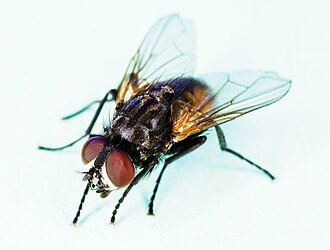
The most common fly pest in Bangalore. Breeds in garbage, animal waste, and rotting organic matter. A single female housefly can lay up to 500 eggs in her lifetime, making infestations grow very rapidly in warm weather.
Small 3mm flies that swarm around ripe and overripe fruits, fermented liquids, and organic kitchen waste. Extremely common in Bangalore's homes and restaurants. Breed in drains, spilled beverages, and overripe produce.
Small moth-like flies that breed in the organic slime inside drains, sewage pipes, and wet areas. Commonly found in bathrooms and kitchen drainage. Indicate blocked or slow-draining pipework.
Larger metallic blue or green flies that breed in dead animals, rotting meat, and organic waste. Their larvae (maggots) can infest meat and fish. Their presence in a kitchen indicates a serious hygiene problem.
Not sure how bad the fly problem is? Get a free inspection and a tailored treatment recommendation from our certified technicians.
Flies are attracted to food odours, moisture, garbage, and organic waste. Even small amounts of food residue on counters, uncovered dustbins, or a blocked drain provides enough food and breeding material to support a large fly population.
No, common Bangalore infestations involve several distinct species — houseflies, fruit flies, drain flies, and blowflies — each breeding in different conditions, which is why identification matters for effective treatment.
No, common houseflies don't bite — they feed by regurgitating digestive fluid onto food and sponging it up, which is exactly how they transfer bacteria and contaminate surfaces.
A housefly typically lives 2–4 weeks, but in that short time a single female can lay hundreds of eggs, which is why fly populations can explode quickly if breeding sites aren't removed.
Fruit flies are drawn to the fermenting sugars in overripe or damaged fruit and can appear within hours, often already having laid eggs on the fruit's surface or nearby drains.
Yes. Flies pick up bacteria on their legs and body from garbage and waste, then deposit it directly onto food surfaces they land on — even a brief contact can transfer harmful pathogens.
Warm, humid conditions accelerate the fly breeding cycle, and waterlogged garbage or drainage areas during monsoon provide ideal breeding grounds, causing a sharp rise in fly activity.
Drain flies are small, moth-like, and fuzzy, breeding in the organic slime inside drains, while fruit flies are smaller, tan-coloured, and breed on fermenting fruit and organic waste — the treatment approach differs for each.
Yes, many flies are drawn to certain wavelengths of light, which is exactly the principle UV light traps use to attract and capture them electronically or on sticky boards.
If flies persist despite regular cleaning, you're finding maggots near bins or drains, or a commercial kitchen needs to maintain hygiene compliance, it's time to call in a professional fly control service.
Yes. UV electric fly killers are highly effective in commercial settings like restaurants, kitchens, and food factories. They provide continuous fly control without chemicals. We supply, install, and maintain UV fly traps for commercial clients.
Chemical spray treatments provide 4–8 weeks of protection. UV traps provide continuous control year-round. For commercial food businesses, monthly treatments combined with UV traps are strongly recommended.
Yes, we assess and treat outdoor breeding sources such as garbage areas, compost, and stagnant water alongside indoor treatment for complete control.
Drain fly treatment focuses on clearing and treating the organic slime inside pipes and drains where they breed, using specialised gel or foam treatments rather than general surface spraying.
Fruit fly treatment combines source removal (disposing of overripe produce and cleaning fermentation residue) with targeted traps and spraying to break the breeding cycle quickly.
We recommend covering or storing exposed food before treatment. Our technicians avoid direct application to food-contact surfaces, focusing instead on breeding areas and entry points.
For persistent infestations, a follow-up visit within 2–3 weeks helps confirm results and catch any newly hatched flies from eggs laid before the initial treatment.
DIY methods kill visible adult flies but don't address the breeding source, so new flies keep emerging. Professional treatment targets breeding sites for lasting results.
We handle full installation and ongoing maintenance, including glue board and bulb replacement, so your UV trap keeps performing effectively year-round.
Yes, we use target-specific treatments applied by trained technicians, avoiding direct food-contact surfaces. The area is safe to use again within the recommended drying period.
Our treatments are formulated to be safe once dried. We recommend keeping children and pets away from freshly treated surfaces until fully dry.
Yes, UV traps with sticky glue boards are chemical-free and safe near food when correctly positioned. Electrocuting-grid units should be positioned away from open food-prep surfaces to avoid debris fallout.
There's a mild odour immediately after spraying, which clears within a few hours with proper ventilation. Windows should be kept open during and after treatment.
As a precaution, we recommend pregnant occupants stay out of the room during application and ventilate the space for a few hours afterward.
Yes, covering or removing open food items before treatment is good practice, even though our technicians focus application on breeding areas rather than food-contact surfaces.
Let us know beforehand if any occupant has respiratory sensitivities so we can plan the treatment approach and ventilation timing accordingly.
Yes, we use registered pest management products applied strictly according to label instructions and dosage guidelines by trained, licensed technicians.
Yes, our technicians follow standard safety protocols including appropriate protective gear while handling and applying pest control chemicals.
Yes, keeping windows open for a few hours after treatment helps any residual odour clear faster and speeds up drying of treated surfaces.
Pricing depends on property size, severity of infestation, and whether UV traps are included. Call us or request a callback for a free, transparent quote.
Yes, we provide a free, no-obligation quote after understanding your property size and the extent of the fly problem.
Yes, commercial kitchens and restaurants typically need more extensive treatment and ongoing UV trap maintenance, which is reflected in the quote.
UV trap pricing depends on unit size and number of units needed for your space. We'll recommend the right configuration and provide a clear cost breakdown during inspection.
No. We provide a fully itemized quote upfront with all charges disclosed before treatment begins — no hidden costs or surprise add-ons.
Yes, our Annual Pest Control AMC plans cover flies along with other common pests, including scheduled UV trap maintenance.
We accept cash, UPI, and major digital payment methods for your convenience — payment details are confirmed at the time of booking.
Yes, bundling fly control with cockroach, ant, or general pest treatment is often more cost-effective than booking each service separately. Ask us for a combined quote.
Fit mesh screens on windows and doors, keep bins covered and emptied regularly, clean spills promptly, and eliminate standing water to reduce fly attraction and breeding.
Garbage should ideally be disposed of daily, especially food waste, since flies can lay eggs on exposed organic waste within hours, leading to a new generation in just days.
Yes, regularly scrubbing drains removes the organic slime layer that drain flies breed in, which is often more effective than chemical drain cleaners alone.
Yes, refrigerating ripe fruit slows fermentation and reduces the odours that attract fruit flies, making it a simple and effective prevention step.
Yes, uncovered or poorly managed compost is a strong fly attractant. Keeping compost covered, well-aerated, and away from windows and doors helps minimize the problem.
Yes, pet waste is a significant fly breeding attractant, especially outdoors. Prompt cleanup removes one of the most common sources of housefly and blowfly activity.
Yes, standing water in saucers, coolers, or blocked gutters can support fly and mosquito breeding alike — regularly emptying these reduces multiple pest problems at once.
These can offer mild, short-term deterrence in small areas, but they don't address breeding sources and aren't a substitute for sanitation and professional treatment for an active infestation.
Yes, self-closing screen or mesh doors on kitchens and back entrances significantly reduce fly entry in areas with frequent foot traffic, like restaurant service doors.
Yes, especially for food businesses — periodic inspections catch new breeding sources early, before they develop into a visible fly problem during service hours.
Yes. Regular professional fly control demonstrates active pest management, which is a key requirement in FSSAI and municipal health inspections. We provide service certificates that can be presented during inspections.
Yes, we work with commercial clients to schedule treatment before opening hours, after closing, or on off-days to avoid disrupting service.
Yes, we service food processing units with HACCP-aligned fly control programs including UV traps, sanitation audits, and scheduled treatment records.
Yes, hospitals require strict hygiene standards, and we provide fly control programs designed around clinical areas, kitchens, and waste disposal zones.
Yes, dairy and poultry operations generate significant fly breeding sources, and we offer tailored large-scale fly management programs for these facilities.
Yes, we provide service reports and treatment records that commercial clients often need for internal hygiene audits and compliance documentation.
Yes, our commercial AMC plans include scheduled fly control and UV trap maintenance, ideal for restaurants, hotels, and food processing facilities.
We prioritize urgent commercial requests, especially ahead of health inspections or client visits — call us directly to discuss fast-response scheduling.
We can share practical guidance with kitchen staff on waste handling, drain cleaning, and food storage practices that support the treatment's effectiveness long-term.
Areas near markets, garbage collection points, or with irregular waste pickup tend to see higher fly activity, along with neighbourhoods with dense food businesses.
Yes, the monsoon brings warm, humid conditions and waterlogging that accelerate fly breeding across the city, making it the peak season for fly complaints.
Yes, shared garbage collection points in apartment complexes are common fly breeding sites, and coordinated treatment for common areas is often more effective than individual unit treatment alone.
Yes, Standard Pest Control provides fly control services across Bangalore, including Whitefield, Koramangala, Indiranagar, HSR Layout, Electronic City, Jayanagar, and surrounding localities.
Yes, high-footfall cafeterias in IT parks benefit from scheduled fly control and UV trap installation to maintain hygiene standards for large daily volumes of food service.
Yes, proximity to wholesale produce markets, lakes, or large-scale waste sites tends to increase baseline fly pressure in the surrounding area.
Yes, areas with open or poorly maintained drainage systems provide more accessible breeding sites for drain flies and houseflies compared to newer, closed drainage infrastructure.
A housefly moves through egg, larva (maggot), pupa, and adult stages, and in warm conditions this cycle can complete in as little as 7–10 days — a key reason infestations grow fast.
Flies have taste receptors on their feet, allowing them to sense whether a surface has food on it the moment they land — even before using their proboscis to feed.
Flies have a highly sensitive sense of smell and can detect certain food and waste odours from a considerable distance, which is why they arrive so quickly once food is exposed.
This behaviour cleans debris off their sensory hairs and taste receptors, keeping their feet sensitive enough to detect food sources accurately.
Flies have compound eyes made of thousands of individual lenses, giving them a nearly 360-degree field of view — which is part of why they're so hard to swat.
A female fruit fly can lay several hundred eggs in her short lifespan, often directly on the surface of ripening or fermenting fruit, which is why populations can explode within days.
Yes, despite their moth-like fuzzy appearance, drain flies belong to the true fly order (Diptera), just like houseflies and fruit flies — the resemblance to moths is only superficial.
Houseflies can fly at a moderate but agile speed, with rapid, erratic changes in direction that make them notoriously difficult to catch or swat.
In outdoor ecosystems, flies play a role in decomposing organic matter and as a food source for other animals — but indoors around food and hygiene areas, that same trait makes them a serious health risk.
Fly activity and breeding slow significantly in cooler temperatures, which is why fly problems are most noticeable during Bangalore's warmer, more humid months.
If you are looking for the Best Fly Control Services in Bangalore, Standard Pest Control offers reliable, safe, and affordable fly management solutions for residential and commercial properties across Bangalore. Contact us today for a free consultation.