Termite Control Bangalore
Free Inspection • ₹200 Off First Booking • Same-Day Service • Red Soil Specialists • Safe for Kids & Pets
Trusted Since 2007
Government Licensed & Experienced Technicians
Free Inspection • ₹200 Off First Booking • Same-Day Service • Red Soil Specialists • Safe for Kids & Pets
Trusted Since 2007
Government Licensed & Experienced Technicians
Termites are among the most destructive pests a Bangalore property can face, silently feeding on wooden foundations, furniture and structural fixtures long before any visible damage appears. Professional Termite Control in Bangalore is essential to protect your investment, whether it's a home, office, warehouse or commercial establishment.
Bangalore's terrain makes this risk especially real: large parts of the city sit on red laterite soil, which retains moisture and is naturally favourable to subterranean termite colonies — the species responsible for the vast majority of termite damage we see across Karnataka. Properties built on or near red-soil terrain should treat termite prevention as a priority, not an afterthought.
At Standard Pest Control, we provide advanced Termite Control Services for homes, apartments, villas, offices, warehouses and commercial properties across Bangalore. Our trained technicians use WHO-certified soil treatment, targeted baiting systems and wood/furniture treatment to eliminate active colonies and build a lasting barrier against new infestations.
New customers benefit from a free inspection and ₹200 off their first booking, with same-day service available across the city. Every product we use is safe for kids and pets once dry, so your household or workplace can return to normal quickly.
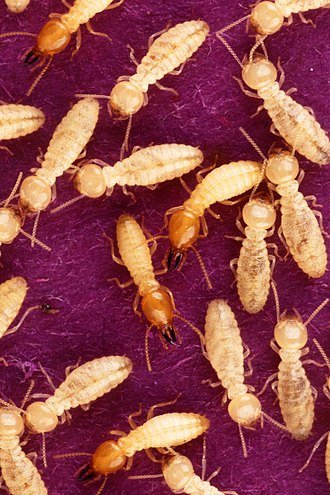
Subterranean termites are by far the most common and destructive species in Bangalore, thriving in the city's moisture-retaining red laterite soil. The marquee below covers the species our technicians most frequently encounter across residential and commercial properties.
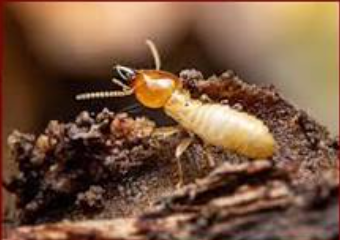
Odontotermes obesus
Workers 4–6 mm
Foundations, red-soil compounds, skirting, mud tubes on walls
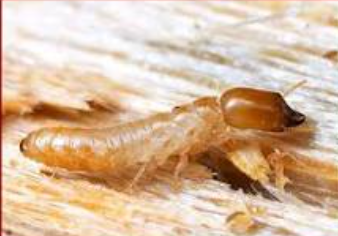
Cryptotermes spp.
Swarmers 8–10 mm
Furniture, door & window frames, wardrobes, false ceilings
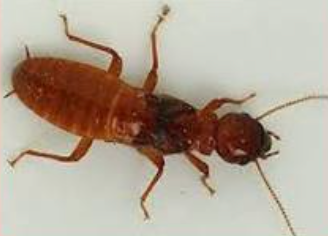
Zootermopsis / Neotermes spp.
10–14 mm
Bathrooms, leaking-pipe areas, waterlogged wood, balconies
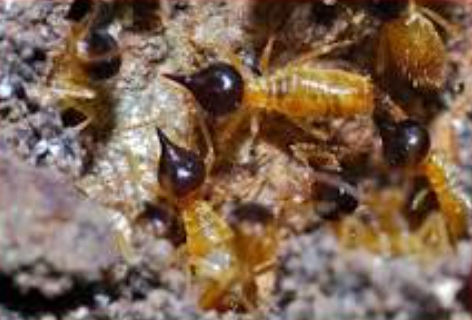
Nasutitermes spp.
Workers 4–6 mm
Compound & garden trees, carton nests on trunks, overhead cables
Termites pose a significant threat to structures in Bangalore. They feed on wood, compromising foundations, walls, and furniture. Left unchecked, termite infestations can lead to costly repairs and disruptions to business operations. Commercial establishments—offices, restaurants, warehouses—are particularly vulnerable as they often feature wooden fixtures and storage that attract subterranean and drywood termites.
Regular termite control is essential not only for preserving property value but also for ensuring a safe environment for employees and customers. At Standard Pest Control, we understand the unique climate of Bangalore and the termite species prevalent in the region. Our professional team focuses on proactive measures, detecting early signs of infestation before they escalate. By investing in expert termite control, Bangalore businesses can maintain uninterrupted operations, protect assets, and uphold a reputation for safety and reliability.
Our certified technicians conduct a detailed assessment of your property, examining key entry points, wooden structures, and moisture-prone zones both inside and outside your premises. We use moisture detection tools and targeted probes to uncover hidden colonies. Following inspection, we provide a comprehensive report outlining infestation level, recommended treatment methods, and a clear cost estimate.
This transparent approach allows Bangalore businesses to make informed decisions without any hidden charges. New customers benefit from a free inspection and ₹200 off on their first service, making it easier to take the first step toward termite protection.
Standard Pest Control offers WHO-certified treatment solutions tailored to your needs. We apply low-odor, environment-friendly termiticides that create a protective barrier around foundations, preventing future invasions. For active infestations, our targeted baiting systems disrupt termite foraging and colony health while minimizing chemical exposure to non-target species.
Every product we use is safe for kids and pets once dry, allowing normal operations to resume quickly. Our trained technicians follow industry best practices, ensuring precise application and uniform coverage. Whether tackling subterranean termites in soil or drywood termites in wooden fixtures, our advanced treatments deliver long-lasting protection.
Not sure what level of treatment you need? Get a free inspection and a tailored recommendation from our certified technicians.
Regular termite inspections safeguard your investment and reduce long-term costs. Early detection allows for minimal intervention, limiting structural damage and repair bills. Scheduled inspections also help meet insurance or regulatory requirements, protecting businesses from compliance issues.
By monitoring high-risk areas—such as wooden beams, storage racks, and landscaping—our team detects subtle signs like mud tubes, frass, or wood blistering before colonies expand. This proactive approach preserves the integrity of your property and supports a healthy work environment. Bangalore businesses that invest in periodic termite checks benefit from uninterrupted operations and the confidence that their premises remain secure.
When you choose Standard Pest Control in Bangalore, you partner with licensed professionals who deliver consistent results. We've built a strong track record across Karnataka since 2007, earning a 4.9 Google rating backed by 220+ verified reviews. Our Govt. Approved License No. JDA/BU/PL/PE19-2039892/2020-2021 ensures compliance with local regulations.
We offer same-day service throughout Bangalore, and our team is available 24/7 via WhatsApp for support. New clients receive a free inspection plus ₹200 off their first termite control service. With affordable pricing and no hidden charges, we make it simple to protect your business and maintain a pest-free environment.
Our termite control plans are customized to fit both commercial and residential properties in Bangalore. After inspection, we design a treatment schedule that aligns with your operational requirements and budget. For offices and retail spaces, we plan treatments during off-hours to avoid disruption.
Warehouses and storage facilities receive specialized soil treatments to secure large perimeters. Homeowners benefit from interior surface sprays and wood injection techniques. Every plan includes clear timelines and cost breakdowns, ensuring transparency. Whether you manage a single shop or multiple locations, our flexible solutions deliver consistent protection against termite threats.
Preventive maintenance and follow-up services are key to long-term termite defense. After the initial treatment, our team schedules routine check-ups to assess barrier integrity and colony activity. We provide detailed follow-up reports and adjust treatment as needed to address any new risks.
Annual maintenance contracts are available for businesses seeking continuous protection, including emergency visits at preferential rates. This ongoing partnership keeps your premises secure year-round and demonstrates to clients and employees that you prioritize safety and facility care. Trust Standard Pest Control to be your proactive partner in Bangalore's fight against termites.
Ready to safeguard your Bangalore property from termites? Contact Standard Pest Control today for a free inspection and ₹200 off your first service!
Not sure what to look for? Our guides on signs of termite infestation and termite damage warning signs walk through the early red flags, while termite mud tubes explains exactly what those telltale mud trails on your walls mean. Planning renovation work? Read termite inspection before renovation first — and if you're building fresh, see how pre-construction anti-termite treatment and pre-construction treatment methods & chemicals protect a property before the first brick is even laid.
Wondering why Bangalore properties seem especially prone to termites? See why termites love red soil for the science behind it, and building a termite-proof future for long-term prevention strategies. Weighing the cost of treatment against the cost of doing nothing? Termite treatment cost vs furniture damage breaks down the real numbers, and if you've heard conflicting advice, termite control myths separates fact from fiction.
Common signs include mud tubes, hollow or damaged wood, discarded wings, blistered or uneven wood surfaces, termite droppings in some species, and live termites. Because much termite activity remains hidden, professional inspection may be needed for confirmation.
Termites cause billions of dollars' worth of property damage globally. The actual cost varies greatly by country, building type, termite species and how long an infestation remains undetected.
A termite swarm occurs when winged reproductive termites, called alates, leave an established colony to mate and potentially establish new colonies. Indoor swarmers can be an important warning sign of termite activity.
Termite swarmers generally have straight or bead-like antennae, a relatively broad waist and two pairs of wings of similar length. Flying ants typically have elbowed antennae, a narrow waist and front wings that are larger than their hind wings.
Subterranean termites generally live in soil or soil-associated colonies and travel to above-ground food sources through protected routes, including characteristic mud tubes. They are the dominant termite type across Bangalore's red-soil areas.
Drywood termites establish colonies inside relatively dry wood and do not require continuous contact with soil. Their biology and treatment requirements differ from subterranean termites.
Conditions that can favour termite activity include moisture, wood-to-soil contact, leaking plumbing, untreated timber, dead wood, stumps and cellulose debris near buildings.
Yes. Termites don't need to eat the bricks or concrete. They can travel through structural gaps, expansion joints and utility penetrations to reach wooden doors, cabinets, flooring, furniture and other cellulose materials.
DIY treatment is generally not recommended for an established structural infestation. Termites often remain concealed inside soil, walls and wood, and effective treatment may require specialised products, equipment and knowledge of building construction.
A soil treatment involves applying an approved termiticide to specified soil areas around or beneath a structure to establish a treated zone that helps prevent or control subterranean termite access. Application must follow the product label and applicable regulations.
Termite baiting uses strategically placed stations containing material that termites can feed upon. Depending on the system, an active ingredient may then be introduced so foraging termites can help distribute it within the colony.
There is no universal 5–10-year rule. Longevity depends on the active ingredient, application method, soil conditions, construction, disturbance of treated areas and product label. Bait systems generally require ongoing inspection and maintenance.
For many properties, an annual professional termite inspection is a sensible preventive practice. Higher-risk buildings or properties with previous infestations may require more frequent monitoring.
Opening a small section and observing whether termites are present or whether the tube is subsequently repaired can provide useful evidence. However, an unrepaired tube does not prove the entire infestation is inactive, so professional inspection is preferable.
Pressure treatment can make wood significantly more resistant to termite attack, depending on the preservative, treatment quality and exposure conditions. However, treated wood should not automatically be assumed to provide permanent or absolute termite protection.
Subterranean termites are the dominant risk in Bangalore's red laterite soil, so we typically recommend a soil termiticide barrier around the foundation combined with wood/furniture spot treatment. For active colonies near structures, we may add a baiting system for slower, colony-wide elimination.
It depends on the inspection findings. Soil treatment creates a protective barrier that's ideal for red-soil properties, while baiting is better suited for isolated or hard-to-reach colonies. We often combine both for comprehensive, long-lasting protection.
Visible activity usually reduces within a few days of soil or spray treatment, though baiting systems work more gradually as termites carry the active ingredient back to the colony over several weeks.
Yes. We use WHO-certified, low-odour termiticides applied by trained technicians. Once the product has dried and the recommended waiting period has passed, the area is safe for children and pets.
We use termiticides approved by relevant regulatory authorities and recommended by WHO guidelines, applied strictly according to label directions for safe, effective coverage.
Vacating is generally not required for standard soil or spot treatment, though we may ask you to stay clear of freshly treated areas for a few hours. For larger fumigation-style jobs, our technician will advise beforehand.
Most modern termiticides we use are low-odour and formulated for residential and commercial use, minimising disruption during and after treatment.
No. Our technicians apply termiticide through drilled points and trenches designed to minimise disturbance, and any drilled tiles or flooring are resealed after treatment.
Termites are not considered a biting pest of people. Soldiers have defensive mandibles, but termite colonies are interested primarily in obtaining cellulose and protecting themselves rather than attacking humans.
Cost depends on property size, the level of infestation, and whether soil treatment, baiting, or both are needed. New customers also receive a free inspection and ₹200 off their first booking, so the exact quote is confirmed after inspection.
The free inspection covers a full assessment of your property's termite risk with a written report and treatment recommendation, at no cost. The ₹200 discount is then applied to your first paid service.
Standard property insurance often excludes gradual pest damage, although policies vary. Pest-control companies may separately offer service warranties or termite-management agreements, subject to their specific terms and conditions.
Yes. Our termite AMC includes scheduled inspections and preventive top-up treatment through the year at a fixed annual rate, priced according to property size — ask our team for a tailored quote.
Yes. Apartments typically cost less due to smaller treatment area, while independent houses, villas and commercial properties with larger perimeters or warehousing require a larger scope and are priced accordingly.
Yes, our termite treatments come with a service warranty period during which we provide free follow-up visits if termite activity reappears — the exact term is confirmed at the time of booking.
Termite activity depends on species and climate. In warm climates, including much of India, termite activity can occur throughout the year, although temperature, rainfall and soil moisture can influence activity and swarming.
Yes. Termites naturally occur in soil and decomposing plant material. They may be found around dead roots, stumps, buried wood, timber edging and other cellulose sources. Finding termites somewhere in a garden does not automatically mean the building itself is infested.
Reduce wood-to-soil contact, fix plumbing leaks promptly, avoid storing firewood or timber against the house, ensure proper drainage around the foundation, and schedule an annual professional inspection.
Yes. Firewood, timber offcuts and dead wood stacked against or near the building are a common entry point and food source for subterranean termites.
Pre-construction anti-termite soil treatment applied to the foundation and plinth before flooring is the most effective long-term protection, especially important on Bangalore's termite-prone red soil.
Yes. Red laterite soil retains moisture and is naturally favourable to subterranean termite colonies, which is why proactive barrier treatment and regular inspection matter more here than in drier soil types.
Yes. Wooden fencing in contact with or close to soil can be vulnerable, particularly if the timber is untreated, deteriorating or persistently damp.
Yes. Crawl spaces can provide favourable termite conditions when they contain moisture, wood-to-soil contact, poor ventilation or accessible cellulose material.
Yes. We provide tailored soil and wood treatment plans for offices, warehouses, retail stores and other commercial properties, including large-perimeter soil barriers for storage facilities.
Yes. For commercial properties we can plan treatment during off-hours or weekends to minimise disruption to your operations.
Yes. Businesses can opt into an Annual Maintenance Contract covering scheduled inspections and preventive treatment year-round, with emergency visits available at preferential rates.
Yes. We offer combined termite and general pest control programs for restaurants and hotels, scheduled to protect wooden fixtures, flooring and furniture without affecting guest operations.
Yes. Drywood termite treatment for furniture, shelving and wooden fixtures is available as part of our commercial termite control service.
Yes. Termites feed on any cellulose material, including paper and cardboard, so warehouses storing these materials are at particular risk and benefit from scheduled inspection.
Bangalore's red laterite soil retains moisture well, which creates favourable conditions for subterranean termite colonies to establish and spread — making it one of the biggest termite risk factors for properties across the city.
Localities with red-soil terrain and older or independent-house construction — including areas like Jayanagar, Banashankari, Rajajinagar, Yelahanka, Whitefield and JP Nagar — commonly report higher subterranean termite activity.
Yes. We provide same-day service across Bangalore for urgent termite concerns, alongside our standard free-inspection booking process.
Our Govt. Approved License No. is JDA/BU/PL/PE19-2039892/2020-2021, ensuring our termite control services comply with local regulations.
Yes. Like many subterranean termite species in warm, humid climates, swarming activity in and around Bangalore often increases during and after monsoon rains when soil moisture rises.
Yes. New construction on red-soil or reclaimed land benefits significantly from pre-construction anti-termite soil treatment applied before flooring, since it's far easier to treat the soil before the building is complete.
No. Termites feed on cellulose-containing materials, which may include wood, paper, cardboard and other plant-derived materials.
Termites do not eat concrete for nutrition. However, subterranean termites can exploit cracks, joints, gaps around pipes and other openings to reach cellulose materials within a building.
There is no reliable rule that a colony will eat a 2×4 piece of timber within a particular number of months. Consumption depends on species, colony size, temperature, moisture and wood characteristics. Damage can nevertheless become extensive when infestations remain undetected.
Yes. Mature termite colonies can contain a primary queen and king, and some species may also develop supplementary reproductive individuals.
Look at the antennae, waist and wings. Termites have relatively straight antennae, broad waists and similar-sized wings. Ants have elbowed antennae, narrow waists and unequal wing pairs.
The termite king is a male reproductive that establishes a colony with the queen and continues to mate with her during the life of the colony.
It depends on caste and species. Workers and soldiers in many termite species have reduced or absent functional eyes, while winged reproductive termites generally have developed eyes.
Termites communicate using chemical signals called pheromones, physical contact and vibrations transmitted through their environment.
Some soldier termites create vibrations by rapidly striking or shaking their bodies or heads against the substrate. These vibrations can function as alarm signals warning other colony members of danger.
Plastic is not a termite food source. However, termites may sometimes damage or move around certain non-cellulose materials while searching for food, particularly when these materials obstruct access to cellulose.
Termites don't have teeth like humans. Worker and soldier termites possess mandibles, whose form and function vary according to caste.
Termites are not aquatic insects. Some may tolerate temporary flooding or low-oxygen conditions, but prolonged submersion can kill them. Survival depends on species, life stage and environmental conditions.
Soldiers primarily defend the colony, particularly against predators such as ants. Depending on the species, they may use enlarged mandibles or chemical defences.
Colony size varies enormously. Depending on species and maturity, colonies can contain thousands, hundreds of thousands or even millions of individuals.
It is misleading to say termites simply "never sleep." Their rest and activity patterns differ from human sleep. Colonies can maintain activity around the clock because different individuals may be active at different times.
Yes. Various termite species can infest dead trees, stumps, fallen timber or parts of living trees, depending on the species and condition of the wood.
Swarming varies by termite species and climate. Many subterranean termites swarm during warm, humid conditions, often associated with rainfall, but there is no single worldwide swarming season.
Only reproductive termites called alates or swarmers develop functional wings. Workers and soldiers are wingless.
After their dispersal flight, reproductives land and shed their wings. A compatible pair may then search for a suitable location to begin colony establishment.
Termites may feed on the paper facing of gypsum board because it contains cellulose. They do not use the gypsum core itself as a primary food source.
There is no dependable universal depth such as "20 feet." Subterranean termite movement in soil varies with species, moisture, temperature, soil structure and availability of food.
A fire may kill exposed termites, while individuals protected deep inside soil or unaffected parts of a structure may survive. Fire should obviously never be considered a termite-control method.
No. Termites do not have ears like humans. They can detect vibrations through specialised sensory structures, including those associated with their legs and body.
Termite queens can be remarkably long-lived. Depending on the species, some may survive for many years or even decades, but a universal 30–50-year lifespan should not be applied to all termites.
Yes. In natural ecosystems, termites are important decomposers. They help break down dead plant material and wood, recycle nutrients and influence soil structure.
Some types of wood may be less preferred or naturally more resistant than others, but no ordinary wood should automatically be considered termite-proof. Resistance varies by wood species, heartwood content and termite species.
Yes. Drywood termites in particular can establish colonies inside furniture and other dry wooden objects. Subterranean termites can also damage furniture when they gain access from the structure or soil.
No. Termites use sensory receptors, particularly on their antennae, to detect chemical signals in their environment.
Termites do not eat metal for nutrition. Reports of damage to very soft materials should not be interpreted as termites consuming metal as food. Their target remains cellulose.
Frass is insect waste. Drywood termite faecal pellets are particularly noticeable and may form small piles resembling grains or coarse sand near infested wood. Subterranean termite evidence usually looks different.
Termites have a circulating body fluid called hemolymph, rather than blood like humans and other vertebrates.
Egg production varies dramatically by species and colony maturity. Highly productive queens of some termite species can lay very large numbers of eggs, but "30,000 eggs every day" should not be presented as typical for all termite queens.
Yes. Termites have a small brain and nervous system that process sensory information and coordinate behaviour.
Subterranean termites forage through soil and use chemical, moisture and environmental cues while searching for suitable food. Once a food source is located, trail pheromones can help recruit additional workers.
Termites have many predators, including ants, spiders, birds, reptiles and other insects. Ants are particularly important termite predators in many ecosystems.
Yes. Wooden boats and wooden components can potentially be attacked by certain termite species when environmental conditions allow infestation.
Workers perform much of the colony's daily labour. Their roles can include foraging, feeding other colony members, caring for young, maintaining galleries and repairing the nest.
No. Like other insects, termites breathe through a tracheal respiratory system connected to openings called spiracles.
Potentially. Termites are not attracted to the chimney itself, but wooden framing, roof components or other cellulose materials around chimney structures can be vulnerable if termites gain access.
If you are looking for the Best Pest Control Company in Bangalore for reliable and affordable Termite Control Services — especially for properties on red-soil terrain — Standard Pest Control provides trusted solutions with professional service and guaranteed customer satisfaction. Call us today for a free inspection.