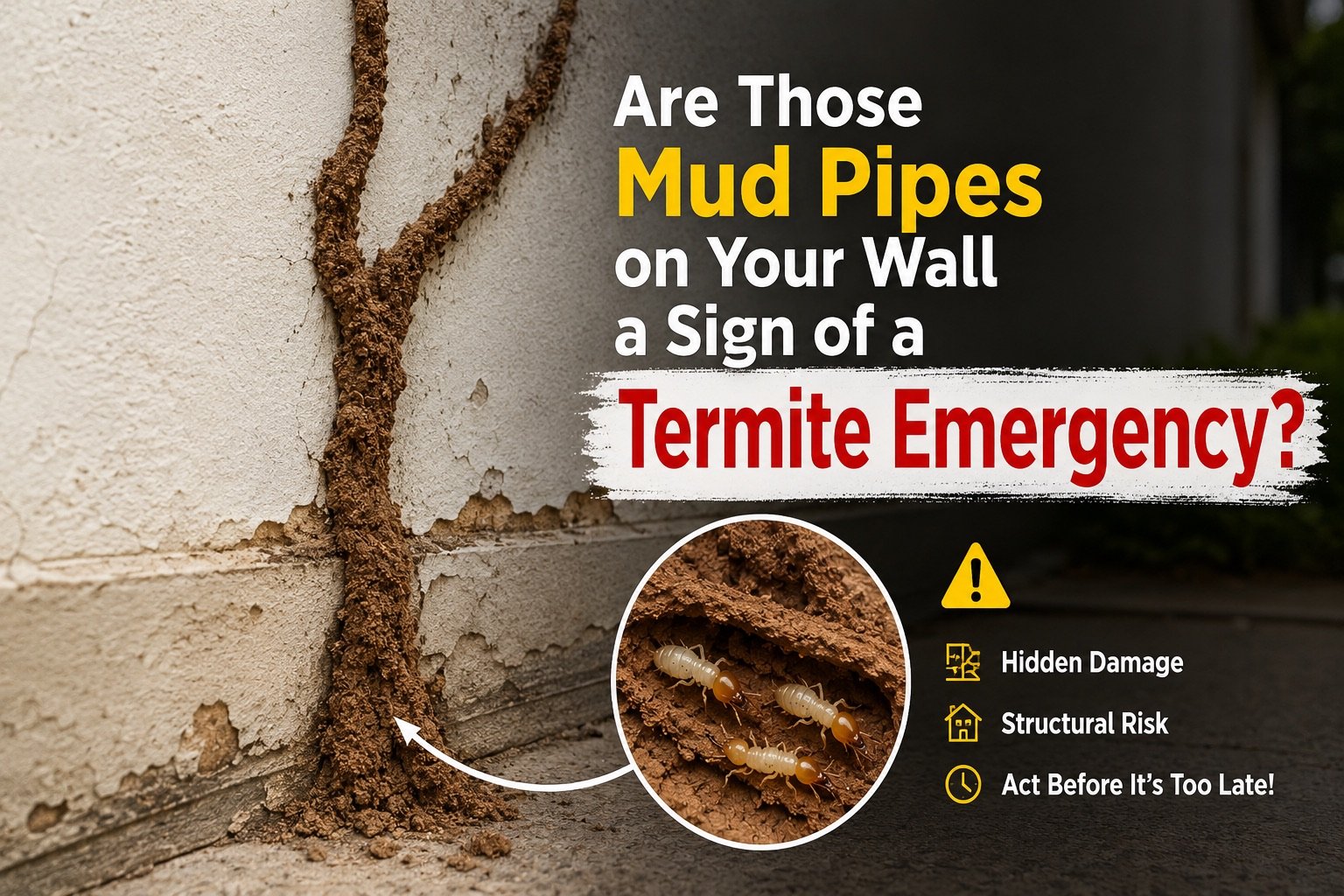
You spot a thin line of dried mud snaking up your wall or along the corner of a beam and your stomach drops. Are those just harmless dirt streaks, or are they one of the classic signs of termite infestation you really shouldn't ignore?
If you live in a termite-prone area, those odd mud formations can be the first clue that something is eating your home from the inside out. Knowing what's normal and what points to termites helps you act early, protect your structure, and avoid far more expensive repairs later.
Are Mud Pipes on Your Wall Always a Termite Emergency?
Mud on a wall doesn't always mean termites, but long, pencil-thin tubes or pipes made of packed soil, saliva, and termite droppings are a serious warning. These structures often show up along foundation walls, corners, expansion joints, or the edges of skirting boards, and they're usually one of the first visible signs of termite activity.
These mud structures act like covered highways, allowing hidden insects to travel from the soil to wood without drying out or exposing themselves to light. If you break a section and see pale, ant-like insects inside, you're probably looking at an active problem that needs quick attention.
What Exactly Are Those Termite Mud Tubes?
What many people call "mud pipes" are technically termite mud tubes, and they tell you a lot about how termites are moving through your property. These tubes often run vertically from the ground up a wall or pier, but you may also see them sideways along brickwork, plumbing lines, or crawl space beams.
There are several types of tubes you might encounter, such as exploratory tubes that test new food sources and thicker shelter tubes that protect the main traffic routes of the colony. Finding these on external or internal walls is one of the clearest early clues that something could be wrong.
Why Do Termites Build Mud Pipes on Walls?
Those narrow termite mud pipes exist because termites need constant moisture and darkness to survive. The tubes keep their bodies from drying out and shield them from predators as they travel from nest to food.
Because these creatures are sensitive to open air and light, they rarely wander across exposed surfaces, so they build covered runways instead. That's why seeing even a single intact tube on a wall deserves a closer look from a pest professional.
Found mud tubes on a wall? Get a professional termite inspection before it spreads further.
Book Free Inspection Call NowKey Signs of Termite Infestation Beyond Mud Pipes
Even if you don't see tubes, there are other classic signs of termite infestation you can check for around your home. A careful visual scan of skirting boards, window frames, door jambs, and attic timbers can reveal subtle changes that often get brushed off as "old house issues."
You might notice timber that sounds hollow when tapped, faint blistering on painted surfaces, or small holes with fine, powdery material nearby. Each clue on its own may not confirm termites, but a pattern of multiple odd details should raise your concern.
Subtle Termite Damage Signs Inside the Home
People often miss early termite damage signs because the surface paint or laminate still looks intact. But behind that thin layer, the inner structure can be riddled with maze-like galleries that weaken support over time.
Watch for doors and windows that suddenly start sticking in dry weather, sagging floors along one side of a room, or tiny cracks around corners that don't match normal settling patterns. These little hints can point to hidden insect activity eating away at the wood.
Early Signs of Termites You Can Spot Yourself
A few simple checks can reveal early signs of termites before there's obvious structural harm. Lightly tapping wooden trims with the handle of a screwdriver can highlight spots that sound hollow compared to solid sections nearby.
You can also watch for discarded wings from swarmers on window sills, or faint rustling and clicking sounds coming from inside walls at night in a quiet room. Catching these early clues buys you valuable time to get a proper assessment.
Why Subterranean Termites Love Your Walls
Most wall problems in houses come from subterranean termites, which nest in the soil and move upward in search of wood. These colonies can be huge, often containing hundreds of thousands of individuals quietly feeding for months or even years.
Because they stay hidden in soil, tunnels, and inside timber, many homeowners don't realize they have a problem until noticeable damage appears. By then, they've often tunneled deep into framing, joists, or support posts that are costly to repair.
Typical Termite Infestation Symptoms Around Foundations
It helps to inspect the outside of your home carefully for termite infestation symptoms that tend to show up at ground level. Pay attention to damp or shaded areas near garden beds, air conditioner drip lines, and leaky downpipes where excess moisture collects.
On brick or concrete foundations, look for fine mud lines coming up from expansion joints, steps, or slab cracks. These outdoor warning signs often show up before you notice anything wrong inside the building.
How to Check Your Walls for Termites Like a Pro
You don't need special tools to do a basic termite inspection at home, just a good torch, a flat screwdriver, and a bit of patience. Start at the ground level and slowly scan along walls, skirting boards, window frames, and any timber touching concrete.
Gently probe suspicious spots, especially areas that look bubbled, water-damaged, or slightly uneven. If the surface caves in easily, or you expose pale insects or packed mud, it's time to stop poking and call in an expert.
What to Do if You Suspect Wall Termites
If you think you may have wall termites, don't spray over-the-counter insecticide directly onto the affected area. Doing that can scatter the insects and drive them deeper into the structure, making proper treatment harder.
Instead, take clear photos of anything unusual, avoid disturbing tubes or damaged sections further, and contact a licensed technician who can confirm what you're dealing with. Acting quickly but calmly helps keep the situation under control.
Simple Termite Detection Checks to Do Every Season
Making termite detection a seasonal habit is one of the best ways to protect your property. A quick visual sweep of external walls, garden edges, and timber structures two or three times a year can pick up problems early.
It's especially smart to repeat these checks after heavy rains or plumbing leaks, because extra moisture makes your home more attractive to insects. A few minutes spent looking now can prevent major headaches later.
Do Mud Pipes Always Mean a Termite Emergency?
Not every mud streak is a crisis, but clear, continuous lines of packed soil on walls are strong termite warning signs and shouldn't be ignored. Even if a tube looks dry or abandoned, it could be part of a larger underground system still in use elsewhere.
Think of mud tubes as an alert, not a reason to panic. The real emergency is leaving them unchecked while insects continue feeding quietly out of sight.
When to Call for a Professional Termite Inspection
Any time you find unexplained mud tubes, hollow-sounding wood, or clusters of discarded wings indoors, arranging a professional termite inspection is the safest next step. A trained specialist knows how to trace activity back to its source and assess how far it has spread.
They can also tell you whether the problem is current or old, and recommend the right treatment options for your building style, soil conditions, and local risk level. Skipping this step often means a hidden colony keeps feeding while only the obvious signs are cleaned up.
The Bottom Line on Mud Pipes and Termite Emergencies
Mud pipes on walls are one of the clearest signs of termite infestation and deserve prompt attention, even if you're not sure how long they've been there. Early action, regular checks, and expert help drastically reduce the risk of serious structural damage.
If you've noticed suspicious tubes, odd marks, or any of the other clues described here, don't wait for the problem to "go away" on its own; reach out to a trusted local expert such as Standard Pest Control to get a thorough assessment and a targeted plan to protect your home from further harm.
Related reading: Signs of Termite Infestation in Homes | Termite Audit Before Home Renovation | Can a ₹15,000 Treatment Save You ₹5 Lakhs in Repairs? | Why Do Termites Love Bangalore's Red Soil So Much? | Pre Construction Anti Termite Treatment