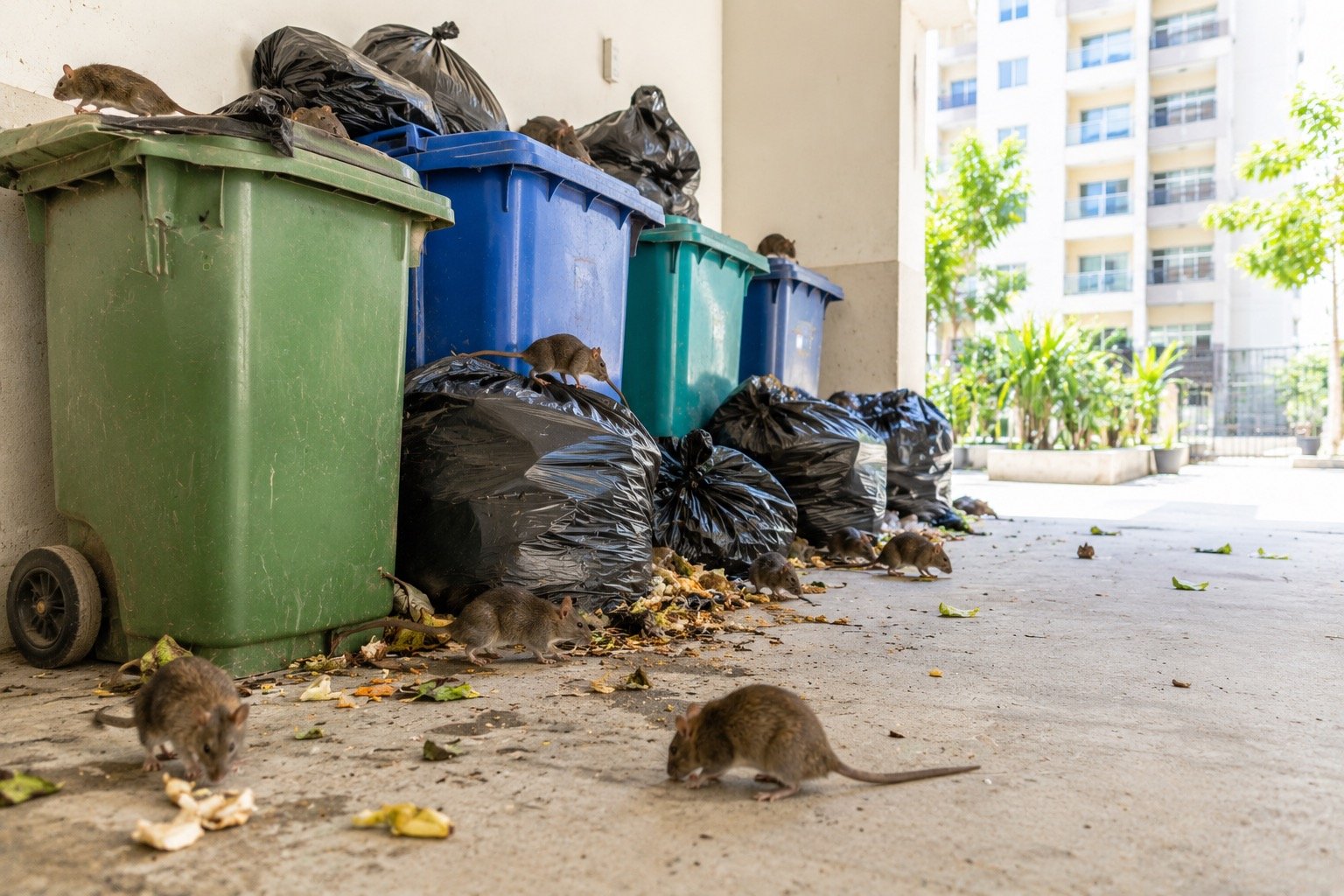
If your building's garbage room smells a little too "alive" lately, it might not be your imagination. Poorly managed trash areas are one of the fastest ways to turn a quiet block into a hotspot for apartment rodent control problems.
The good news is that you don't have to accept rats and mice as part of city living. With a clear plan, your garbage area can go from rodent magnet to low-risk zone, and apartment rodent control becomes a whole lot easier and cheaper.
Why Garbage Areas Attract Rodents in Apartment Buildings
Most rodent problems are built, not born; repeated spills, overfilled bins, and flimsy bags teach pests that your trash room is always open for business.
Once the pattern sets in, you quickly slide from a few sightings into a full rodent infestation that feels impossible to get ahead of.
Early Warning Signs Your Garbage Area Has a Rodent Problem
Rodents work the night shift, so by the time you see one at noon, they've usually been around for a while and know exactly which garbage attracts rats most reliably.
Before things get that far, pay attention to these smaller clues that point to trouble starting in the trash zone:
- Gnaw marks on plastic bags, bin lids, and cardboard near the garbage room.
- Droppings along the walls, behind bins, or under the compactor.
- Scratching sounds in the walls around the chute, especially at night.
- Grease marks or dark rub lines where rodents squeeze under doors or pipes.
- Musky smell in warm, undisturbed corners near stored trash.
If you're seeing these signals more than once a week, that's a strong hint you need structured waste management pest control instead of just cleaning a bit extra.
Already spotting these signs in your garbage room? Get a professional rodent inspection before the colony spreads.
Book Free Inspection Call NowCore Principles of Effective Apartment Rodent Control
Good apartment rodent control isn't only about traps; it's about making your building an expensive, risky place for rodents to live.
That means focusing on three levers you can actually control: food access, shelter, and the paths pests use to move between the garbage room and the rest of the property.
Cut the Food Supply at the Source
If trash is spilling out of liners or sitting open overnight, it's almost impossible to keep a rat prevention program working for long.
Push for simple rules that tenants and staff can follow consistently, such as these:
- Use thick, tied trash bags that don't rip easily.
- Keep all food scraps inside sealed bags, never loose in bins.
- Schedule daily removal for wet waste and kitchen rubbish.
- Wash or hose down the garbage area floor on a clear routine.
Clear, non-negotiable standards for food waste make every other layer of apartment pest management far more effective.
Block Entry Points Around the Garbage Zone
Once food is harder to reach, rodents start hunting for cracks and gaps, so a quick visual check won't cut it for long.
Walk the building with maintenance and look for gaps around pipes, broken door sweeps, damaged vents, and missing screens, because these tiny openings often decide whether you need long-term residential rodent control or just occasional monitoring.
Use Traps and Stations the Right Way
Snap traps, multiple-catch devices, and bait stations can be powerful tools, but only when they're placed with a clear plan.
Professionals map out rodent travel routes and then design rat control services that cover harborage, nest points, and the runways near trash rooms and service corridors.
Not sure where to start sealing? We'll map every entry point around your garbage area.
Book Free Inspection WhatsApp UsPractical Steps to Clean Up Your Garbage Area and Keep Rodents Away
Turning a problem garbage room into a low-risk area doesn't have to be complicated, but it does have to be boringly consistent.
Start with a one-time deep reset, then lock in daily and weekly routines so your garbage area pest control efforts don't fade after a month.
One-Time Reset Checklist for Landlords and Managers
A focused clean-up weekend can break the cycle and give you a fresh baseline where rodent extermination actually holds.
Use a simple checklist like this to guide the reset:
- Empty every bin and fully clear the floor area.
- Throw out damaged, lidless, or cracked garbage containers.
- Power-wash floors, walls, and corners, then let them dry.
- Seal visible gaps with steel wool and appropriate sealant.
- Install metal kick plates or solid sweeps on garbage room doors.
Once the reset's done, document it, take a few dated photos, and treat that condition as the standard you're aiming to maintain with pest prevention habits.
Daily and Weekly Routines That Actually Stick
Big policy changes tend to fail; small habits, written down and tracked, usually win.
Agree on a simple, realistic schedule for housekeeping and maintenance so waste management is predictable instead of crisis-driven and ties smoothly into your ongoing rat control services plan.
- Set a fixed time for wet garbage removal every day.
- Assign responsibility for wiping spills immediately.
- Do a weekly walk-through to spot new damage or gaps.
- Log trap counts and sightings in a shared record.
When You Need Professional Help for Apartment Rodent Control
There's a point where DIY efforts stop moving the needle, especially in taller buildings with old plumbing and shared walls.
If rodents are active on multiple floors or inside occupied units, you're beyond a local trash issue and into full-building apartment rodent control territory.
Red Flags That Call for an Expert Visit
Some situations are higher risk than they look, especially in mixed-use properties with food businesses.
Strong, repeated signs in common areas often mean residential rodent control measures must expand into basements, shafts, and service ducts.
- Tenants reporting rats or mice more than once a month.
- Visible burrows along exterior walls or in soft soil near the building.
- Gnawing damage on wiring, storage boxes, or insulation.
- Droppings appearing again within a day of cleaning.
At that stage, it pays to bring in a team that offers structured garbage area pest control as part of a wider inspection and treatment program.
What a Good Pest Partner Should Offer
Not all providers work the same way, and the cheapest quote is often the one that leaves you dealing with the same trash room problems a year from now.
Look for contractors who start with a thorough survey, share photos of problem spots, and explain how their rat control services will reduce both current activity and future risk.
Bringing Your Building Back From the Brink
Rodents around the garbage area don't fix themselves; they spread into parking levels, storage rooms, and eventually homes unless you take control of apartment rodent control early.
If you're ready to protect tenants, avoid complaints, and keep your building healthier, this is the moment to tighten waste practices, seal problem spots, and bring in a trusted local partner like Standard Pest Control to design a long-term plan that keeps trash areas clean and pests out.
Related reading: Sanitation and Rodent Control: Eliminating Food and Water Sources | Rodent Exclusion: Sealing Entry Points to Keep Pests Out | 10 DIY Rodent Prevention Tips for a Rodent-Free Home | Rodent Anatomy: What Makes Them Such Persistent Pests? | Rats Vs. Mice: Key Identification Differences | Signs of Rodent Infestation You Should Never Ignore | Can Rats Climb to the 15th Floor of Your Bangalore Apartment? | Are Rodents Using Your Kitchen as a Midnight Playground? | Is Your IT Server Room a Breeding Ground for Rats? | Why Choose Standard Pest Control in Bangalore | Rodents in Summer: Outdoor Activity and Breeding