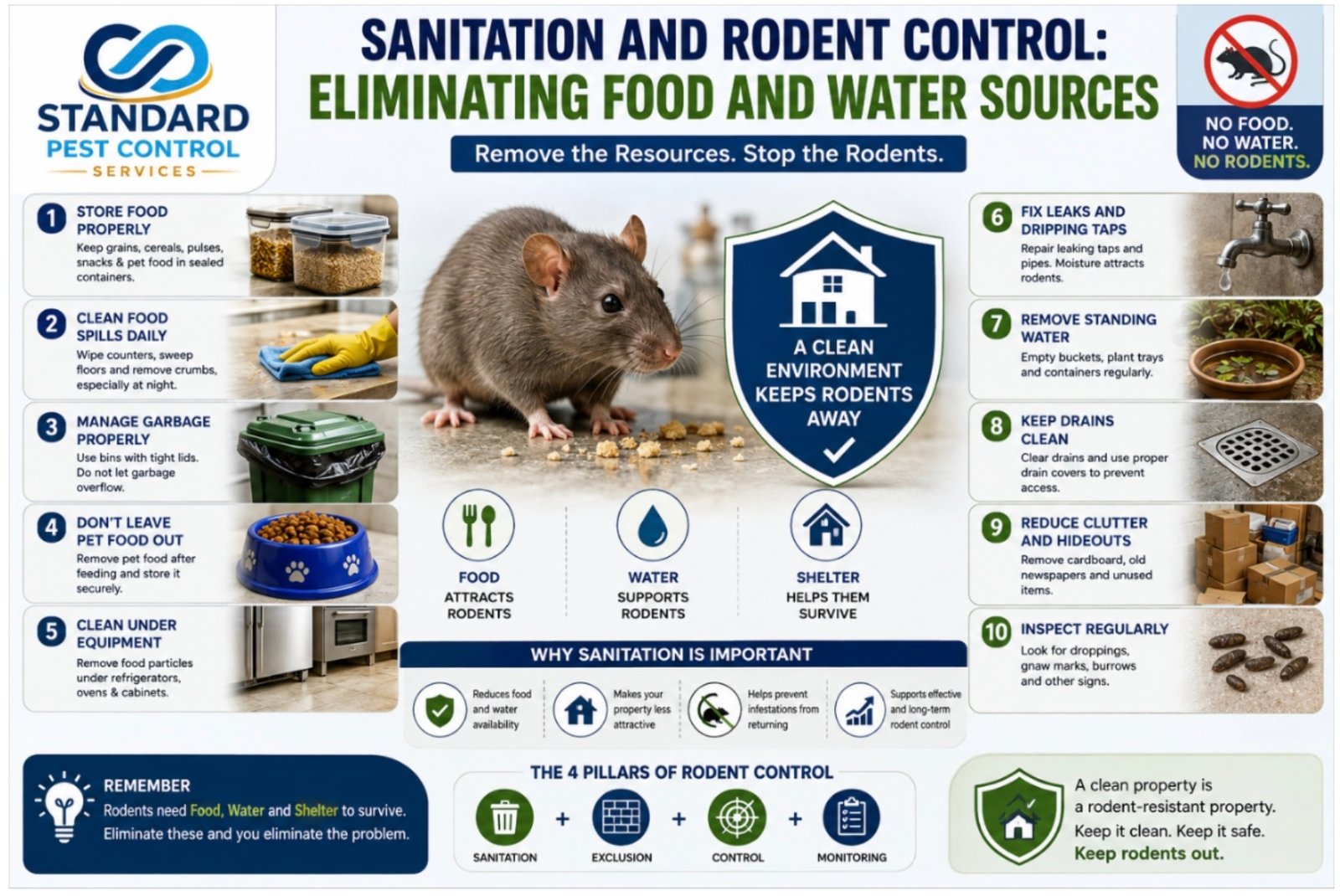
Rodent control is not only about traps, bait stations or removing the rats you can see. One of the most important parts of long-term rodent management is sanitation.
Rats and mice remain in places where their basic survival needs are available: food, water and shelter create ideal conditions for rodents.
A few food crumbs under kitchen equipment, an uncovered garbage bin, leaking plumbing or improperly stored pet food can provide rodents with what they need to survive.
This is why professional rodent control in Bangalore should combine appropriate control measures with sanitation, exclusion and regular monitoring.
Why Is Sanitation Important For Rodent Control?
Rodents are opportunistic feeders. They take advantage of food and water that people unintentionally make available.
A property may undergo rodent treatment, but if food waste remains accessible every night, the conditions attracting and supporting rodents have not been fully addressed. Good sanitation helps to:
- Reduce available rodent food
- Eliminate unnecessary water sources
- Reduce potential harbourage
- Make rodent activity easier to detect
- Improve the effectiveness of a rodent-control programme
- Reduce conditions that encourage recurring infestations
Sanitation does not necessarily eliminate an established infestation by itself, but it is an essential part of Integrated Pest Management (IPM).
What Food Sources Attract Rats And Mice?
Rodents are adaptable feeders. They may consume many foods commonly available around homes and businesses. Potential food sources include rice and grains, cereals, flour and pulses, fruits and vegetables, bread, snacks, pet food, bird seed, food waste, restaurant leftovers, uncovered garbage, spilled ingredients, and food residues underneath equipment.
Even small amounts of food can contribute to an environment that supports rodents.
1. Store Food In Sealed Containers
Food storage is one of the first areas to address. Open bags and loosely closed packets are easier for rodents to access. Products such as rice, flour, cereals, pulses and pet food should be kept in durable containers with properly fitting lids where appropriate.
In commercial food-storage areas, follow proper stock-management practices and regularly inspect packaging for gnaw marks. Gnawed packets, spilled grains, droppings around shelves or damaged cartons may indicate rodent activity.
2. Clean Food Spills And Crumbs Immediately
A few crumbs may seem insignificant, but rodents can survive on relatively small amounts of accessible food. Pay particular attention to difficult-to-clean locations such as under refrigerators, behind cooking equipment, under kitchen cabinets, beneath storage racks, around dining tables, behind vending machines, and under commercial kitchen equipment.
Daily surface cleaning is important, but periodic deep cleaning underneath and behind equipment is equally valuable.
Why Night-Time Cleaning Matters
Rats and mice are commonly active when human activity decreases. Leaving food residue overnight gives them an opportunity to feed with less disturbance. Before closing a kitchen or going to bed: remove food, clean spills, wash dishes, wipe surfaces, sweep floors, and manage waste.
Already seeing signs of activity despite good sanitation? Get a free inspection to find the real cause.
Book Free Inspection Call Now3. Manage Garbage Properly
Garbage is one of the most important food sources associated with urban rodent problems. Use waste bins with secure lids wherever practical and avoid allowing food waste to accumulate unnecessarily. Garbage areas should be clean, organised, regularly emptied and monitored for rodent activity.
Look around waste areas for droppings, gnawed bags, burrows, grease marks, spilled food, damaged bins and rat sightings. This is particularly important for apartments, restaurants, hotels and commercial properties.
4. Don't Leave Pet Food Overnight
Pet food can easily become rodent food. Feed pets according to their normal schedule and remove leftover food rather than leaving bowls filled throughout the night. Store larger pet-food bags in sealed containers. Also clean crumbs and spilled food around feeding areas. If bird seed is stored on the property, it should receive similar attention.
5. Clean Under Kitchen Appliances
The visible part of a kitchen may look perfectly clean while hidden spaces contain food debris. Rodents frequently exploit areas underneath or behind refrigerators, ovens, dishwashers, cabinets, storage racks and cooking equipment.
These spaces are usually dark and relatively undisturbed. Periodic cleaning helps remove food while also making droppings, gnawing and other signs of activity easier to detect.
Eliminating Water Sources For Rodent Prevention
Food receives most of the attention in rodent prevention, but water is another important survival requirement. Water can be available from sources homeowners may overlook.
6. Repair Leaking Taps And Pipes
Inspect plumbing regularly for leaks. Pay attention to kitchen sinks, wash basins, bathrooms, utility rooms, outdoor taps, water-storage areas and commercial kitchens. A slow leak can create a persistent moisture source.
Repairing plumbing problems can make the environment less favourable to rodents while also helping prevent other moisture-related pest issues.
7. Remove Standing Water
Standing water should not be allowed to remain unnecessarily around the property. Check plant trays, utility areas, balconies, basements, roof areas, gardens, drainage zones and cleaning buckets. Good drainage and regular housekeeping help reduce accessible water.
8. Keep Drains Clean And Maintained
Drainage areas can be associated with both water availability and rodent movement. Regularly inspect floor drains, kitchen drains, basement drains, wastewater outlets and drain covers. Damaged drain covers or structural gaps around drainage infrastructure should be repaired appropriately.
If rats are repeatedly seen emerging near drains, arrange a professional inspection to determine the source.
Struggling with recurring activity near drains? Ask about our combined sanitation and exclusion assessment.
Book Free Inspection WhatsApp UsSanitation Also Means Removing Rodent Shelter
Food and water are only part of the equation. Rodents also require protected places to hide and nest — this is called harbourage. Common harbourage conditions include cardboard boxes, newspaper piles, unused furniture, storage clutter, dense vegetation, debris, poorly maintained store rooms, and undisturbed false ceilings.
9. Reduce Clutter
Organised storage makes an area less attractive to rodents and easier to inspect. Where practical: reduce clutter, organise materials, keep floors accessible, and inspect regularly. Commercial warehouses should also avoid allowing unused packaging and debris to accumulate.
10. Keep The Exterior Clean
Rodent prevention should extend beyond the interior of the building. Inspect the exterior for garbage, food waste, overgrown vegetation, debris, standing water, open drains, burrows, fallen fruits and unused materials.
A clean kitchen inside will not fully solve the problem if rodents have abundant food and shelter immediately outside the building.
The Four Pillars Of Rodent Prevention
A successful rodent-management programme should address four areas:
- Sanitation — Remove accessible food and water.
- Exclusion — Identify and seal potential rodent entry points. See our guide on rodent exclusion for detail.
- Control — Manage existing rodent activity using appropriate professional methods.
- Monitoring — Continue checking for droppings, gnawing, sightings and other evidence.
Sanitation, exclusion, control and monitoring together produce better long-term rodent management than any one measure alone.
Sanitation For Rodent Control In Bangalore Homes
Bangalore homes may experience rodent activity associated with nearby garbage areas, drains, restaurants, vacant sites, gardens and construction activity. Inside the home, concentrate sanitation efforts on kitchens, utility areas, balconies, store rooms, pet-feeding areas and garbage-storage locations.
Apartment residents should remember that common areas can also contribute to rodent activity. If the problem originates in a basement garbage room or service shaft, treating only one apartment may not address the entire problem.
Rodent Sanitation In Apartments
Apartment associations should pay particular attention to:
- Basement garbage areas: Keep waste contained and arrange regular cleaning.
- Parking areas: Remove food waste and unnecessary clutter.
- Utility shafts: Inspect for droppings and rodent access.
- Landscaping: Keep vegetation properly maintained.
- Drainage: Repair damaged covers and address standing water.
- Common food areas: Ensure waste is removed regularly.
A building-wide approach is often more effective than treating individual flats independently.
Rodent Sanitation For Restaurants And Commercial Kitchens
Sanitation becomes especially important in food-handling environments. Restaurants can provide rodents with abundant food, water and harbourage unless strict housekeeping procedures are maintained.
Daily attention should include cleaning underneath cooking equipment, removing food spills, cleaning grease accumulation, proper waste disposal, cleaning drain areas, storing ingredients securely, removing cardboard accumulation, inspecting storage rooms, and checking delivery areas.
A restaurant may have professional pest-control service, but poor sanitation can significantly undermine the overall rodent-management programme.
Rodent Sanitation For Warehouses
Warehouses require a different approach. Rodents may find food inside damaged packaging and shelter among poorly organised stock. Good practices include inspecting incoming materials, removing damaged cartons, cleaning spills immediately, keeping storage organised, maintaining accessible inspection areas, removing unnecessary packaging, monitoring loading areas, and maintaining exterior sanitation.
Regular inspection helps detect activity before widespread contamination or product damage occurs.
Why Cleaning Alone May Not Solve A Rodent Infestation
A perfectly clean property can still experience rodents. Why? Because rodents may enter while searching for shelter or because the building has accessible entry points.
Therefore, sanitation should be combined with rodent exclusion. Inspect potential entry points around doors, pipes, drains, AC lines, cable openings, ventilation systems, roof edges, windows, service ducts and wall cracks.
If food is removed but access remains open, rodents may continue entering. If entry points are sealed but food waste remains abundant outside, rodent pressure around the building may continue. Both issues need attention.
Signs Of A Rodent Infestation
Good sanitation makes these signs easier to notice: droppings, gnaw marks, damaged food packaging, scratching noises, grease marks, burrows, nesting material, unusual odours, chewed electrical cables, and rat or mouse sightings. See our full guide on signs of rodent infestation for detail on each.
Repeated signs should not be ignored. Early professional intervention can help prevent the infestation from becoming more difficult to manage.
Professional Rodent Control In Bangalore
When sanitation alone does not solve the problem, professional rodent control in Bangalore may be necessary. A structured rodent-management programme may involve:
- Inspection: Identify species, activity and harbourage.
- Sanitation assessment: Identify food, water and waste conditions supporting rodents.
- Entry-point assessment: Locate structural access routes.
- Control: Select suitable control measures based on the site.
- Exclusion: Recommend sealing or protecting appropriate entry points.
- Monitoring: Check whether activity continues and modify the programme where necessary.
This approach addresses the cause as well as the visible infestation.
Frequently Asked Questions About Sanitation And Rodent Control
Does a dirty house cause rats?
Poor sanitation can provide rodents with food, water and shelter, but even clean properties can experience rodent problems if suitable entry points are available.
What food attracts rats the most?
Rodents can consume many foods, including grains, cereals, fruits, pet food, food waste and leftovers. Preventing access to food is more important than focusing on one particular food type.
Will removing food make rats leave?
Reducing food availability helps make the environment less favourable, but an established infestation may still require professional control and exclusion.
Does pet food attract rats?
Yes. Accessible pet food can provide rodents with an easy food source. Store it securely and avoid leaving unnecessary food out overnight.
Can leaking water attract rodents?
Water availability can help support rodent activity. Repair leaking plumbing and eliminate unnecessary standing water.
Why are rats around my garbage area?
Food waste, odours, shelter and poor waste containment can make garbage areas attractive to rodents.
Can rats live in a clean house?
Yes. Cleanliness reduces food availability but cannot prevent rodents from entering through structural openings.
What is the best way to prevent rats?
A strong prevention strategy combines sanitation, exclusion, monitoring and appropriate control measures.
How often should commercial kitchens be cleaned for rodent prevention?
Routine cleaning should be carried out daily, while harder-to-reach areas underneath and behind equipment should be included in a planned deep-cleaning schedule based on site conditions.
When should I call professional rodent control?
Seek professional assistance when you notice recurring droppings, repeated sightings, gnawing, scratching sounds, damaged wiring or rodent activity that continues despite sanitation and prevention efforts.
Eliminate The Resources, Reduce The Rodent Problem
Successful rodent control is not simply about eliminating the rat you see. It is about understanding why rodents are able to survive on your property.
Start with three questions: what are they eating, where are they getting water, and where are they hiding? Then ask one more: how are they getting inside?
Addressing food, water, shelter and entry points creates a much stronger foundation for long-term rodent management.
For recurring infestations, professional rodent control in Bangalore can combine sanitation assessment, rodent exclusion, control and monitoring to address the complete problem.
Standard Pest Control — Bangalore. Professional rodent control, rat control, rodent exclusion, inspection and monitoring for homes, apartments, restaurants, hotels, offices, warehouses and commercial properties across Bangalore.
Remember: Remove the food. Remove the water. Remove the shelter. Block the entry.
Related reading: DIY Rodent Control: Traps, Baits and Repellents | The Dangers of Using Poison for Rodents | How Small of a Hole Can a Rodent Squeeze Through? | Rodent Exclusion: Sealing Entry Points to Keep Pests Out | Landscaping for Rodent Prevention | 10 DIY Rodent Prevention Tips for a Rodent-Free Home | Signs of Rodent Infestation You Should Never Ignore | How to Safely Clean Up Rodent Droppings and Urine | Rodents and Food Contamination: Protecting Your Pantry | Sanitation Best Practices for Commercial Pest Prevention