Rodent infestations in residential and commercial properties represent more than a minor nuisance; they pose serious structural, economic, and health hazards. Whether hidden in false ceilings, kitchens, or utility shafts, rats and mice can multiply rapidly while remaining out of sight during daylight hours. Recognizing the early warning indicators of rodent activity is essential to preventing costly property damage and protecting public health.
At Standard Pest Control, our certified field technicians encounter diverse rodent challenges across urban properties in Bangalore. Drawing from nearly two decades of localized pest management expertise, this guide examines the primary physical and auditory signs of rodent infestations — focusing on droppings, gnaw marks, rub trails, and nocturnal sounds — so property owners know when it's time to call in a professional.
The Diagnostic Matrix: Core Warning Signs of Rodent Activity
| Indicator | Manifestation | Likely Species | Property Risk |
|---|---|---|---|
| Droppings | Rice-grain sized (3–6 mm) with pointed ends | House Mouse | Contamination of stored food and pantry items |
| Droppings | Large (18–20 mm) capsule shapes like olive pits | Norway Rat | Spread of pathogens (Salmonella, Leptospirosis) |
| Gnaw Marks | Fine scratch marks and small notches on plastic/wood | Mice or juvenile rats | Damage to plastic packaging, soft trim, and furniture |
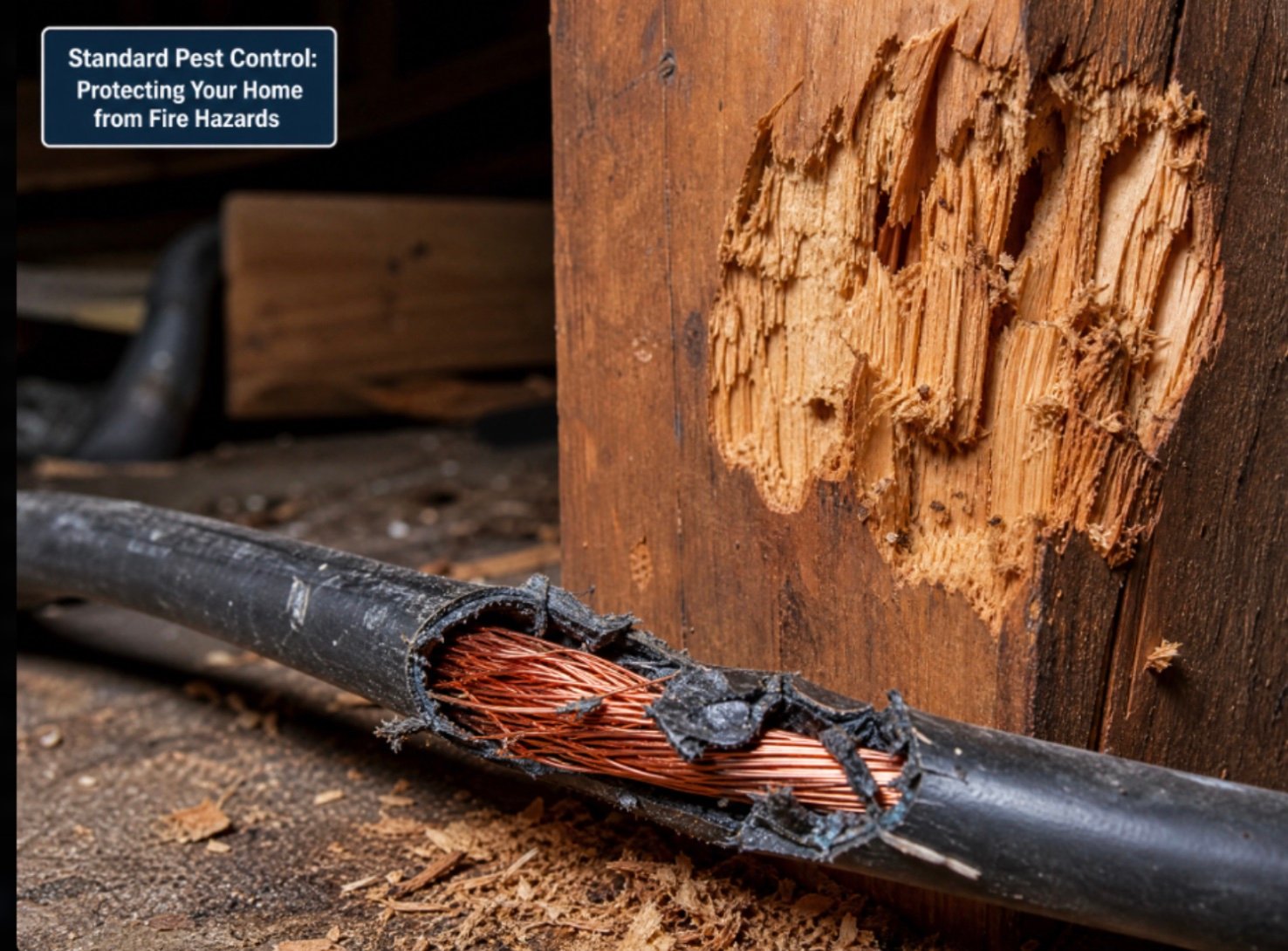
| Gnaw Marks | Broad gouges, splintered timber, chewed electrical cables | Roof Rats / Norway Rats | Severe fire hazards from exposed copper wiring |
| Auditory Signs | Light scuttling, scratching, and squeaking in walls at night | Mice / Roof Rats | Sleep disruption and hidden structural nesting |
| Auditory Signs | Heavy thumping, burrowing sounds in sub-floors or basements | Norway Rats | Foundation undermining and subterranean tunneling |
1. Droppings And Waste Accumulation
The discovery of fecal droppings is frequently the first tangible evidence that rodents have breached a property. Because rats and mice have high metabolic rates, they defecate constantly — often leaving between 40 to 100 droppings per individual every single night. Examining the size, shape, and physical condition of droppings helps pest management professionals identify the invading species and gauge the severity of the infestation.
House Mouse Droppings
Mouse droppings are small, measuring approximately 3 to 6 millimeters in length. They resemble dark grains of rice, featuring pointed ends. Fresh droppings appear dark, glossy, and slightly pliable, whereas older droppings turn grey, become dusty, and crumble easily under pressure. They are commonly discovered inside kitchen pantries, near pet food storage, inside low cabinets, and behind major appliances.
Rat Droppings
Rat droppings are significantly larger and vary by species:
- Roof Rat Droppings: Measure about 10 to 14 millimeters in length, featuring spindle shapes with pointed tips. Frequently found scattered across attics, false ceilings, and upper rafters.
- Norway Rat Droppings: Measure 18 to 20 millimeters long, presenting a bulky capsule shape with blunt, rounded ends resembling olive pits. Typically concentrated along exterior burrows, basement corners, and lower-level runways.
"Fecal accumulation is not merely an aesthetic concern; it is a biohazard. Dried rodent droppings pulverize into dust, releasing airborne pathogens that exacerbate respiratory conditions and transmit infectious diseases."
— Standard Pest Control Technical Division2. Gnaw Marks And Structural Damage
Rodents belong to the order Rodentia, characterized by a single pair of continuously growing upper and lower incisors. To prevent their teeth from growing too long, rodents must gnaw constantly on hard surfaces. Inspecting gnaw marks reveals travel paths and nesting locations.
Differentiating Mouse And Rat Damage
Mouse gnaw marks: Because mice are physically smaller, their gnaw marks leave fine, clean-edged scratch marks and small notches approximately 1 to 2 millimeters wide. They readily chew through cardboard packaging, plastic cereal containers, drywall corners, and soft wood trim.
Rat gnaw marks: Rats possess immense jaw strength capable of chewing through dense hardwoods, aluminum sheeting, plastic utility pipes, and cinder blocks. Rat gnaw marks appear as broad, deep gouges with splintered edges.
The Electrical Fire Hazard
One of the most dangerous consequences of unchecked rodent gnawing is damage to electrical wiring concealed within walls and ceilings. Exposed copper wires frequently spark when in contact, making rodent activity a leading cause of unexplained residential and commercial electrical fires in metropolitan centers like Bangalore.
Heard scratching in the walls or ceiling? Get a free inspection before rodents reach your wiring.
Book Free Inspection Call Now3. Nocturnal Noises: Scratching, Scurrying, And Thumping
Because rats and mice are strictly nocturnal creatures, property owners rarely see them during daylight hours. Instead, infestations are frequently unmasked by unsettling auditory cues heard after dark when ambient household noise subsides.
Identifying Sounds By Location And Pitch
- False ceilings and attics: Light, rapid scratching, scampering, and pattering noises overhead usually indicate roof rats or house mice navigating upper wall voids and ceiling insulation.
- Inside hollow walls: Gnawing sounds, scratching, and muffled squeaking point to rodents nesting within wall cavities or chewing through wooden studs.
- Sub-floors and basements: Heavy thumping, dragging sounds, or scratching near floorboards typically signal large Norway rats moving through sub-floor ducts or subterranean burrows.
4. Smudge Marks, Footprints, And Nesting Materials
Beyond droppings, gnaw marks, and sounds, secondary physical indicators reveal active rodent pathways throughout a structure.
Greasy Rub Marks (Smudge Trails)
Because rats and mice have poor eyesight, they rely heavily on their vibrissae (whiskers) and tactile senses, navigating along walls, baseboards, and pipes while brushing their fur against vertical surfaces. Their fur contains natural oils and dirt that, over weeks of continuous travel, leave dark, greasy smear marks and smudge trails along entry holes and baseboard corners.
Footprints And Tail Drags
In dusty, seldom-used areas such as utility rooms, storage basements, and attics, rodents leave distinct footprints and continuous tail-drag impressions. Property owners can verify active pathways by dusting a thin layer of talcum powder or flour across suspected transit zones and checking for paw prints the following morning.
Nesting Debris
Rodents construct hidden nests using shredded paper, cardboard, insulation, fabric scraps, dry leaves, and synthetic fibers. Discovering bundled nesting material inside kitchen cabinets, behind refrigerator motor compartments, or within ceiling cavities confirms an established breeding colony.
Found droppings or nesting debris? Ask about our low-odour, family-safe rodent control options.
Book Free Inspection WhatsApp UsStandard Pest Control Protocols In Bangalore
Urban environments in Bangalore present unique pest management challenges due to dense residential layouts, commercial food establishments, humid monsoons, and rapid construction. Standard Pest Control applies an Integrated Pest Management (IPM) framework designed for local conditions.
Step 1: Comprehensive Inspection
Licensed technicians execute a meticulous inspection of the property — checking false ceilings, kitchen utility ducts, drainage chambers, electrical shafts, and basement areas. Identifying specific rodent signs dictates whether high-reach baiting, burrow treatment, or precision trapping is deployed.
Step 2: Structural Proofing And Exclusion
Eliminating pests permanently requires sealing their entry points. Standard Pest Control seals gaps, reinforces entry vents with galvanized steel mesh, repairs damaged drainage pipes, and secures cable penetrations.
Step 3: Targeted Baiting And Trapping
- Rodenticides: Anticoagulant block baits formulated for single or multi-feed efficacy are placed in tamper-resistant stations to eliminate foraging colonies safely.
- Mechanical traps: Heavy-duty snap traps and multi-catch live traps are positioned along established runways identified during the initial inspection.
Step 4: Sanitization And Ongoing Maintenance
Following rodent eradication, technicians disinfect contaminated surfaces with specialized antimicrobial solutions to neutralize pathogens such as leptospirosis, hantavirus, and salmonellosis. Regular Annual Maintenance Contracts (AMC) ensure continuous monitoring and proactive defense for apartments, restaurants, corporate offices, and warehouses across Bangalore.
Frequently Asked Questions
What are the earliest signs of a rodent infestation in a home?
The earliest warning signs typically include faint scratching or scuttling sounds in walls at night, small rice-grain-sized droppings in pantries, minor gnaw marks on food packaging, and an unfamiliar musky odor.
How can I tell if the noises in my ceiling are mice or rats?
Mice typically produce light, rapid scratching and scurrying sounds, whereas larger rats create heavier thumping, dragging, and louder gnawing noises, particularly in false ceilings or attics during nighttime hours.
Are rodent droppings dangerous to human health?
Yes. Dried rodent droppings can pulverize into fine dust that, when inhaled, transmits dangerous pathogens such as hantavirus, salmonella, and leptospirosis. Fecal matter should never be swept or vacuumed dry; it must be disinfected and wiped away carefully.
What areas in Bangalore do you serve?
Standard Pest Control provides same-day residential and commercial pest management services across all major localities in Bangalore, including Indiranagar, Koramangala, Jayanagar, Whitefield, Electronic City, Hebbal, and surrounding areas.
Conclusion
Recognizing the early warning signs of a rodent infestation — from rice-grain droppings and structural gnaw marks to nocturnal scratching sounds — is critical to preventing costly property damage and severe health risks. Rather than relying on temporary over-the-counter fixes, property owners benefit from professional intervention that targets the root cause of the infestation.
For homeowners and businesses seeking reliable, expert intervention, Standard Pest Control delivers certified, safe, and professional pest control Bangalore services. Backed by nearly 19 years of industry experience, same-day service availability, and government-approved licenses, we safeguard your living and working environments against all common urban pests.
Related reading: DIY Rodent Control: Traps, Baits and Repellents | The Dangers of Using Poison for Rodents | How Small of a Hole Can a Rodent Squeeze Through? | Sanitation and Rodent Control: Eliminating Food and Water Sources | Rodent Exclusion: Sealing Entry Points to Keep Pests Out | Landscaping for Rodent Prevention | 10 DIY Rodent Prevention Tips for a Rodent-Free Home | Rodents in Spring: Emerging From Winter Hiding Spots | How to Safely Clean Up Rodent Droppings and Urine | The Psychological Impact of Rodents: Fear, Disgust, and Stress | Preparing Your Home for Rodent Treatment: A Comprehensive Checklist | What to Expect During a Professional Rodent Extermination Service