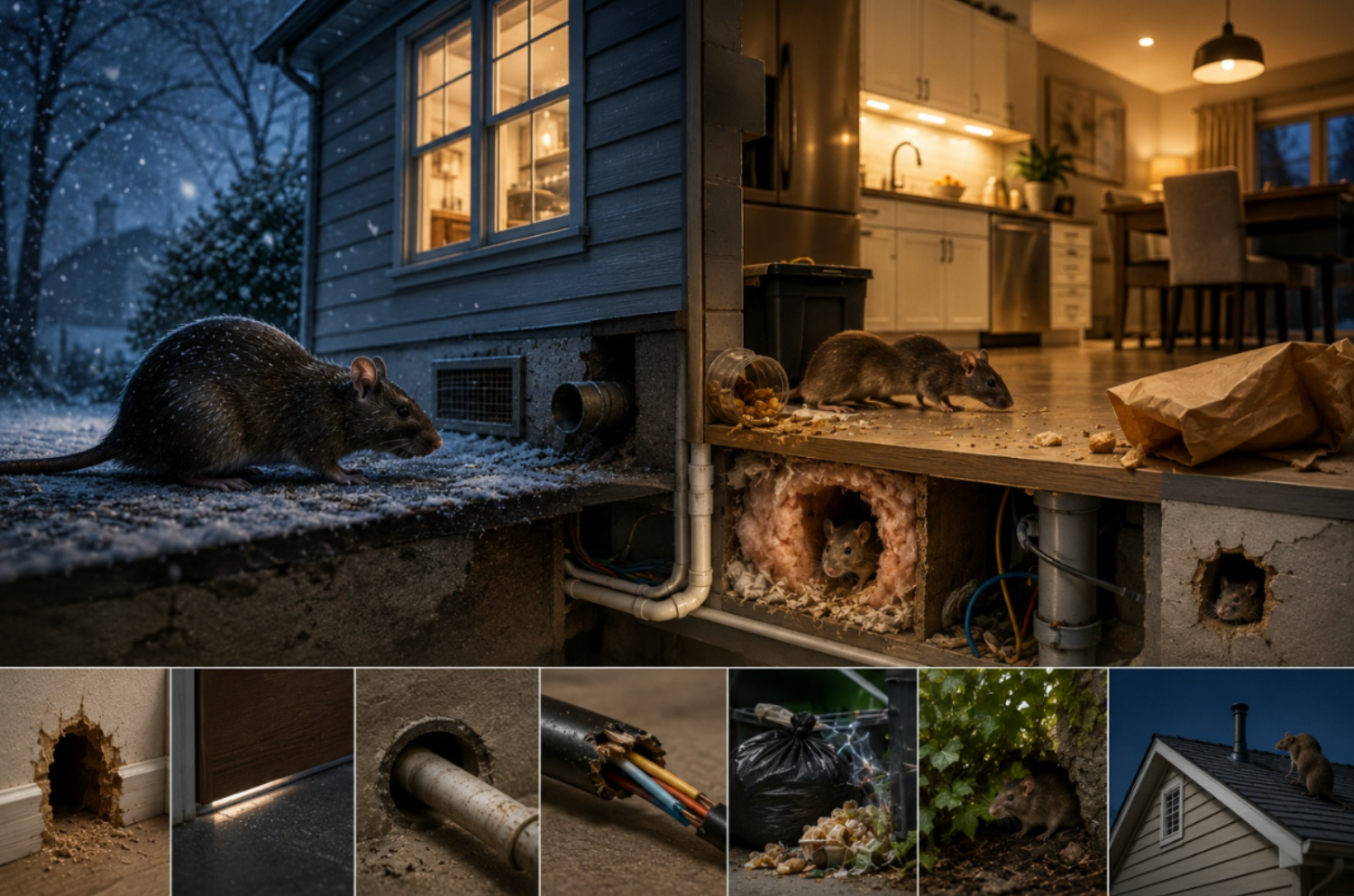
When temperatures drop, humans aren't the only ones looking for a warm and comfortable place to stay. Rats and mice also search for environments that provide three essential things: shelter, food and water.
Homes, apartments, restaurants, warehouses, offices and commercial buildings can provide all three. This is why many property owners notice scratching noises, droppings, damaged food packages or other signs of rodents during cooler periods.
Although Bangalore doesn't experience the severe winters found in colder countries, seasonal temperature changes, rainfall, food availability and outdoor conditions can still influence rodent behaviour. Buildings provide stable shelter throughout the year, making prevention important in every season.
Understanding why rodents enter buildings and how they get inside is the first step toward preventing a small rodent problem from becoming an established infestation.
Why Do Rodents Come Indoors During Winter?
Rats and mice are highly adaptable animals. Outdoors, they may shelter in burrows, vegetation, drainage systems, garbage areas, storage yards, construction sites and other protected spaces.
When outdoor conditions become less favourable, buildings can offer a more stable environment. Inside a home, rodents may find warmth, food, water, nesting material and protection together. Once they discover these resources, they may remain even when outdoor conditions improve.
1. Rodents Are Looking For Shelter
Shelter is one of the biggest reasons rodents enter buildings. Rodents prefer protected environments where they can hide from weather, predators, human disturbance and temperature fluctuations.
Inside buildings, potential harbourages include false ceilings, wall voids, storage rooms, kitchen cabinets, utility shafts, basements, roof spaces and areas behind appliances. A quiet, rarely disturbed area can become an attractive nesting location.
2. Buildings Provide More Stable Temperatures
Outdoor temperatures can fluctuate significantly between day and night. Buildings provide a relatively stable environment, and rodents may find warmth around kitchens, machinery, appliances, ceiling spaces, utility rooms and equipment areas.
The objective isn't necessarily to find a very hot location — a protected environment with a more stable temperature may be enough.
3. Food Is Easy To Find Indoors
Rodents are opportunistic feeders. Human buildings can provide abundant food sources — rice, cereals, flour, pulses, nuts, fruits, biscuits, pet food, garbage and food crumbs.
Even small amounts of food can support rodent activity. A kitchen that looks clean at eye level may still contain food underneath appliances or behind cabinets.
4. Garbage Can Become A Rodent Food Source
Poorly managed garbage can attract rodents throughout the year. Problems may occur around open garbage bins, overflowing waste areas, food waste, apartment garbage rooms, restaurant waste-storage areas and outdoor dumping locations.
Rodent management should therefore include proper waste control. Use covered bins where appropriate and clean spilled food around waste-storage areas — see our detailed guide on rodent control for apartment garbage areas for a room-by-room checklist.
5. Water Is Another Important Resource
Rodents need access to water, although requirements vary depending on species and diet. Potential sources include leaking pipes, dripping taps, pet-water bowls, standing water, drainage areas and condensation. Repairing leaks helps reduce conditions that support rodents and other pests.
6. Homes Provide Nesting Materials
Rodents can use many common household materials for nesting, including paper, cardboard, fabric, insulation, packaging and other soft materials. Cluttered storage rooms can therefore provide both shelter and nesting material — reducing unnecessary clutter makes inspection easier and removes some harbourage opportunities.
Hearing scratching in the walls as the weather cools? Get a free inspection before it becomes a full infestation.
Book Free Inspection Call NowHow Do Rodents Get Inside?
Rats and mice are remarkably capable at exploiting structural openings. Potential entry routes include gaps under doors, plumbing openings, utility penetrations, ventilation openings, damaged walls, roof gaps, drainage systems and service shafts. The exact route depends on the building and rodent species.
Mice Can Enter Through Very Small Openings
House mice can squeeze through remarkably small gaps — roughly around 6 mm (¼ inch) under suitable conditions. That means an opening that appears insignificant to a homeowner may still be large enough for a mouse. Inspect around pipes, cabinets, utility lines, doors and walls; small gaps deserve attention.
Rats Can Also Exploit Small Gaps
Rats require larger openings than mice but can still enter through surprisingly small spaces. Young rats in particular may exploit openings around approximately 12–13 mm (½ inch) when conditions permit, and they are also capable climbers and gnawers. This makes rodent proofing more complicated than simply sealing one visible hole — see our full guide on how small a hole a rodent can squeeze through for exact gap sizes to check.
Roof Rats Can Enter From Above
Not every rodent enters at ground level. Roof rats are skilled climbers and may use trees, cables, pipes, building ledges and adjacent structures to reach upper areas. From there, they may enter roof spaces, false ceilings, attics and upper-floor utility areas. If rodent noises are coming from above the ceiling, the inspection should include external upper-level access routes.
Norway Rats Often Use Lower Areas
Norway rats are generally associated more strongly with ground-level environments — drains, garbage areas, basements, foundations and ground-floor storage. Understanding the rodent species helps determine where inspection should concentrate.
Why Rodents Love False Ceilings
False ceilings provide many features rodents prefer: dark, protected, warm and rarely disturbed. They can also contain electrical wiring, plumbing, air-conditioning systems and communication cables.
This creates an important concern. Rodents frequently gnaw materials, including electrical cables. Damaged wiring can create equipment problems and, under some circumstances, electrical or fire hazards.
Why Do Rodents Gnaw?
Rodent incisors continue growing throughout their lives. Gnawing helps maintain these teeth and allows rodents to access food, create openings and manipulate their environment. They may gnaw wood, plastic, cardboard, packaging, insulation and electrical cables.
This is why rodent infestations are not simply hygiene problems — they can also become property-maintenance and safety concerns.
Worried about gnawed wiring in your ceiling or walls? Ask our technicians to check for rodent damage.
Book Free Inspection WhatsApp UsSigns Of A Winter Rodent Invasion
Early detection makes rodent management easier. Watch for these warning signs:
- Droppings: may appear around kitchens, storage rooms, walls or hidden spaces.
- Scratching sounds: noises inside walls or false ceilings — particularly during quieter night-time periods — may indicate rodent activity.
- Gnaw marks: look for damage to packaging, timber, plastic or cables.
- Damaged food packaging: rodents may chew through bags, boxes and containers.
- Grease marks: repeated rodent movement along the same route can sometimes leave dark rub marks.
- Nesting material: shredded paper, fabric or insulation may indicate nesting activity.
- Unusual odours: established infestations can sometimes produce noticeable odours.
See our full guide on signs of rodent infestation for detail on each of these.
Why You May Hear Rodents More At Night
Many common commensal rodents are primarily active when buildings are quiet. At night, homeowners may hear a scratch, a run, a gnaw, then silence. The sounds can come from ceilings, walls, kitchens, storage areas and roof spaces. Repeated sounds should be investigated rather than ignored.
The Kitchen Is A Major Rodent Hotspot
Kitchens provide everything rodents need: food, water, warmth and hiding places. Inspect behind refrigerators, under sinks, around cabinets, near food storage, around plumbing and under appliances. Keeping the visible countertop clean is not enough — hidden food residue should also be removed.
Winter Rodent Activity By Property Type
Apartments
Apartment buildings can be challenging because rodents may move through shared infrastructure — plumbing shafts, utility ducts, false ceilings, basements, garbage areas and service passages. This means one apartment may experience rodents even when the occupants maintain good sanitation. When activity occurs across multiple flats, building-level inspection may be necessary.
Independent Houses And Villas
Independent houses require both indoor and outdoor inspection. Check compound walls, gardens, drains, garbage areas, roofs, utility rooms, external storage and vegetation touching the building. The closer food, shelter and vegetation are to the structure, the easier it may be for rodents to approach unnoticed.
Restaurants
Restaurants are particularly attractive to rodents because food is continuously available. Rodent prevention should include proper food storage, daily cleaning, waste management, drain inspection, door-gap control, monitoring and structural proofing. Waiting until a customer sees a rat is not an acceptable rodent-management strategy — commercial pest control should be preventive.
Warehouses
Warehouses provide large amounts of shelter. Cardboard boxes, pallets and stored materials can create hidden movement routes, and rodents may damage packaging, stored food, raw materials and electrical systems. Regular monitoring is particularly important in large storage facilities because rodent activity may remain unnoticed for extended periods.
How To Prevent Winter Rodent Invasions
Prevention should focus on removing the conditions that attract rodents.
1. Seal Entry Points
Inspect the exterior and interior for potential access routes, paying attention to pipe gaps, door gaps, utility openings, wall damage and roofline openings. Use appropriate rodent-resistant materials. However, if rodents are already inside, determine active routes before sealing everything — see our detailed guide on rodent exclusion for material recommendations by location.
2. Install Suitable Door Sweeps
Large gaps underneath doors can provide easy access. Properly fitted door sweeps can help reduce this risk — check main doors, kitchen service doors, utility doors, garage doors and commercial back entrances.
3. Store Food In Secure Containers
Avoid relying only on thin plastic bags or cardboard packaging. Where practical, store susceptible foods in secure containers, paying particular attention to rice, flour, cereals, pulses, snacks and pet food.
4. Manage Garbage Properly
Use appropriately covered waste containers and avoid allowing food waste to accumulate overnight. For apartments and businesses, common garbage areas should be regularly inspected.
5. Remove Clutter
Reduce unnecessary cardboard, paper, fabric, packaging and stored debris. This removes potential nesting material and improves inspection access.
6. Repair Water Leaks
Correct dripping taps, leaking pipes and persistent standing water. Reducing water availability helps make the environment less supportive of pests.
7. Trim Vegetation
For independent houses and villas, trim vegetation where it provides direct access to roofs or walls. This is especially important when dealing with climbing rodents — see our full guide on landscaping for rodent prevention for a plant-by-plant breakdown.
8. Monitor High-Risk Areas
Rodent prevention should not stop after one inspection. Regularly check the kitchen, storage, utility areas, garbage area, false ceiling and exterior in sequence. Early detection prevents small problems from becoming large infestations.
Why Random Poisoning Is Not The Best Solution
When homeowners see a rat, they may immediately buy rodenticide and place it randomly around the property. This can create problems. Rodenticides must be handled carefully because they may pose risks to children, pets and non-target animals — see our guide on the dangers of secondary rodenticide poisoning. Rodents may also die in inaccessible areas, potentially creating odour problems.
Professional rodent management uses appropriate control methods based on site conditions.
Trapping Vs Baiting
Different infestations may require different methods. Professional rodent programs may use mechanical traps, monitoring devices, secured bait stations, structural proofing and sanitation measures. No single method is best for every property — the correct strategy depends on rodent species, infestation level, building structure and safety requirements.
Don't Seal Rodents Inside
Proofing is one of the most important parts of rodent management, but timing matters. If active openings are sealed while rodents remain inside, animals may become trapped within the structure. The better approach is: inspect, control existing rodents, proof entry points, then monitor. Professional assessment helps determine the correct sequence.
Why Rodents Sometimes Return After Treatment
If rodents return, ask: was the entry point corrected? Is food still available? Is garbage properly managed? Are neighbouring areas infested? Is there outdoor rodent activity? Removing one rodent doesn't prevent another from entering through the same opening — long-term control requires exclusion.
Professional Rodent Control In Bangalore
Standard Pest Control provides professional rodent control services in Bangalore for residential and commercial properties, suitable for apartments, villas, independent houses, restaurants, hotels, hospitals, offices, warehouses, factories and commercial kitchens.
A professional rodent-control program may include inspection, species identification, activity mapping, control, proofing recommendations and monitoring. The objective isn't simply to catch the rat — it is to understand why the rat entered and reduce the chance of another one entering.
Winter Rodent Prevention Checklist
Use this checklist when temperatures begin to change or whenever rodent pressure increases:
- ☐ Check gaps underneath doors
- ☐ Inspect plumbing openings
- ☐ Check utility penetrations
- ☐ Inspect roof areas
- ☐ Check false ceilings
- ☐ Secure food
- ☐ Store pet food properly
- ☐ Clean crumbs and spills
- ☐ Manage garbage
- ☐ Reduce cardboard clutter
- ☐ Repair leaks
- ☐ Trim vegetation
- ☐ Check for droppings
- ☐ Listen for scratching sounds
- ☐ Inspect food packaging
- ☐ Check for gnaw marks
- ☐ Arrange professional inspection if activity continues
Frequently Asked Questions
Why do rats and mice enter homes during winter?
Buildings provide shelter, more stable temperatures, food, water and nesting opportunities. When outdoor conditions become less favourable, rodents may move into protected structures.
Do rodents hibernate during winter?
Common pest rodents such as house mice and rats do not simply hibernate through winter. They remain active and continue searching for food and shelter.
Can mice enter through very small holes?
Yes. House mice can exploit openings around 6 mm or approximately ¼ inch under suitable conditions.
How small a gap can a rat enter?
Rats can exploit openings of roughly 12–13 mm or around ½ inch in some situations, although the exact ability varies with the animal and opening.
Why do I hear rats in my ceiling at night?
False ceilings can provide protected rodent movement routes. Rodents are often more noticeable at night when the building is quiet.
Do rats damage electrical wires?
Yes. Rodents may gnaw electrical cables, potentially damaging equipment and creating electrical hazards.
Does Bangalore have winter rodent problems?
Bangalore's winter is mild compared with colder climates, but cooler weather and seasonal environmental changes can influence rodent behaviour. Buildings provide attractive shelter throughout the year, so rodent prevention should be continuous.
Should I seal rat holes immediately?
If you already have an active infestation, it is better to identify rodent movement and determine whether animals remain inside before sealing every opening.
How can I prevent rodents from entering my house?
Combine structural proofing with secure food storage, garbage management, clutter reduction, leak repair, vegetation management and regular monitoring.
When should I call professional rodent control?
Consider professional inspection when you repeatedly see rodents, find fresh droppings, hear noises in walls or ceilings, notice gnaw damage or continue experiencing activity despite preventive measures.
Final Takeaway: Don't Give Rodents A Winter Home
When outdoor conditions become less comfortable, your property can look extremely attractive to rats and mice. To a rodent, your home may provide warmth, shelter, food, water and safety. Prevention means removing those opportunities.
Before rodents become established: inspect entry points, secure food, manage garbage, reduce clutter, repair leaks and monitor activity. And if rodents are already inside: identify, control, proof, then monitor.
The most effective rodent-control strategy isn't simply removing the rat you can see. It's preventing the next rat from getting inside. For persistent rodent activity, Standard Pest Control provides pest-management services for homes and businesses across Bangalore.
Related reading: Rodents in Spring: Emerging From Winter Hiding Spots | Rodents in Summer: Outdoor Activity and Breeding | Signs of Rodent Infestation You Should Never Ignore | How Small of a Hole Can a Rodent Squeeze Through? | Rodent Exclusion: Sealing Entry Points to Keep Pests Out | The Dangers of Using Poison for Rodents | Fall Rodent Control: Preparing Your Home for Colder Weather