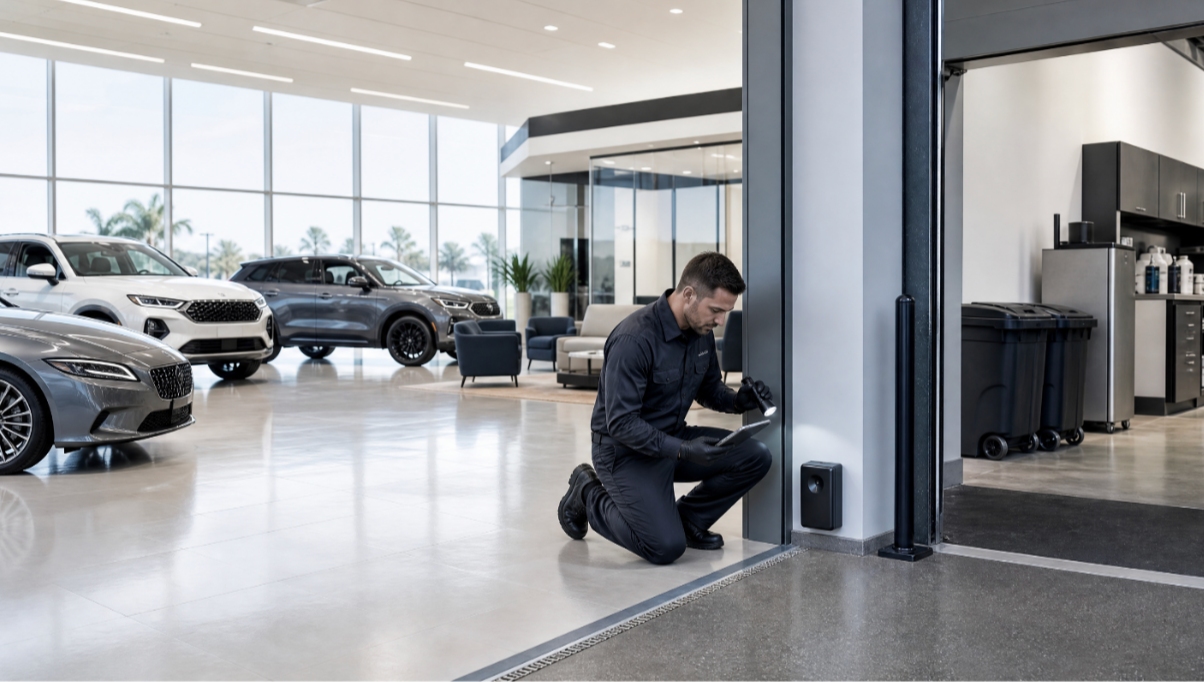
Car dealerships invest heavily in vehicle inventory, showroom presentation and customer experience. A clean, polished showroom builds confidence, but pest activity can quickly undermine that image and may even cause costly damage.
Rats and mice can damage vehicle wiring, cockroaches and ants can invade staff pantries, mosquitoes can affect outdoor display areas, and termites can damage wooden interiors and office structures. For car dealerships, pest management is therefore about more than removing visible pests. It is about protecting vehicles, electrical systems, buildings, employees, customers and the dealership's reputation.
A professional Integrated Pest Management (IPM) programme combines inspection, sanitation, structural exclusion, monitoring and targeted treatment to reduce pest risks throughout the property. For professional commercial pest-management services in Bangalore, visit Standard Pest Control.
Why Car Dealerships Need Specialized Pest Control
A dealership is not a single environment. A typical facility may contain:
- New-car showroom
- Vehicle stockyard
- Service workshop
- Spare-parts warehouse
- Customer lounge
- Staff pantry
- Offices
- Basement parking
- Wash bays
- Garbage areas
- Landscaping
Each area presents different pest risks. The vehicle stockyard and workshop may face rodents, while kitchens and pantries may experience cockroaches and ants. Outdoor areas may experience mosquitoes, and buildings may require termite protection. This makes a site-wide pest-management strategy important.
Rodents: A Major Risk to Vehicle Inventory
Rats and mice deserve particular attention in automotive facilities. Rodents naturally gnaw materials to maintain their continuously growing teeth. When they enter vehicle storage areas, engine compartments or workshops, electrical wiring and other components may be damaged.
Potential consequences include:
- Damaged wiring
- Electrical faults
- Vehicle downtime
- Repair costs
- Customer complaints
- Delayed vehicle delivery
For a dealership holding dozens or hundreds of vehicles, even occasional rodent activity should be investigated promptly. See Rodent Pest Control Bangalore.
Why Rodents Enter Car Dealerships
Rodents are usually attracted to the property, not specifically to the cars. Staff pantries, cafeterias, garbage and food waste can support rodent activity. Warehouses, stockyards, basements and stored materials provide protected hiding places. Drainage, wash bays and leaking pipes can provide water. Rodents may enter through gaps around:
- Doors
- Drainage systems
- Pipes
- Utility lines
- External walls
Once rodents establish themselves around a property, parked vehicles may become additional hiding locations.
Vehicle Stockyards Need Regular Inspection
Cars parked for extended periods may receive less human disturbance than vehicles in regular use. This makes stockyard monitoring particularly important. Inspect:
- Rows of parked vehicles
- Boundary walls
- Drainage
- Vegetation
- Waste areas
- Storage containers
- Nearby food sources
Look for rodent droppings, gnaw marks, burrows, tracks and nesting material. Pest-control technicians and dealership maintenance teams should communicate immediately when signs are found.
Inspect Vehicles That Remain Parked for Long Periods
Vehicles that remain stationary for extended periods deserve additional attention. Before delivery or movement, dealership personnel can inspect for obvious signs of pest activity around suitable accessible areas.
If rodent evidence is found, inspect surrounding vehicles and investigate the source of the activity. Treating only one affected vehicle without controlling rodents around the property may allow the problem to continue.
Rodent Control Should Focus on the Property
Spraying chemicals around individual cars is not a complete rodent-control strategy. A better programme combines sanitation, exclusion, monitoring, habitat management and targeted control. The objective is to reduce the rodent population around the entire dealership.
Create a Rodent Monitoring Map
Large dealerships should consider numbered monitoring locations, for example:
- R01 – Main Stockyard Entrance
- R02 – Workshop Rear Wall
- R03 – Spare Parts Warehouse
- R04 – Garbage Area
- R05 – Basement Parking
- R06 – External Boundary
Record activity during every inspection. Over time, this can reveal where rodents are entering and which areas require corrective action.
Structural Pest Proofing
Inspect the property for possible rodent access, paying particular attention to:
- Door gaps
- Wall openings
- Pipe penetrations
- Utility conduits
- Damaged drainage covers
- Warehouse doors
- Loading areas
Appropriate proofing can reduce dependence on repeated chemical treatment.
Not sure what's causing the problem? Get a professional inspection before you decide on treatment.
Book Free Inspection Call NowLandscaping and Rodent Activity
Dense vegetation can provide rodents with shelter and make inspection difficult. Where appropriate, trim excessive vegetation near buildings, remove unnecessary debris, keep boundaries visible, manage fallen fruit, maintain drainage and avoid unnecessary clutter around stockyards. A clean external perimeter makes rodent activity easier to detect.
Spare-Parts Warehouses
Automotive warehouses may contain cardboard boxes, packaging, rubber components, electrical parts and shelving. Rodents may hide among stored materials. Maintain clear inspection space where practical and avoid excessive clutter, use suitable stock rotation, and inspect damaged packaging.
Pest Control in Service Workshops
Workshops contain many potential pest harbourages. Inspect equipment areas, storage rooms, drainage, staff eating locations, waste areas, false ceilings and utility rooms. Food should not be left overnight in workshop areas.
Cockroaches in Dealerships
Cockroaches are more likely to become established around areas containing food, water and warmth. Common hotspots include:
- Staff pantries
- Customer cafés
- Washrooms
- Drains
- Garbage rooms
- Staff lockers
For professional treatment, see Cockroach Pest Control Bangalore.
Customer Lounges Need Special Attention
Modern dealerships often provide tea, coffee, snacks and beverages. These improve customer experience but can also attract ants and cockroaches. Clean beverage machines, tables, pantry counters and floors underneath furniture. Food waste should be removed promptly.
Ant Control
Ants may appear around sugar containers, beverage machines, customer lounges, staff kitchens and landscaping. Simply cleaning visible ants may not eliminate the colony — identify entry routes and food sources. See our complete guide to ant control.
Mosquito Management
Large dealerships often have significant outdoor space. Potential mosquito breeding locations may include:
- Blocked drains
- Rainwater accumulation
- Containers
- Landscaping
- Equipment yards
- Roof drainage
Regular stagnant-water inspections are particularly important during Bangalore's rainy periods. See Mosquito Pest Control Bangalore.
Termite Protection
Dealership buildings may also contain termite-susceptible materials, including office furniture, wooden doors, cabinets, interior partitions and structural wood. Termite management should focus on early detection and appropriate professional treatment. See Termite Control Bangalore.
Waste Management
Waste can support multiple pest species. Dealerships should manage staff food waste, packaging, general garbage and workshop waste. Keep waste areas clean and inspect them regularly. Food waste should be stored in suitable closed containers and removed on an appropriate schedule.
Ready to get this sorted? Ask us about a structured, documented treatment plan.
Book Free Inspection WhatsApp UsDon't Forget Basement Parking
Basements can provide rodents with protected travel routes. Inspect drainage, electrical rooms, utility shafts, storage rooms, false ceilings and parking corners. Rodent droppings in these locations may indicate movement toward upper floors or workshops.
Loading Bays Are Important Entry Points
Spare parts and other materials frequently enter through loading areas, and doors may remain open for extended periods. Inspect loading bays for rodent droppings, gnaw marks, structural gaps and damaged doors. Incoming packaging should also be checked when appropriate.
Staff Training
Security guards, workshop employees, cleaners and stockyard personnel are often the first to notice pest activity. Train staff to report:
- Rodent droppings
- Gnaw marks
- Damaged wiring
- Burrows
- Cockroach sightings
- Ant trails
- Standing water
This is the same principle behind our Employee Training for Pest Awareness in the Workplace programme.
Create a Pest-Sighting Register
Maintain a simple record of date, time, location, pest or sign, and action taken. These records help identify repeated hotspots.
Protecting Vehicles During Pest-Control Service
Pest-control treatments around valuable vehicles should be carefully planned. Technicians should avoid unnecessary chemical application on vehicles, follow pesticide label instructions, protect sensitive surfaces, coordinate treatment areas with dealership management, and use targeted methods. The purpose is to control the pest without creating another problem for the inventory.
Integrated Pest Management for Dealerships
A dealership IPM programme can follow: Inspect → Remove Attractants → Proof → Monitor → Identify → Treat → Document → Review. This is more effective than waiting for vehicle damage and then reacting.
Pest Control Before Vehicle Delivery
A premium customer experience includes delivering a vehicle in excellent condition. Before handover, dealerships already inspect paint, interiors, electrical systems and tyres. Where a dealership has experienced rodent activity, pest evidence can also be incorporated into pre-delivery inspection procedures. Early detection may prevent an unpleasant customer experience after delivery.
Protecting Dealership Reputation
Imagine a customer purchasing a new vehicle and discovering rodent-related wiring damage soon afterward. Even when the cause is complicated, the customer may associate the problem with the dealership. Pest management therefore contributes to inventory protection, customer satisfaction and brand reputation together.
Monthly Pest Trend Analysis
Management should periodically review which areas have the most rodent activity, whether monitoring stations show increased activity, whether cockroaches are repeatedly appearing near the pantry, whether mosquito activity is increasing after rainfall, and whether structural recommendations have been completed. Trend analysis allows management to act before problems become expensive.
Professional Pest Control for Car Dealerships in Bangalore
Standard Pest Control provides professional commercial pest-management services for businesses in Bangalore. A customized dealership programme can include:
- Detailed pest-risk inspection
- Rodent management
- Cockroach management
- Ant control
- Mosquito management
- Termite inspection
- Pest monitoring
- Structural proofing recommendations
- Service documentation
- Follow-up inspections
The programme can cover showrooms, workshops, stockyards, warehouses, offices, customer lounges and external areas together as one site.
Frequently Asked Questions
Why are rodents a concern for car dealerships?
Rodents can enter stockyards, workshops and storage areas and may gnaw vehicle wiring and other materials, potentially causing costly damage.
Why do rats enter parked cars?
Vehicles can provide protected spaces, particularly when they remain stationary. However, the underlying problem is usually rodent activity around the surrounding property.
How can dealerships prevent rodent damage?
Reduce food sources, maintain waste areas, control vegetation, proof structural openings and establish regular rodent monitoring throughout the property.
Should rodent poison be placed inside cars?
Rodent-control products should only be used according to their approved labels and by appropriate professionals. A dealership programme should primarily address rodent activity across the site rather than improvising pesticide placement inside vehicles.
How often should a dealership receive pest control?
Frequency depends on facility size, surrounding environment, pest pressure and monitoring results. Large stockyards and workshops may require more frequent inspection than low-risk office areas.
What pests are common in car showrooms?
Cockroaches and ants may occur around pantries and customer lounges, while rodents may be more significant around workshops, stockyards and utility areas.
Can mosquitoes become a problem in car stockyards?
Yes. Blocked drains, rainwater accumulation and outdoor containers can create breeding opportunities.
Can termites affect dealerships?
Yes. Termites may damage wooden furniture, doors, partitions and other cellulose-containing materials in dealership buildings.
Why should rodent stations be mapped?
Mapping allows technicians to compare activity between visits and identify recurring rodent hotspots.
What is the best pest-control method for a car dealership?
A customized Integrated Pest Management programme combining sanitation, exclusion, monitoring, habitat management, targeted treatment and documentation provides the strongest long-term approach.
Final Thoughts
For a car dealership, pest control is not simply about keeping insects away from the showroom. It is also about protecting high-value inventory. A single rodent can potentially damage wiring in a vehicle worth lakhs of rupees. Waiting until damage occurs can therefore be far more expensive than prevention.
The strongest approach is: keep the property clean, control food and waste, maintain the perimeter, proof entry points, monitor rodent activity, inspect inventory, and take corrective action early.
Protecting the showroom creates a good impression. Protecting the inventory protects the business. For professional commercial pest-management services in Bangalore, visit Standard Pest Control.
Related reading: Employee Training for Pest Awareness in the Workplace: Building a Pest-Smart Team | Pest Control for Warehouses and Storage Facilities: Protecting Goods from Damage | Documentation in Commercial Pest Control: Why Records Matter | Rodent Exclusion: Sealing Entry Points to Keep Pests Out | Choosing a Commercial Pest Control Provider: What to Look For