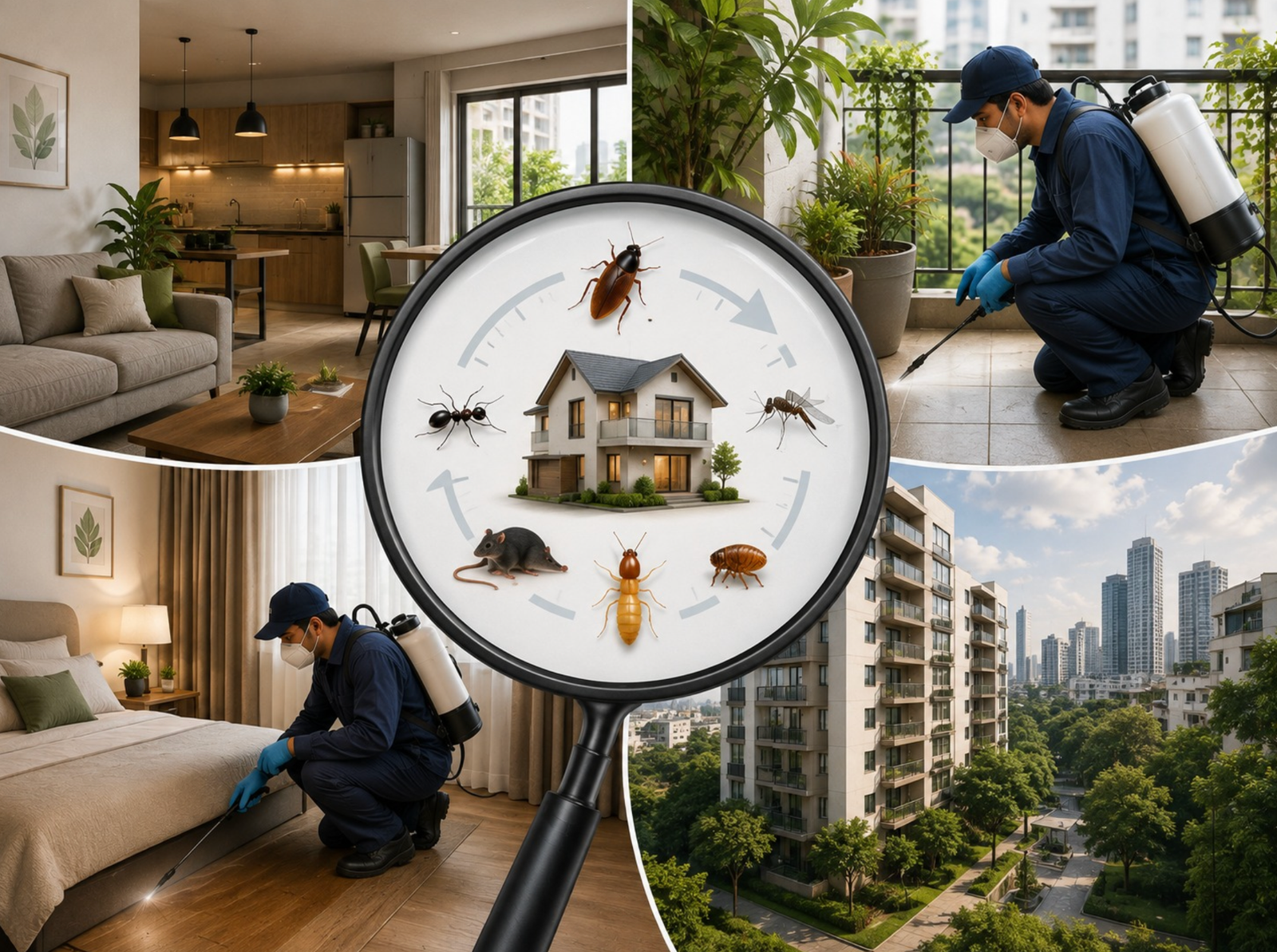
If you live in Bengaluru long enough, the question isn't how often should pest control be done, it's how long you can go before ants, cockroaches or rodents start claiming territory again. The right frequency isn't guesswork, though – it's a mix of your locality, building type, and how you use your home.
Get the timing right and you avoid repeat infestations, health issues, and the cost of emergency visits. Get it wrong and you'll keep calling a technician every few months, wondering why the problem never really goes away.
How Often Should Pest Control Be Done In Bangalore Homes?
For most Bengaluru apartments and independent homes, a good thumb rule is a pest control frequency of once every 4-6 months for general pests like ants, cockroaches and silverfish. That usually keeps activity low through both summer and monsoon.
If you've had a serious infestation in the past year – heavy cockroach activity, bed bugs, or rodents – plan a more aggressive schedule for the next 12 months, then move back to maintenance visits once things stabilise.
How Often Should Pest Control Be Done: Quick Scenarios
In a typical 2BHK in a gated community, a yearly plan with two visits is usually enough as a baseline home pest control schedule, unless there's a specific issue like bed bugs. Smaller 1BHK homes with good maintenance and no pets can often work with a single annual visit plus a quick inspection mid-year.
On the other hand, if your flat is on the ground floor facing a garden or open drain, expect to need service at least three times a year for the first cycle to keep cockroaches and mosquitoes under control.
Not sure how often your home actually needs pest control? Get a free assessment based on your floor, locality, and pest history.
Book Free Inspection Call NowSeasonal Pest Control Schedule For Bangalore's Climate
Bengaluru's relatively mild temperatures hide one important detail: pests stay active almost all year, which has a direct impact on your pest control schedule. The patterns change slightly between pre-monsoon, monsoon, and the cooler months.
Think of your year in three blocks – March to May, June to October, and November to February – and plan treatment dates just before the two main activity spikes.
Monsoon And Post-Monsoon: High-Risk Period
Monsoon (June-October) is the peak time for cockroaches, flies, and mosquitoes, so pest management is most effective if you schedule a visit right before the rains start. The chemicals have time to settle, and you get maximum protection when dampness and organic waste attract insects.
Post-monsoon is when you might start seeing more spiders and occasional termites, especially in lower floors and older buildings that already had moisture problems.
Summer And Cooler Months: Maintenance Mode
Pre-summer treatment in March or April is usually when technicians focus on cracks, drains, balconies, and utility ducts for long-lasting residential pest control. The goal here is to block the easy entry points before pests become active again.
Through November to February, you may not see as many crawling insects, but rodents and ants tend to move indoors for warmth and food, so you still need to keep an eye out.
Annual Pest Control Vs More Frequent Visits
Many Bengaluru households try to manage with just annual pest control, often linked to building maintenance or society drives. That can work if the building is well maintained, garbage is handled properly, and there's no major history of infestation.
The catch is that chemicals don't last forever. Most gel and spray treatments for common pests have a residual effect of three to five months in real-world conditions, sometimes less if the house is cleaned heavily — which is exactly why follow-up treatment matters as much as the first visit.
When Once A Year Is Enough
If your flat is on a higher floor, has good ventilation, and no open drains nearby, yearly preventive pest control is usually sufficient. This applies especially to newer constructions with sealed windows and good plumbing.
Families that cook less often at home, or keep a strict cleaning routine around the kitchen and utility areas, can often stretch the gap between visits without seeing a spike in activity.
When You Need Quarterly Or Bi-Monthly Visits
Ground and first-floor homes next to vacant plots, stormwater drains, lakes, or open garbage spots almost always need a tighter pest prevention plan. In these cases, quarterly visits are realistic rather than "extra".
Homes with elderly people, infants, or immunocompromised family members also benefit from more frequent treatments, because small pest issues can quickly become health concerns.
Overdue for a seasonal treatment? Book your next pest control visit with Standard Pest Control before the next activity spike.
Book Free Inspection WhatsApp UsPest Type: How It Changes Your Pest Control Frequency
The type of pest problem you face often matters more than your pin code when fixing pest control frequency. A single ant trail doesn't need the same follow-up as a confirmed bed bug infestation.
Once a technician identifies the specific pest, they'll usually recommend a series of visits instead of a one-time spray, even if that sounds more expensive upfront.
Common Pests And Suggested Schedules
- Cockroaches and ants: One major treatment plus a follow-up after 3-4 months; then move to 6-monthly preventive pest control.
- Bed bugs: Minimum two visits spaced 10-15 days apart, often a third inspection visit; future pest inspection every 6 months if you've had repeat issues.
- Rodents: Multiple visits over 4-6 weeks to close entry points and monitor traps, then quarterly checks — watch for the early signs of rodent infestation as part of your wider pest management plan.
- Termites: A full chemical barrier or drilling treatment, then yearly pest inspection to catch any new termite activity early.
The mistake most people make is stopping follow-up visits once the visible insects drop, which allows hidden eggs or nests to re-establish in a few weeks.
How To Build A Practical Pest Control Plan For Your Home
A good plan isn't just about booking a service; it combines treatment with habit changes so your next home pest control session can be on maintenance rather than crisis mode. That starts with checking how pests are getting in and what's keeping them there.
Spend a weekend tracking three things: sources of moisture, gaps and cracks, and regular food sources that might be encouraging insects and rodents.
Simple Steps Between Professional Visits
Small tweaks in routine can extend the gap between professional pest prevention services. Basic things like clearing kitchen counters at night, sealing snack containers, and washing dustbins weekly go a long way.
On balconies and utility areas, avoid storing cardboard boxes on the floor, since they attract cockroaches and provide perfect hiding places between pest control Bangalore visits.
- Wipe under gas stoves and refrigerators weekly, not just around them.
- Fix dripping taps and leaky pipes, especially under sinks.
- Use drain covers in bathrooms and utility areas overnight.
- Keep outside shoe racks raised slightly off the ground.
If you keep pets, clean their feeding area soon after meals and store food in sealed containers, as spillage is a major draw for ants and cockroaches.
When To Call A Professional Immediately
There's a difference between one stray ant and multiple trails across rooms. Some signs mean you shouldn't wait for your next scheduled residential pest control visit, because the infestation has already taken hold.
Fast action saves money in these cases, because early-stage treatment usually requires fewer chemicals, fewer visits, and less disruption.
Red Flags You Shouldn't Ignore
- Live or dead cockroaches seen in the daytime, which indicates a heavy infestation.
- Bed bug stains on mattresses or repeated bites across arms and legs.
- Rodent droppings in kitchen cabinets or noises in false ceilings at night, pointing to a growing pest control need.
- Fine mud tubes or hollow-sounding wood on doors, indicating possible termite activity that needs specialised pest control frequency planning.
In these situations, don't try to manage with strong over-the-counter sprays alone, as you'll often drive pests deeper into walls without actually eliminating them.
Frequently Asked Questions
How often should pest control be done in Bangalore homes?
For most apartments and independent homes, once every 4-6 months for general pests like ants, cockroaches and silverfish is a good baseline. If you've had a serious infestation in the past year, plan a more aggressive schedule for the next 12 months before moving back to maintenance visits.
Is once-a-year pest control enough?
It can be, if your flat is on a higher floor, has good ventilation, and no open drains nearby — this applies especially to newer constructions with sealed windows and good plumbing. Ground and first-floor homes near vacant plots, drains, or garbage spots usually need quarterly visits instead.
How long do pest control chemicals actually last?
Most gel and spray treatments for common pests have a residual effect of three to five months in real-world conditions, sometimes less if the house is cleaned heavily — which is why follow-up visits matter as much as the first treatment.
How many visits does a bed bug infestation need?
A minimum of two visits spaced 10-15 days apart, often with a third inspection visit, and a follow-up pest inspection every 6 months if you've had repeat issues.
Does the type of pest change how often I need treatment?
Yes. Cockroaches and ants typically need one major treatment plus a follow-up after 3-4 months, rodents need multiple visits over 4-6 weeks to close entry points, and termites need a full barrier or drilling treatment followed by a yearly inspection.
When should I call a pest control professional immediately instead of waiting for my next scheduled visit?
Call right away if you see live or dead cockroaches in the daytime, bed bug stains or repeated bites, rodent droppings or noises in false ceilings, or mud tubes and hollow-sounding wood that could indicate termites.
Conclusion
For most Bengaluru homes, the honest answer to how often should pest control be done is this: at least twice a year for general pests, more often if your building or locality has known issues. The right timing, paired with small changes at home, keeps infestations from flaring up again.
If you're unsure where your home fits, speak to a local technician at Standard Pest Control for a quick assessment, then commit to a realistic schedule that protects your family's health and comfort through every season.
Related reading: Why Follow-Up Treatment Is Necessary | How to Choose the Best Pest Control Company in Bangalore: 12 Expert Tips | Cockroach Control Bangalore: Prevention Tips & Services | Bed Bug Treatment Bangalore: Spot & Stop Infestations Fast | Signs of Rodent Infestation You Should Never Ignore | Signs of Termite Infestation in Homes | Annual Pest Control AMC: Is It Worth the Investment for Bangalore Homes? | Monsoon Pest Control Checklist for Bangalore Homes: Protect Your Family from Seasonal Pests