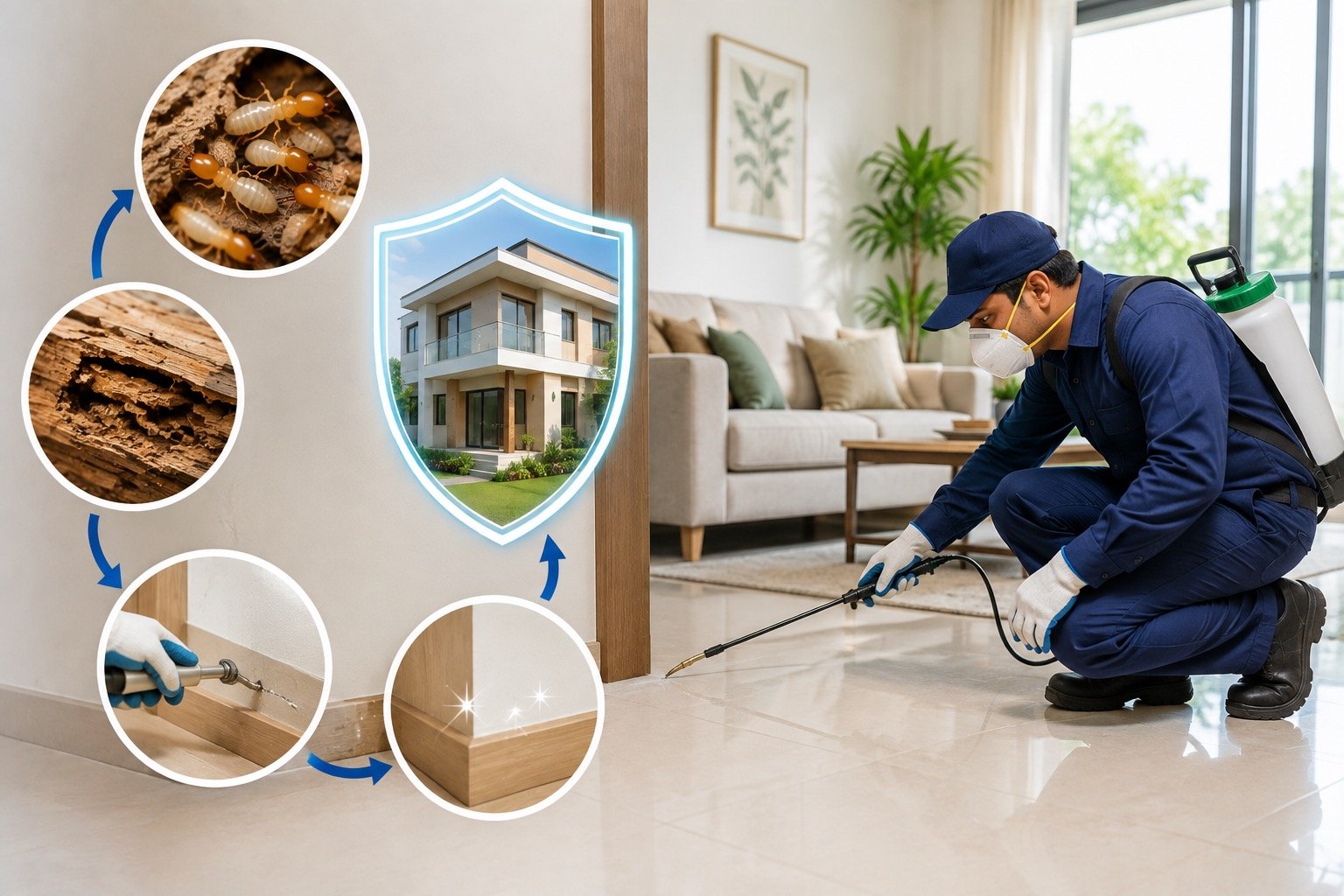
You've had pests treated and the house finally feels under control. So when the technician talks about a pest control follow up treatment, it can sound like an upsell instead of a necessity.
The truth is, one visit rarely finishes the job, especially with termites in Indian conditions. Humidity, hidden timber, shared walls, and older construction all give pests a second chance unless you follow a proper schedule.
Why One Termite Visit Is Almost Never Enough
Termites don't move like cockroaches that scatter when you spray; a termite follow up treatment is about reaching the colony you can't see. The first visit usually hits the obvious activity – mud tubes on the wall, damaged door frames, or infested furniture – but the workers feeding those areas may only be a fraction of the colony.
In most Indian homes, termites nest inside soil under the plinth or in damp spots close to the foundation. That main nest can keep sending new workers for weeks, which is why skipping the second visit is the fastest way to see fresh mud tubes in the same place.
What Actually Happens in a Pest Control Follow Up Treatment
Homeowners often expect the technician to simply repeat the spray, but a good follow-up is more strategic. On the second termite treatment visit, the technician checks how the earlier chemicals or baits have been taken up and whether activity has shifted to new areas.
If fresh damage or live insects show up, they're mapped and marked, and the technician may adjust the product or application method. Done properly, this repeat pest control visit is where most of the fine-tuning happens, not the first day.
Overdue for a follow-up visit? Book your next termite recheck before fresh activity spreads.
Book Free Inspection Call NowWhy Termites Need Their Own Maintenance Plan
Termites aren't seasonal visitors; they're a year-round structural risk, so a basic ant or cockroach package won't cover long term termite protection. The products used against termites are designed to bind with soil or wood and last months, but they still have limits in heavy rain or where plumbing leaks keep areas constantly damp.
That's why many technicians recommend a termite maintenance schedule that includes yearly checks and targeted re-treatments on vulnerable sides of the building, such as wall-floor junctions, garden beds, or places where wooden frames touch masonry.
How a Pest Management Plan Protects Your Home
For serious infestations, a structured pest management plan is safer than calling only when you see visible damage. The plan usually starts with a full inspection, then a main treatment, followed by scheduled rechecks every 30–90 days in the first year.
Those rechecks pick up early signs of new galleries, moisture problems, or structural gaps that could let termites back in, saving you from expensive repairs to beams, doors, and built-in furniture.
The Role of Follow Up Pest Inspections and Monitoring
A proper follow up pest inspection is not a five-minute walk-through. Done right, it means opening inspection covers, tapping timber, checking skirting boards, and revisiting each area marked during the first treatment.
Technicians also look for subtle signs people usually miss: fine soil deposits under furniture, faint blistering in laminate, or hairline cracks in wall plaster that line up with old mud tubes. This post treatment inspection is how they confirm the treatment is moving in the right direction instead of relying on guesswork.
Why Complete Termite Removal Takes Time
Many homeowners ask for a guarantee of complete termite removal after the first day, but that isn't how colony biology works. In soil-based colonies, there can be thousands of individuals spread across different chambers linked by tunnels.
Modern products are designed so workers carry them back into the nest, passing the active ingredient between termites over days or weeks. Follow-up visits check that this transfer is happening, and that new feeding points haven't opened up in other parts of the property.
Still seeing activity after your first treatment? That's not always a failure — let us confirm what's happening.
Book Free Inspection WhatsApp UsUnderstanding Your Pest Control Warranty
Most professional companies in India offer some form of pest control warranty on termite treatments, but many homeowners don't read the fine print. The warranty almost always depends on allowing the scheduled follow-up visits and not disturbing treated soil around the foundation or drill points.
If you do major renovations, cover treated areas with new tiling, or change plumbing, you'll usually need a new inspection so the technician can confirm that key barriers are still intact and the original protection level remains valid.
How Often Do You Need Repeat Visits?
For heavy infestations, repeat pest control is typically scheduled 30–45 days after the first visit, then at 3, 6, or 12 months depending on the product used. Apartments with shared walls and service ducts may need closer monitoring than independent homes with clear foundation access.
In high-risk zones with nearby vacant plots, timber storage, or previous damage, technicians sometimes recommend a tighter schedule for the first year, then relaxing to annual checks once the structure stays clear.
What to Expect After Your Second Termite Treatment
After a second termite treatment, you may still see a few winged termites or dead workers for a short period. That doesn't always mean failure; it can be a sign that the colony is disturbed and collapsing as treated individuals move back and forth.
The important thing is trend: fewer fresh mud tubes, no spreading damage, and silent, solid timber when tapped. If anything new shows up between visits, don't wait for the next appointment – call the service team so they can inspect before the problem expands.
Simple Steps to Support Long Term Termite Protection
Your technician can treat the structure, but daily habits keep it protected. Don't store firewood, cardboard, or garden waste directly against outside walls, and fix plumbing leaks quickly so walls and floors can dry out between monsoons.
Make a habit of checking skirting boards, window frames, and door jambs when you clean. If you see fresh mud lines, hollow-sounding wood, or flaky paint near the floor, book a follow up pest inspection instead of patching the surface and hoping it goes away.
The Bottom Line on Pest Control Follow-Up Treatment
Skipping a pest control follow up treatment is like stopping a course of medicine halfway through – the symptoms ease, but the problem returns stronger and more expensive. Consistent inspections, scheduled re-treatments, and simple home habits together keep termites from reclaiming your walls and furniture.
If you've recently had termites treated or are still seeing suspicious signs, book your next visit with Standard Pest Control and ask the technician to walk you through the recommended follow-up schedule for your property so you can keep your home protected year after year.
Related reading: 12 Expert Tips to Choose the Best Pest Control Company | Pest Control Near Me: What to Look for Before Hiring | Why Choose Standard Pest Control in Bangalore | Common Myths About Termite Control | Termite Audit Before Home Renovation | Can a ₹15,000 Treatment Save You ₹5 Lakhs in Repairs? | Signs of Termite Infestation in Homes | Pest Control Careers: What It Takes to Be a Professional Exterminator | How Often Should Pest Control Be Done in Bangalore? Expert Recommendations for Every Home