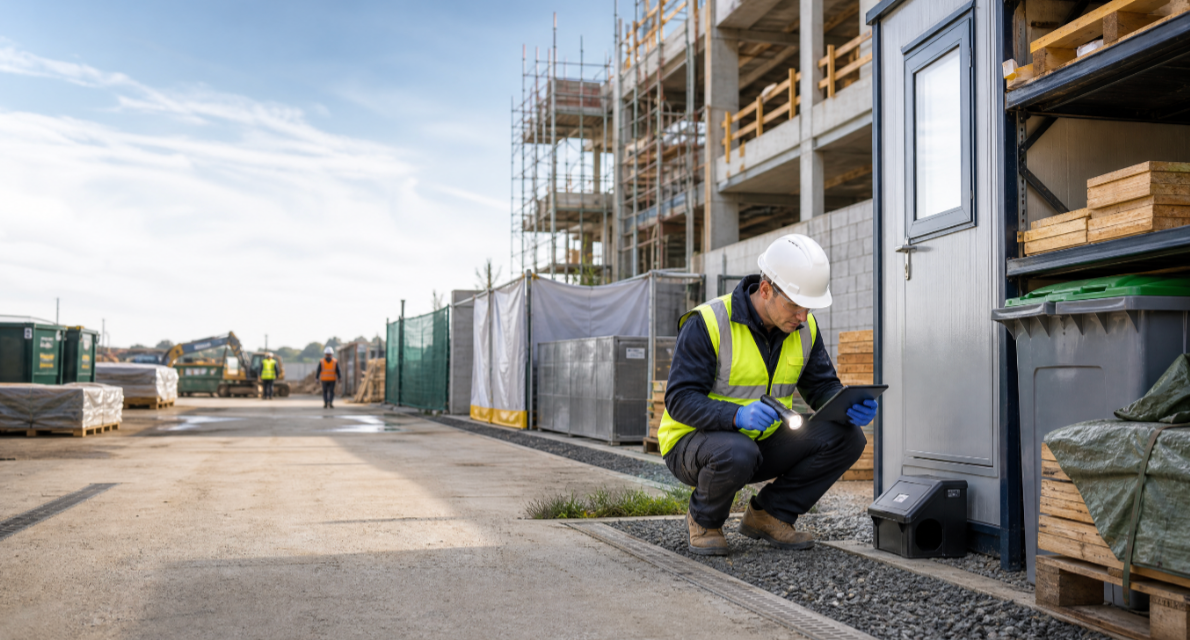
Construction sites are constantly changing environments. Excavation, demolition, material storage, temporary shelters, food waste, standing water and disturbed soil can suddenly create favourable conditions for rodents, mosquitoes, cockroaches, ants, flies and termites.
Some infestations may be temporary, appearing during particular stages of construction. However, if they are ignored, pests can spread into site offices, worker facilities, storage areas and eventually the completed building.
Effective pest control for construction sites therefore requires more than occasional pesticide spraying. A planned Integrated Pest Management (IPM) programme can help control current pest activity while reducing the risk of pests becoming established in the finished property. For professional commercial pest-management services in Bangalore, visit Standard Pest Control.
Why Construction Sites Attract Pests
Construction changes the existing environment. Excavation may disturb rodents and insects already living on the land, while building activity creates new hiding places. Common attractions include:
- Construction debris
- Temporary sheds
- Food waste
- Open garbage
- Standing rainwater
- Drainage pits
- Stored materials
- Pipes and ducts
- Soil disturbance
- Worker accommodation
As construction progresses, the pest risks can change considerably. This is why pest management should evolve with the project.
What Are Temporary Pest Infestations?
A temporary infestation is pest activity associated with a particular construction condition or stage. For example, excavation may disturb rats living underground and cause them to move toward temporary buildings. Rainwater collecting in unfinished structures may create mosquito breeding sites.
The original condition may disappear later, but that doesn't mean the pest problem should be ignored. If pests find reliable food, water and shelter, a temporary problem can become permanent.
Common Pests on Construction Sites
1. Rodents
Rats and mice can become a major problem on construction projects. They may shelter around:
- Material stacks
- Temporary cabins
- Drainage
- Storage rooms
- Debris
- Site boundaries
Rodents can damage stored materials and electrical wiring and contaminate food areas. For professional rodent management, see Rodent Pest Control Bangalore.
2. Mosquitoes
Construction sites can accidentally create numerous mosquito breeding locations. Watch for stagnant water in:
- Excavation pits
- Buckets
- Drums
- Tarpaulins
- Containers
- Unfinished floors
- Drainage channels
- Equipment
- Water tanks
During Bangalore's rainy periods, these locations should be inspected particularly frequently. See Mosquito Pest Control Bangalore.
3. Cockroaches
Cockroach problems commonly develop around:
- Worker kitchens
- Canteens
- Temporary toilets
- Site offices
- Garbage areas
- Drainage
Food, water and shelter can allow populations to grow quickly. See Cockroach Pest Control Bangalore.
4. Flies
Food waste, garbage and organic matter can attract flies. Repeated fly activity around worker eating areas usually indicates that sanitation or waste management needs improvement. Removing breeding sources is more important than repeatedly treating adult flies.
5. Ants
Soil excavation and landscaping can disturb ant colonies. Ants may then move toward:
- Site offices
- Canteens
- Worker accommodation
- Food-storage areas
See our complete guide to ant control for treatment options.
6. Termites
Termites deserve special attention because construction provides an opportunity to establish long-term protection before the building is completed. Where appropriate, pre-construction anti-termite treatment may be incorporated at specified construction stages.
Treatment should follow applicable specifications, approved product labels and project requirements. For professional termite management, see Termite Control Bangalore.
Pest Risks Change During Each Construction Stage
One pest-control plan should not simply remain unchanged throughout the project.
Site Clearing & Excavation
Main concerns may include rodents, ants, termites and displaced wildlife.
Foundation & Plinth Stage
Termite-prevention measures become particularly important, as covered in our guide to pre-construction anti-termite treatment.
Structural Construction
Standing water, worker facilities and debris may increase mosquito, fly and rodent activity.
Interior Work
Enclosed areas begin providing harbourage for cockroaches and rodents.
Finishing Stage
Pest proofing becomes critical before the building is handed over.
Pre-Handover
A detailed inspection can identify remaining pest activity and structural entry points.
Start With a Construction-Site Pest Risk Assessment
Before beginning a pest-control programme, inspect:
- Site boundaries
- Excavation
- Drainage
- Material-storage areas
- Temporary offices
- Worker accommodation
- Canteens
- Toilets
- Garbage areas
- Water-storage areas
Record both existing pest activity and conditions likely to support future infestations.
Construction Debris Creates Harbourage
Unnecessary piles of timber, cardboard, packaging, pipes, scrap and building materials can create protected hiding places. Follow good housekeeping practices and remove unnecessary waste. Where practical, keep stored materials organized and accessible for inspection.
Material Storage Matters
Poorly organized material storage makes pest detection difficult. Keep storage areas organized, clean and inspectable. Where appropriate, keep suitable materials raised from the ground and avoid unnecessary contact with walls. This makes signs such as droppings and gnawing easier to detect.
Not sure what's causing the problem? Get a professional inspection before you decide on treatment.
Book Free Inspection Call NowStanding Water Requires Immediate Attention
Mosquito management on construction sites should begin with source reduction. Conduct regular water inspections and ask where rainwater can collect on the site. Check the property after rainfall.
Where practical and compatible with construction requirements:
- Drain accumulated water
- Cover containers
- Correct blocked drainage
- Remove unnecessary water-holding materials
Don't rely solely on fogging while breeding sites remain active.
Rodent Management Around Site Boundaries
Rodents may move onto a construction site from drains, vacant land, garbage areas or neighbouring properties. Monitor the external perimeter and look for:
- Burrows
- Droppings
- Tracks
- Gnawing
- Rodent pathways
High-risk sites may benefit from a documented rodent-monitoring programme.
Create a Rodent Monitoring Map
Monitoring points can be numbered, for example:
- R01 – Main Gate
- R02 – Worker Canteen
- R03 – Material Storage
- R04 – Garbage Area
- R05 – Site Office
- R06 – Rear Boundary
Record activity during every inspection. This helps identify where rodent pressure is increasing.
Worker Canteens Are High-Risk Areas
Food areas can quickly become pest hotspots. Maintain covered food, clean floors, clean preparation areas, proper food storage and covered waste containers. Clean food residues at the end of every shift — a rodent-control programme will struggle if food remains freely available overnight.
Temporary Toilets and Wash Areas
Water and sanitation facilities should be included in pest inspections. Check drainage, leaks, standing water and waste management. Poorly maintained facilities may contribute to cockroach, fly and mosquito activity.
Site Offices Need Pest Protection Too
Temporary site cabins often contain documents, electrical equipment, staff food and furniture. Keep doors and structural gaps properly maintained and control food storage. Rodents and cockroaches can easily move from external construction areas into these quieter indoor spaces.
Pest Control for Worker Accommodation
Where accommodation is provided, additional hygiene and pest-management measures may be required. Pay attention to food storage, waste, bathrooms, bedding and drainage. Any suspected bed bug activity should be professionally inspected and correctly identified.
Pre-Construction Anti-Termite Treatment
Termite prevention is one area where the construction phase provides a major opportunity. Depending on project specifications, anti-termite treatment may involve designated stages around foundations, plinth areas, soil interfaces or other specified construction locations.
The exact treatment method, concentration and application rate should follow the approved pesticide label and applicable project or regulatory specifications. Planning termite protection during construction can be significantly easier than addressing hidden termite activity after occupation, as outlined in our piece on building a termite-proof future.
Protect Treated Termite Areas
Anti-termite work should be coordinated with construction teams. If treated soil is subsequently excavated, removed, disturbed or replaced, the pest-management contractor should be informed. Good communication between civil engineers and pest-control teams is essential.
Ready to get this sorted? Ask us about a structured, documented treatment plan.
Book Free Inspection WhatsApp UsPre-Handover Pest Proofing
As the project approaches completion, inspect potential pest entry points. Check:
- Utility penetrations
- Pipe openings
- Doors
- Windows
- Drainage
- Service shafts
- False ceilings
Correcting these before occupancy can reduce future pest problems.
Avoid Unnecessary Blanket Spraying
Construction-site pest control should be targeted:
- Mosquitoes → locate standing water
- Rodents → find food sources, harbourage and entry routes
- Cockroaches → inspect kitchens, drains and sanitation
- Termites → follow construction-stage prevention protocols
This approach is more sustainable than repeatedly spraying the entire site.
Integrated Pest Management for Construction Sites
A strong construction IPM programme follows: Inspect → Identify → Remove Attractants → Improve Sanitation → Monitor → Treat Target Areas → Document → Review. As the construction stage changes, repeat the assessment.
Worker Pest-Awareness Training
Workers can provide valuable information because they see the site every day. Encourage reporting of:
- Rodent sightings
- Burrows
- Cockroaches
- Mosquito breeding
- Standing water
- Unusual insect activity
This is the same principle behind our Employee Training for Pest Awareness in the Workplace programme.
Create a Pest-Sighting Register
A simple format can be used: date, location, pest or sign, number seen, and corrective action. For example: "15 Aug — Worker Canteen — Rat droppings — Multiple — Inspection and sanitation correction initiated." Over time, this provides useful trend information.
Pest-Control Documentation for Construction Projects
Maintain records such as:
- Inspection reports
- Service reports
- Rodent-monitoring records
- Corrective actions
- Termite-treatment records
- Areas treated
- Product information where applicable
- Follow-up observations
For pre-construction termite projects, maintaining treatment-stage documentation can be particularly valuable for project records and handover.
Pest Control Before Building Handover
Before final handover, conduct a comprehensive pest inspection. Review:
- Basements
- Electrical rooms
- Service shafts
- Parking areas
- Drainage
- Kitchens
- External boundaries
- Landscaping
The goal is to avoid transferring a construction-phase pest problem to the future occupants.
After Construction: Transition to Building Pest Management
Once construction is complete, pest risks change again. The construction programme should transition into an appropriate programme for the completed property, for example:
- Construction Site → Residential Apartment Pest Programme
- Construction Site → Office Pest Management
- Construction Site → Hotel Pest Management
- Construction Site → Hospital Pest Management
Planning this transition helps provide continuity.
Professional Pest Control for Construction Sites in Bangalore
Standard Pest Control provides professional pest-management solutions for commercial properties and construction projects in Bangalore. Construction-site pest programmes can be planned around:
- Rodent management
- Mosquito management
- Cockroach treatment
- Ant management
- Pre-construction termite treatment
- Pest monitoring
- Site sanitation recommendations
- Structural pest-prevention recommendations
- Documentation and follow-up
For specialized services, visit Rodent Pest Control Bangalore, Mosquito Pest Control Bangalore, Cockroach Pest Control Bangalore or Termite Control Bangalore.
Frequently Asked Questions
Why do construction sites attract rats?
Construction debris, temporary structures, worker food, garbage and surrounding drains can provide rats with food and shelter.
Why are mosquitoes common at construction sites?
Unfinished buildings and equipment can collect rainwater, creating temporary mosquito breeding sites.
Is fogging enough for construction-site mosquitoes?
Fogging may reduce adult mosquitoes temporarily, but breeding-source management is essential for longer-term control.
When should anti-termite treatment be performed during construction?
The treatment schedule depends on the construction method, project specification and applicable standards. Pre-construction treatment is typically coordinated with specific building stages before relevant areas become inaccessible.
Can construction debris attract pests?
Yes. Unnecessary debris and poorly organized materials can provide hiding places for rodents, insects and other pests.
How can construction workers help prevent pests?
Workers can maintain clean food areas, dispose of waste properly, prevent standing water and report pest activity quickly.
How often should a construction site be inspected?
Inspection frequency should reflect the site's pest pressure, construction stage, weather and sanitation conditions. High-risk or rapidly changing sites may require more frequent monitoring.
Should rodent bait be placed throughout a construction site?
Rodent-control products should be used only where appropriate, secured against unauthorized and non-target access, and strictly according to their approved labels. Monitoring, sanitation and habitat management should also form part of the programme.
What happens to pest control after construction ends?
The temporary construction programme should transition into an ongoing pest-management plan appropriate for the completed building.
What is the best pest-control strategy for construction sites?
A customized Integrated Pest Management programme combining sanitation, water management, pest monitoring, structural prevention, targeted treatment and documentation provides the strongest approach.
Final Thoughts
Construction sites are temporary environments, but pest problems created during construction do not always remain temporary. Rodents can establish harbourage. Mosquitoes can breed in standing water. Cockroaches can spread through worker facilities. Termites can become a long-term threat to the completed structure.
The strongest approach is: keep the site clean, manage waste, remove standing water, monitor rodents, protect food areas, coordinate termite prevention, and pest-proof before handover.
The best time to prevent tomorrow's pest problem may be while the building is still being built. For professional pest-management services in Bangalore, visit Standard Pest Control.
Related reading: Employee Training for Pest Awareness in the Workplace: Building a Pest-Smart Team | The Unseen Shield: Pre Construction Anti Termite Treatment | Building a Termite-Proof Future: Pre Construction Treatment Stages | Pest Control for Warehouses and Storage Facilities: Protecting Goods from Damage | IPM for Commercial Properties: A Strategic Approach to Business Protection | Documentation in Commercial Pest Control: Why Records Matter