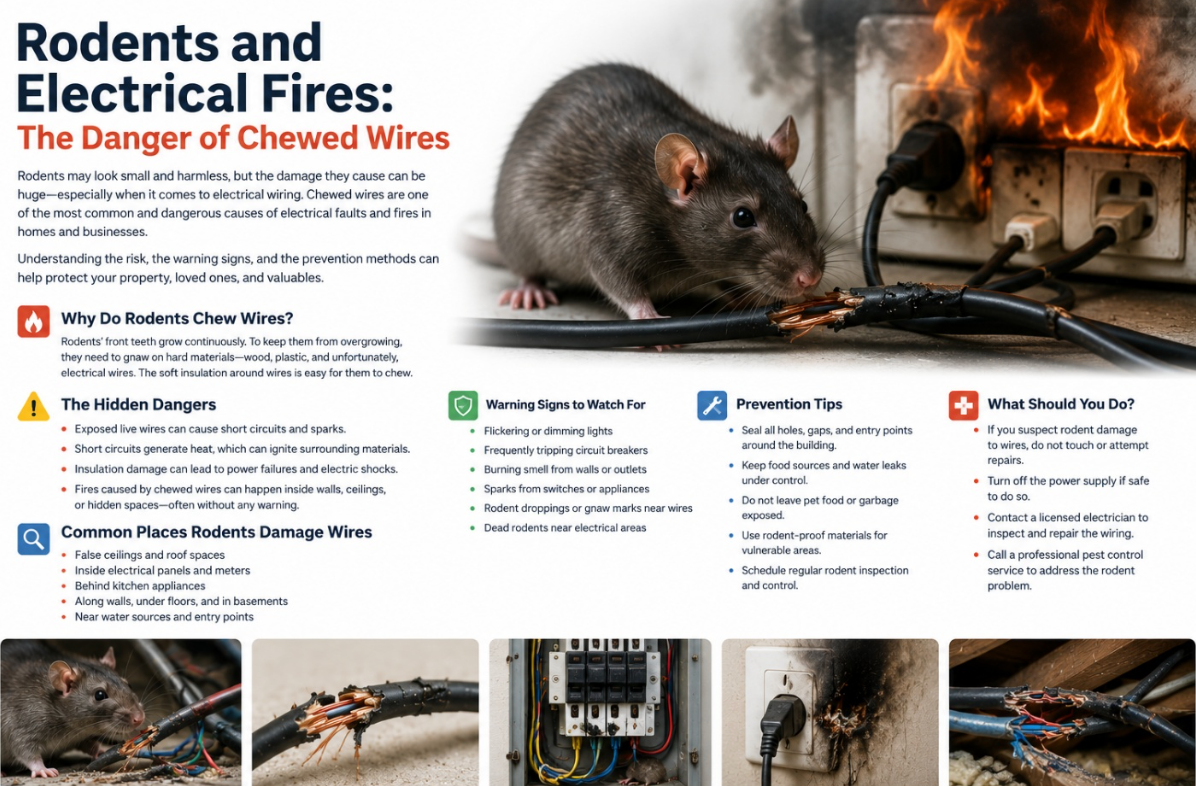
When most homeowners think about rats and mice, they usually worry about droppings, contaminated food, unpleasant noises, or damaged food packets. But there is another rodent risk that can remain completely hidden: electrical wiring damage.
Rats and mice are natural gnawers. When rodents enter false ceilings, wall cavities, electrical rooms, kitchens, attics, warehouses, or other concealed spaces, electrical cables can become targets for gnawing.
If the protective insulation surrounding a cable is damaged, electrical conductors may become exposed. Depending on the electrical system and extent of damage, this can contribute to short circuits, electrical faults, equipment damage, electric-shock hazards, overheating, and potentially fire.
That means scratching sounds above your ceiling may be more than an annoying nighttime disturbance. They can be a warning that deserves investigation.
Why Do Rats And Mice Chew Electrical Wires?
Rodents don't usually chew electrical wires because they want to eat them. Gnawing is part of normal rodent behaviour. Rats and mice belong to the order Rodentia, and one of their defining characteristics is continuously growing incisors.
They regularly gnaw materials such as wood, plastic, cardboard, packaging, building materials and cable insulation. Electrical wires may simply be located along their movement routes. The problem is that even a relatively small amount of gnawing can damage the insulation designed to protect electrical conductors.
Why Chewed Electrical Wires Can Be Dangerous
Electrical cable insulation serves an important safety function — it helps separate conductive components from people, other wires, and surrounding materials. When a rodent damages this protective layer, the electrical system may become vulnerable: damaged insulation can lead to exposed conductors, an electrical fault, heat or sparks, and potentially fire.
Not every chewed wire will start a fire. However, rodent-damaged wiring should never be ignored.
How Rodent Damage Could Contribute To An Electrical Fire
Imagine a rat living above a false ceiling. The rat repeatedly gnaws the insulation around an electrical cable. Eventually, part of the conductor becomes exposed. Depending on the circumstances, damaged conductors may create short circuits, arcing, overheating or electrical faults.
If sufficient heat or sparks reach combustible materials, a fire could potentially develop. This becomes particularly concerning because rodent damage frequently occurs in concealed spaces.
Hearing scratching near your ceiling wiring or fuse box? Get a free inspection before it becomes an electrical problem.
Book Free Inspection Call NowThe Hidden Danger: Damage Behind Walls And Ceilings
A chewed cable lying openly on the floor is relatively easy to notice. But rodents prefer protected areas. Electrical damage may therefore occur inside false ceilings, behind walls, under floors, inside service shafts, behind appliances, in roof spaces, or around utility areas.
You may not see the damage until another symptom appears. This is why evidence of rodents near electrical infrastructure should be taken seriously.
Common Warning Signs Of Rodent Activity Near Wiring
Watch for a combination of pest and electrical warning signs.
Pest signs: scratching inside walls or ceilings, rodent droppings near cables, gnaw marks, damaged plastic insulation, nesting material near electrical areas, and repeated rodent sightings.
Electrical signs: flickering lights, repeatedly tripping circuit breakers, unusual electrical smells, sparks, and unexpected electrical faults.
Electrical symptoms can have many causes unrelated to rodents. If you notice them, have the electrical system assessed by a qualified electrician.
Burning Smells Should Never Be Ignored
A burning or unusual electrical smell deserves immediate attention. Do not assume "it is probably just a rat." A burning smell may indicate an electrical problem requiring urgent professional assessment.
If there is smoke, visible fire, or an immediate danger, leave the affected area and contact the appropriate emergency service. Pest-control treatment should never replace electrical safety procedures.
Where Do Rodents Commonly Damage Electrical Wires?
Rodents can damage cables almost anywhere they gain access. Some areas deserve particular attention.
1. False Ceilings
False ceilings provide dark, protected movement routes. They can also contain extensive electrical wiring. Scratching above a false ceiling combined with electrical problems deserves investigation.
2. Behind Kitchen Appliances
Rodents may travel behind refrigerators, ovens, dishwashers and other equipment. These locations may provide warmth, food residue, water and shelter.
3. Electrical And Utility Rooms
Commercial buildings may contain dedicated electrical and service areas. Rodent access to these spaces should be prevented.
4. Attics And Roof Spaces
Roof rats are particularly capable climbers. They may access upper building areas through tree branches, utility lines, structural gaps and roof openings.
5. Basements
Basements can provide protected harbourage and may contain electrical infrastructure.
6. Warehouses
Warehouses often contain extensive wiring together with stored materials, pallets and packaging that can provide rodent harbourage.
Found gnaw marks on a cable or appliance cord? Have the rodent side and the electrical side both checked.
Book Free Inspection WhatsApp UsRats In False Ceilings: A Warning Sign
If you repeatedly hear scratching above your ceiling, don't ignore it. The rodent may be moving around electrical cables, internet cables, air-conditioning lines, insulation and plumbing. Even if no electrical problem has appeared yet, identifying and controlling the rodent early can reduce the chance of further damage.
Rodent Damage To Appliance Wiring
Electrical damage is not limited to wiring inside walls. Rodents may also damage cables connected to appliances such as refrigerators, washing machines, dishwashers, air conditioners, computers and kitchen equipment.
If you find obvious gnawing on an appliance cable, stop using the equipment if it is safe to do so and have the cable professionally assessed. Never cover serious electrical damage with ordinary tape and assume the problem is solved.
Rodents And Cars
Rodent wiring damage can also occur in vehicles. Engine compartments can provide rodents with sheltered spaces, and rodents may damage wiring harnesses, sensor cables, insulation and plastic components.
Symptoms may include warning lights, starting problems, sensor faults, or other electrical issues. A qualified automotive professional should inspect suspected vehicle wiring damage.
Commercial Properties Face Additional Risks
Rodent-related electrical damage can be especially concerning in commercial properties because they may contain large electrical systems and operate for long periods. Potentially affected sites include restaurants, hotels, hospitals, offices, warehouses, factories, schools, retail stores and commercial kitchens.
For businesses, a rodent problem can therefore involve more than hygiene — it may affect food safety, reputation, property, equipment, operations and electrical safety.
Rodents In Restaurants
Restaurants attract rodents because they can provide food, water and shelter. But modern commercial kitchens also contain extensive electrical equipment. Rodent activity behind refrigeration equipment, storage racks, cooking equipment and false ceilings should be addressed promptly. Preventive rodent monitoring is particularly important in food businesses.
Rodents In Warehouses
Warehouses may allow rodent populations to remain hidden because of pallets, cardboard, stored goods, large floor areas, loading doors and limited disturbance. Electrical cables may also run through inaccessible areas. A warehouse rodent-management program should therefore combine monitoring, sanitation, structural exclusion and appropriate control.
Rodents In Offices
An office may appear to contain little food, yet rodents can still enter. They may move through false ceilings, cable ducts, utility shafts, server areas and pantry areas. Rodent activity near IT infrastructure can be particularly disruptive.
Can Rodents Damage Internet And Data Cables?
Yes. Rodents may gnaw many types of cables, not only electrical power cables — this can include internet cables, communication cables, data cables and security-system wiring. Damage can cause connectivity problems and expensive repairs.
Can Rodents Cause A Short Circuit?
Rodent-damaged electrical wiring can contribute to short circuits if insulation damage allows conductors to contact each other or other conductive materials. However, electrical faults have many possible causes — a qualified electrician should determine the exact cause.
Pest-control professionals address the rodent problem. Electrical professionals address the damaged electrical system. Both may be necessary.
What Should You Do If You Find A Chewed Wire?
Treat the situation seriously. Do not touch exposed wiring, and keep children and pets away. If safe and appropriate, stop using affected equipment. Contact a qualified electrician to assess the electrical damage, then address the rodent infestation so additional wiring is not damaged.
The complete response combines electrical safety, rodent control and rodent proofing.
Never Attempt Unsafe DIY Electrical Repairs
A damaged electrical cable is not an ordinary household repair. Avoid touching exposed conductors, handling energized cables, attempting electrical repairs without appropriate qualifications, or continuing to use obviously damaged equipment. Rodent control and electrical repair are separate professional tasks.
How Professional Rodent Control Helps Protect Wiring
Professional rodent management begins with inspection. A technician may look for droppings, gnaw marks, nesting areas, movement routes, entry holes, food sources and water sources. Control measures can then be selected according to the property, including trapping, secured bait stations, monitoring, sanitation improvements and rodent proofing.
Rodent Proofing Is Critical
Catching existing rodents without sealing entry points can create a repeating cycle: a rodent enters, damages wiring, gets removed, and then a new rodent enters through the same open point. Long-term management should break that cycle.
Possible entry points include gaps around plumbing, utility penetrations, door gaps, roof openings, ventilation openings and structural gaps. Use appropriate rodent-resistant materials for exclusion — see our detailed guide on rodent exclusion for material recommendations by location.
Don't Seal Rodents Inside
Rodent proofing needs to be planned carefully. If an active rodent is inside a false ceiling and every exit is suddenly blocked, the animal may become trapped — this can result in additional gnawing, attempts to create new exits, odour if the animal dies, and further property damage.
The sequence should be based on the actual site: inspect, control existing activity, exclude, then monitor.
Sanitation Helps Protect Your Electrical System Too
Sanitation may seem unrelated to electrical fires, but consider the chain: food attracts rodents, rodents enter the building, rodents gnaw materials, and wiring may be damaged. Reducing rodent attraction reduces the opportunity for electrical damage.
Keep food securely stored, garbage covered, pet food protected, storage areas organized, and food residue cleaned — see our guide on sanitation and rodent control for more.
Landscaping Can Also Matter
For properties with gardens, vegetation can contribute to rodent access. Roof rats are capable climbers. Where appropriate, trim branches contacting buildings, reduce dense vegetation near structures, remove unnecessary outdoor clutter, and manage waste properly — see our full guide on landscaping for rodent prevention. The objective is to make the building less accessible and attractive.
Why Regular Rodent Monitoring Is Important
Waiting until a rat runs across the room means you are relying on visible sightings. But rodents are often active when people are asleep or buildings are quiet. Monitoring can detect activity through traps, monitoring stations, dropping inspections, gnaw marks, and digital rodent sensors in some commercial programs. Early detection may help prevent damage before it becomes serious.
Smart Rodent Monitoring And Electrical Risk
Modern commercial pest-management programs can increasingly use digital monitoring systems. A smart device may record rodent activity and alert the pest-management team — this can be particularly useful in data centres, warehouses, food facilities, hospitals and large commercial buildings. The goal is to detect rodent movement before extensive damage occurs.
What If You Hear Rats But Can't See Them?
This is common. Rodents may remain inside false ceilings, wall voids, service shafts or roof spaces. Record where and when you hear the activity — for example, "kitchen ceiling, 11:30 PM, repeated scratching." This information can help a rodent-control professional investigate likely movement routes.
Professional Rodent Control In Bangalore
Rodent problems occur in residential and commercial properties across Bangalore. Dense development, restaurants, drainage systems, construction, apartment utility networks, food businesses, and waste-management areas can all create opportunities for rodent activity.
Standard Pest Control provides professional rodent control services in Bangalore for apartments, independent houses, villas, restaurants, hotels, hospitals, offices, schools, warehouses, factories and commercial kitchens.
Our approach focuses on inspection, identification, control, rodent proofing, sanitation and monitoring. If electrical wiring has already been damaged, an appropriately qualified electrician should inspect and repair the electrical system.
Frequently Asked Questions
Can rats cause electrical fires?
Rodents can damage cable insulation through gnawing. In some circumstances, damaged wiring can contribute to electrical faults, overheating, arcing, short circuits, and potentially fire. Not every chewed cable causes a fire, but damaged electrical wiring should always be professionally assessed.
Why do rats chew electrical wires?
Rodent incisors continuously grow, so gnawing is a normal behaviour that helps maintain their teeth. Electrical cable insulation is one of many materials they may gnaw.
How do I know if a rat has chewed my wires?
Possible signs include visible gnaw marks, damaged cable insulation, droppings near wiring, rodent activity in ceiling or utility areas, or electrical problems. Electrical symptoms can have many causes, so professional assessment is important.
Can mice damage electrical wiring?
Yes. Mice can enter very small spaces and may gnaw cable insulation, communication wiring, appliance cables, and other materials.
What should I do if I find exposed electrical wiring?
Do not touch it. Keep people and pets away and arrange assessment by a qualified electrician. If rodents caused the damage, arrange rodent control and proofing as well.
Can rats damage wires inside false ceilings?
Yes. False ceilings can provide rodents with protected travel routes while also containing electrical and communication cables.
Can rodent damage cause circuit breakers to trip?
Damaged wiring can potentially contribute to electrical faults that trip protective devices. However, breakers can trip for many reasons, so a qualified electrician should identify the cause.
Can rats damage appliance cables?
Yes. Rodents may gnaw cables behind refrigerators, kitchen equipment, washing machines, and other appliances.
Does catching the rat solve the electrical risk?
No. Existing electrical damage must still be professionally assessed, and entry points should be addressed to reduce the chance of another rodent entering.
How can I prevent rodents from damaging wires?
Use an integrated approach involving rodent control, structural exclusion, food and waste management, clutter reduction, regular inspection, and monitoring.
Final Takeaway: Don't Ignore Scratching Near Electrical Areas
Rodent activity is not only a hygiene problem. It can also become a property and electrical-safety problem. The risk starts with something simple: a rat enters the building, finds protected harbourage, gnaws cable insulation, and the wiring becomes damaged — a fault, heat or arcing may then occur, creating potential fire risk.
The solution should address both sides of the problem. A rodent problem needs a pest-control professional. Damaged wiring needs a qualified electrician. For long-term prevention: inspect, control, repair, exclude, monitor.
If you hear rodents inside walls, false ceilings, electrical rooms, or other concealed spaces, don't wait for the wiring to reveal the problem. Investigate the rodent activity early and protect both your property and its electrical systems. For persistent rodent activity, Standard Pest Control provides pest-management services for homes and businesses across Bangalore.
Related reading: Rodent Exclusion: Sealing Entry Points to Keep Pests Out | Sanitation and Rodent Control: Eliminating Food and Water Sources | Landscaping for Rodent Prevention | Signs of Rodent Infestation You Should Never Ignore | Is Your IT Server Room a Breeding Ground for Rats? | How to Safely Clean Up Rodent Droppings and Urine | Are Rodents Dangerous? Diseases, Allergies, and Contamination