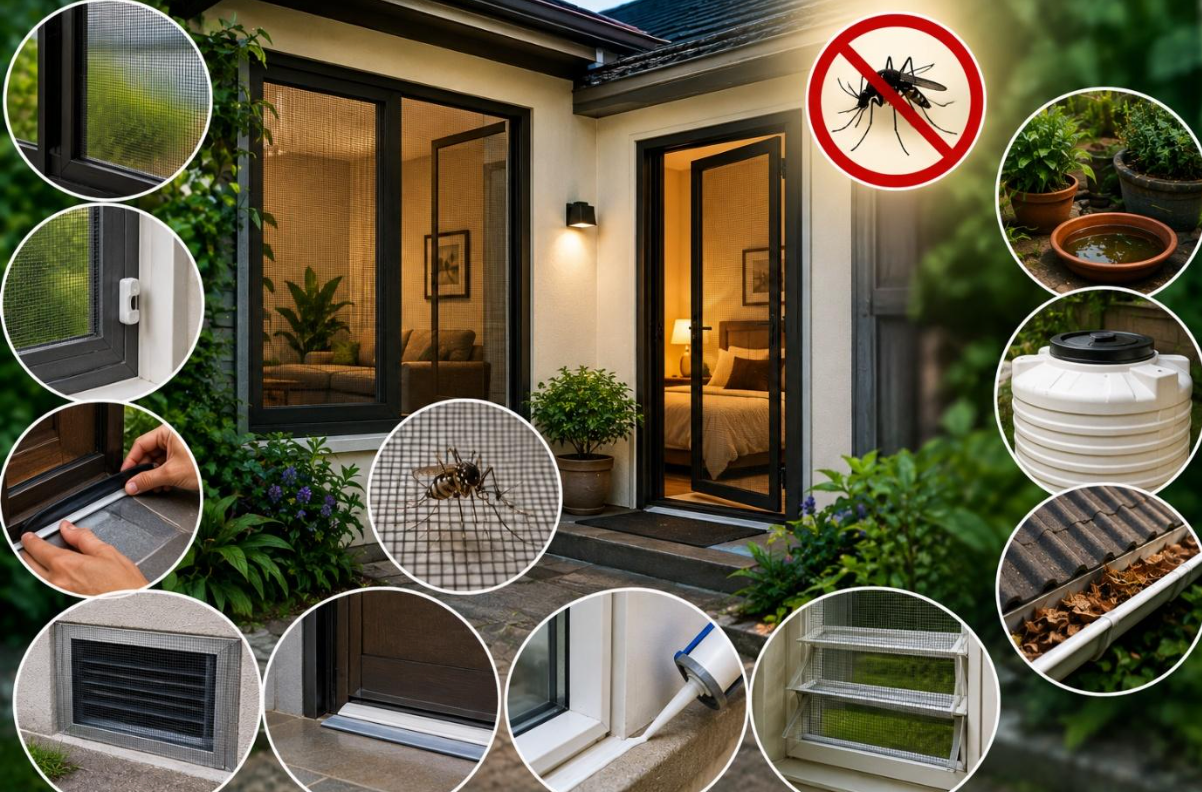
Mosquitoes don't need a wide-open door to enter your home. An open window, damaged mesh, gaps around doors, ventilation openings and frequent door movement can all provide opportunities for mosquitoes to get indoors. While professional mosquito treatment can reduce mosquito activity, preventing mosquitoes from entering your home is equally important.
Mosquito-proofing combines physical barriers, breeding-source reduction and good property maintenance. From installing window screens to eliminating standing water, these practical measures can significantly improve your overall mosquito-management program.
For persistent mosquito problems, visit Mosquito Control Bangalore – Standard Pest Control.
Why Are Mosquitoes Entering Your Home?
Before reaching for a mosquito spray, ask an important question: how are the mosquitoes getting inside? Common entry opportunities include:
- Open windows
- Doors left open
- Torn mosquito mesh
- Gaps around screens
- Unscreened ventilation openings
- Poorly fitted doors
- Utility openings
- Balcony access
- Other structural gaps
Mosquitoes may also be breeding very close to your house, increasing the number that eventually find their way indoors. Good mosquito-proofing therefore works in two directions: prevent entry and reduce mosquito breeding around the property.
1. Install Mosquito Screens on Windows
Window screens are one of the most useful physical barriers against mosquitoes. They allow ventilation while reducing the opportunity for mosquitoes and other flying insects to enter. Consider screens for frequently opened windows in:
- Bedrooms
- Living rooms
- Kitchens
- Bathrooms
- Utility areas
The important point isn't simply having screens—they need to fit correctly. A screen with gaps around its frame may still allow mosquitoes to enter.
2. Inspect Existing Screens for Damage
A tiny tear can compromise an otherwise good mosquito screen. Periodically inspect mesh for tears, holes, loose edges, damaged frames and gaps. Pay particular attention to older screens and frequently used windows.
Repair or replace damaged sections promptly. This is a simple, pesticide-free form of mosquito control that continues working every day.
3. Screen Balcony Doors
Balconies are one of the most common connections between indoor and outdoor spaces in Bangalore apartments. If balcony doors remain open for ventilation, consider suitable mesh or screen-door solutions. This can be especially helpful in homes with balcony gardens.
But don't stop at the screen. Check the balcony itself for mosquito breeding sources such as:
- Flowerpot saucers
- Buckets
- Containers
- Blocked drains
- Decorative water features
4. Seal Gaps Around Doors
Look underneath and around exterior doors. A poorly fitting door can leave openings that allow mosquitoes and other insects inside. Depending on the construction, appropriate solutions may include:
- Door sweeps
- Weather stripping
- Properly fitted frames
- Repairing damaged seals
The objective is straightforward: close unnecessary entry points without interfering with normal ventilation or safety. This exclusion principle is also used extensively in professional Pest Control Services Bangalore.
5. Keep Doors Closed When Practical
This sounds simple, but frequently opened doors can be a major entry route. This is particularly relevant for villas, ground-floor apartments, restaurants, offices, shops and hotels.
If doors need to remain open for operational reasons, businesses may need additional exclusion measures depending on the property. Physical prevention can reduce the number of mosquitoes entering and therefore reduce dependence on repeated indoor treatments.
6. Check Ventilation Openings
Bathrooms, kitchens and utility spaces often contain ventilation openings. Inspect them carefully. If an opening connects directly outdoors and lacks suitable screening, mosquitoes may potentially use it as an entry route.
Appropriate mesh can help where installation is practical and does not interfere with ventilation requirements. Also inspect exhaust openings, utility vents, service areas and other exterior openings. A professional pest inspection should look beyond doors and windows.
Not sure where mosquitoes are actually getting in? Get a professional inspection that checks entry points and breeding sources together.
Book Free Inspection Call Now7. Inspect Your Bathroom
If you frequently notice mosquitoes in the bathroom, don't immediately assume they are breeding inside the bathroom drain. Mosquitoes may simply be entering through windows, ventilation openings, service shafts or nearby openings.
However, persistent water accumulation and drainage problems should still be investigated. Identify the insect first and then determine the source.
8. Mosquito-Proof Your Bedroom
Nobody wants to hear a mosquito buzzing around at 2 AM. For better bedroom protection:
- Check Window Screens — Make sure they close completely.
- Inspect Gaps — Look around window and door frames.
- Use Bed Nets Where Appropriate — A properly used mosquito net creates an additional physical barrier while sleeping.
- Use Suitable Personal Repellents — Follow the product's label directions.
- Reduce Indoor Mosquito Entry — Keep unscreened windows closed during periods of significant mosquito activity when practical.
Physical barriers can provide valuable protection without depending entirely on insecticides.
9. Don't Ignore Your Balcony Garden
Plants themselves aren't necessarily creating mosquitoes. Water associated with the plants can be the problem. Inspect:
- Plant saucers
- Decorative pots
- Watering containers
- Buckets
- Drainage trays
Avoid leaving unnecessary standing water. Interestingly, some homeowners grow citronella, mint or lemongrass specifically because they believe the plants repel mosquitoes—while water is sitting underneath those same pots.
10. Eliminate Standing Water Around the Property
Mosquito-proofing isn't limited to sealing your house. Reducing mosquito populations immediately outside the building can decrease the number trying to get indoors. Walk around your property and inspect: buckets, plant saucers, tyres, gutters, drains, tarpaulins, water-storage containers and outdoor equipment.
Remove unnecessary accumulated water and properly maintain essential water sources. This is one of the foundations of sustainable mosquito control, and the same principle behind our professional mosquito treatment options guide, which covers larvicides and source reduction in more depth.
11. Clean Roof Gutters
Blocked gutters can retain water. Leaves and organic debris may prevent proper drainage, particularly during Bangalore's rainy periods. Inspect and clean gutters so rainwater can flow away efficiently.
Remember: the fewer suitable breeding habitats around your home, the fewer mosquitoes you may have to prevent from entering.
12. Cover Water-Storage Containers
Stored water may be necessary in some homes. In that situation, prevention means restricting mosquito access. Use properly fitting covers where appropriate and regularly inspect them for gaps, damage, openings and poorly fitted lids. Also check whether water is accumulating on top of the cover itself.
13. Maintain Outdoor Vegetation
Adult mosquitoes may rest in sheltered, humid vegetation. You don't need to remove your garden. Instead: trim excessive vegetation, remove unnecessary weeds, clear fallen leaves, reduce clutter and maintain airflow.
A well-maintained garden can be less favourable for mosquito resting activity while still remaining attractive.
14. Use Fans in Outdoor Sitting Areas
Fans don't eliminate mosquito populations, but airflow can make it harder for mosquitoes to approach people in a localized area. They can be particularly useful around balconies, patios, verandas and outdoor dining areas.
Think of fans as an additional layer of protection, not a replacement for source reduction.
Screens and sealing still not enough? Ask us about a structured mosquito-management program for your property.
Book Free Inspection WhatsApp Us15. Consider Mosquito Traps as a Supplement
Some mosquito traps use combinations of attractants, airflow, light or other mechanisms. They may help capture mosquitoes in certain environments.
However, mosquito traps don't automatically eliminate breeding sources. If mosquitoes continue developing in a bucket, drain or water-filled container nearby, new adults can keep emerging.
16. Be Careful With Outdoor Lighting
Some flying insects are strongly attracted to lights. This can sometimes create confusion between mosquitoes and other small flies such as non-biting midges. If hundreds of tiny mosquito-like insects are gathering around exterior lighting but aren't biting people, identification becomes important — see Mosquitoes vs. Midges: Telling the Difference.
Correct pest identification prevents unnecessary treatments.
17. Inspect Your Home After Heavy Rain
Rain can rapidly change mosquito conditions around a property. A dry container today may contain water tomorrow. After significant rainfall, inspect:
- Balcony — Check pots and drains.
- Terrace — Look for containers and water accumulation.
- Garden — Inspect plant saucers and equipment.
- Roof — Check gutters.
- Parking and Utility Areas — Look for drainage problems.
- Outdoor Storage — Inspect tarpaulins, buckets and stored materials.
Make this part of your rainy-season mosquito control routine.
Mosquito-Proofing Apartments in Bangalore
Apartment mosquito control requires cooperation because the breeding source may be outside your individual flat. Potential common-area sources include terrace drains, basement drainage, gardens, utility areas, water storage, plant containers, construction areas and stormwater drainage.
Residents can mosquito-proof individual flats with screens and sealing, while apartment management addresses common-area breeding sources, similar to our mosquito control tips for apartments. This creates a much stronger approach: individual protection combined with community source reduction.
Mosquito-Proofing Villas
Villas and independent houses often have more outdoor areas to inspect. Pay particular attention to the garden, terrace, roof gutters, car parking, outdoor storage, water tanks, drains and plant containers.
A villa may have excellent window screens but still experience high mosquito pressure if breeding sources exist throughout the garden. Exclusion and environmental management therefore need to work together.
Mosquito-Proofing Commercial Properties
Hotels, restaurants, hospitals, schools, offices and other businesses may require additional attention because doors open frequently and outdoor areas may be extensive. A commercial mosquito-management program may include: Inspection → Entry-point assessment → Breeding-source identification → Exclusion → Environmental management → Appropriate treatment → Monitoring.
Physical mosquito-proofing can be especially valuable because it provides continuous protection between pest-control visits. Businesses can explore Standard Pest Control Bangalore for professional pest-management services.
Screens vs. Mosquito Fogging: Which Is Better?
They serve different purposes. Screens and sealing help prevent mosquitoes from entering. Fogging targets exposed adult mosquitoes under appropriate conditions. Source reduction targets the environmental conditions allowing mosquito development.
A stronger mosquito-management program combines these approaches rather than expecting one method to solve everything: Source reduction → Exclusion → Personal protection → Appropriate professional treatment → Monitoring.
A 10-Minute Mosquito-Proofing Checklist
Walk around your home and check:
- Are all window screens intact?
- Are balcony screens properly fitted?
- Are there gaps around exterior doors?
- Are ventilation openings protected appropriately?
- Is water sitting underneath plant pots?
- Are roof gutters draining properly?
- Are outdoor containers collecting water?
- Are water-storage containers properly covered?
- Is excessive vegetation providing mosquito resting areas?
- Are mosquitoes still entering despite these measures?
If the answer to the last question is yes, a professional inspection may help identify what you're missing.
Frequently Asked Questions
What is the best way to stop mosquitoes entering my house?
Properly fitted window and door screens, sealing unnecessary gaps and reducing mosquito populations around the property are important preventive measures.
Can mosquitoes enter through window screens?
Properly fitted and undamaged screens can significantly reduce mosquito entry. Torn mesh or gaps around frames can compromise protection.
Why do I have mosquitoes even when my windows are closed?
They may enter through doors, ventilation openings, damaged screens or other gaps. Mosquitoes already inside the property may also remain hidden in resting locations.
Should I seal every opening in my house?
No. Ventilation and building-safety requirements must be maintained. Use appropriate screening and sealing only where suitable.
Do mosquito-repellent plants stop mosquitoes entering?
Plants alone should not be relied upon as a mosquito barrier. Source reduction and physical exclusion are more dependable approaches.
Are mosquito traps useful indoors?
Some traps may capture mosquitoes, depending on their design and placement, but they don't replace exclusion and breeding-source management.
Is mosquito fogging enough for my house?
Fogging may reduce exposed adult mosquitoes in appropriate circumstances, but it doesn't replace screens, source reduction or other preventive measures.
When should I call professional mosquito control?
Professional inspection may be helpful when mosquito activity remains high despite repairing screens, eliminating standing water and improving exclusion.
Build Layers of Protection Around Your Home
There isn't one single way to mosquito-proof a property. The strongest strategy uses several layers: screens stop entry, sealing closes unnecessary gaps, standing-water management reduces breeding, garden maintenance reduces favourable resting areas, repellents provide personal protection, and professional mosquito control addresses persistent activity.
The objective shouldn't simply be to kill the mosquito flying around your bedroom tonight. It should be to make it increasingly difficult for mosquitoes to breed around your property and enter your home in the first place.
For professional help, visit Mosquito Control Bangalore – Standard Pest Control.
Related reading: Understanding the Mosquito Life Cycle: From Egg to Adult | Common Mosquito Species in Bangalore: A Visual Guide to Identification and Control | How to Identify a Mosquito Bite vs. Other Insect Bites | The Anatomy of a Mosquito: What Makes Them Such Effective Biters? | Mosquitoes vs. Midges: Telling the Difference | Understanding Professional Mosquito Treatment Options: Barrier Sprays, Larvicides & More | Natural Mosquito Repellents: Do They Really Work? | Eliminating Standing Water: Your First Line of Defense Against Mosquitoes