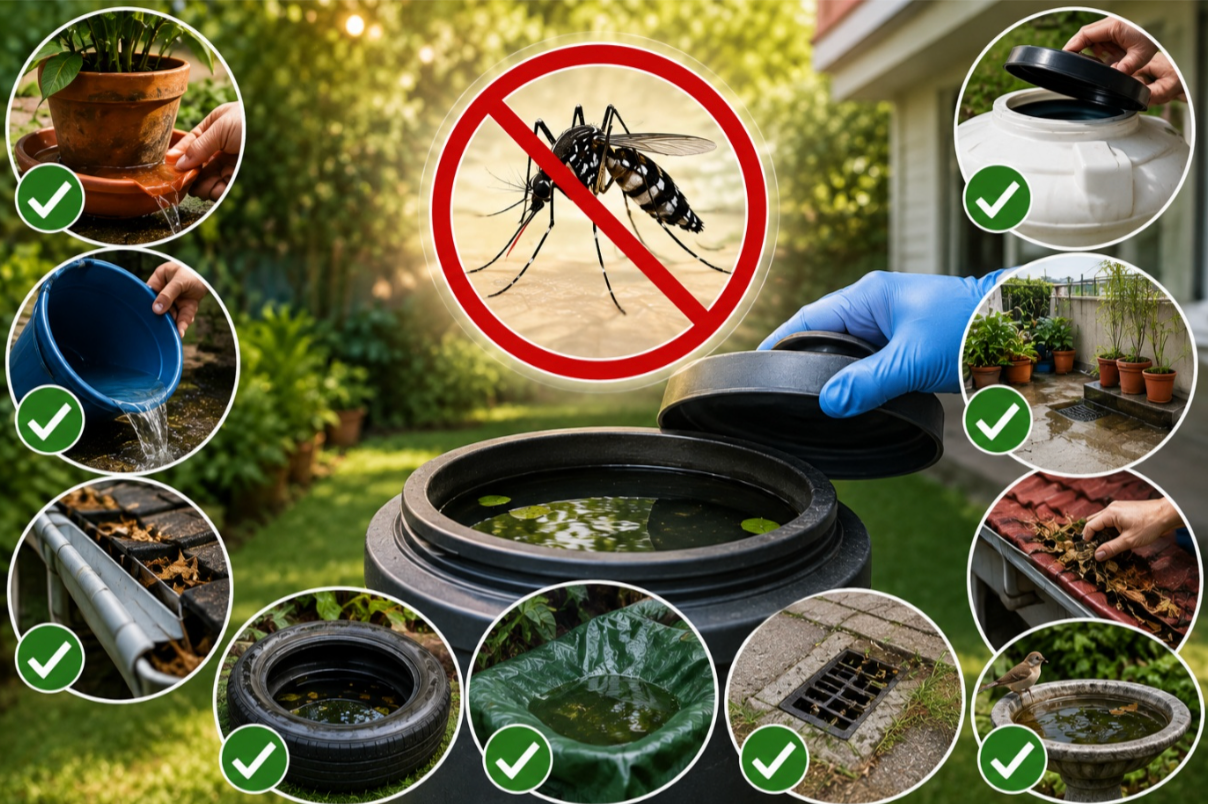
Mosquitoes are more than an outdoor nuisance. Certain species can transmit diseases such as dengue, chikungunya and malaria. While mosquito sprays, repellents, fogging and traps all have a role in mosquito management, one of the most important preventive measures is surprisingly simple: eliminate unnecessary standing water.
Mosquitoes depend on water during their immature life stages. By identifying and managing water-holding areas around your home, apartment, garden or commercial property, you can interrupt their breeding cycle before adult mosquitoes emerge.
For recurring mosquito problems, professional Mosquito Control Bangalore should combine breeding-source inspection, environmental management and appropriate treatment.
Why Does Standing Water Attract Mosquitoes?
The mosquito life cycle has four stages: Egg → Larva → Pupa → Adult. The larval and pupal stages occur in water — see our full guide on understanding the mosquito life cycle from egg to adult. Depending on the mosquito species, suitable breeding habitats may include anything from larger water bodies to surprisingly small containers.
Around a typical Bangalore property, potential sources can include flowerpot saucers, buckets, roof gutters, drains, tyres, unused containers and construction materials. This is why effective mosquito control begins with finding the water—not just killing the mosquitoes you see flying.
Where Should You Look for Standing Water?
Many mosquito breeding sources are easy to overlook because they don't look like ponds or pools. Start by inspecting:
- Flowerpot saucers and planters
- Buckets and plastic containers
- Bird baths
- Blocked roof gutters
- Poorly draining areas
- Discarded tyres
- Children's outdoor toys
- Tarpaulins and plastic covers
- Construction materials
- Water-storage containers
- Decorative water features
- Terrace and balcony drains
A simple rule is useful: if an object can collect water, inspect it regularly.
1. Check Flowerpots and Plant Saucers
Bangalore homes often have plants on balconies, terraces and in gardens. Water can remain underneath pots after watering or rainfall. These small, sheltered water collections can provide suitable conditions for some mosquitoes.
Lift the pots and inspect underneath them regularly. Empty unnecessary accumulated water and keep trays clean. You don't need to remove your plants—the objective is simply to prevent unnecessary stagnant water.
2. Empty Buckets and Unused Containers
A bucket sitting behind the house may not look like a mosquito problem. Then it rains. The bucket fills with water and remains untouched.
Unused containers should be stored upside down where appropriate or kept under cover so they cannot collect rainwater. Pay attention to paint buckets, cleaning containers, gardening tubs, bottles, cans and discarded household items.
3. Keep Roof Gutters Clear
Roof gutters can collect leaves, soil and other debris. When drainage becomes restricted, pockets of water may remain.
Clean gutters periodically and make sure rainwater can flow properly through the drainage system. This becomes especially important during Bangalore's rainy season, when repeated rainfall can continually refill water-holding areas.
Not sure where mosquitoes are actually breeding on your property? Get a professional inspection that finds the water, not just the adults you see.
Book Free Inspection Call Now4. Inspect Drains Around Your Property
Not every drain is automatically a mosquito breeding site, but blocked, poorly maintained or stagnant drainage areas require attention. Check whether water is flowing properly. Look for: blocked drain, water accumulation, organic debris and persistent stagnation.
If a drainage problem keeps returning, correcting the drainage issue is usually more sustainable than repeatedly spraying adult mosquitoes around it. For larger or persistent problems, Professional Pest Control Services Bangalore can help identify pest-conducive conditions around the property.
5. Inspect Your Terrace After Rain
Terraces deserve special attention because they often contain multiple objects capable of collecting rainwater. Inspect plant pots, buckets, drain outlets, tarpaulins, construction materials, stored items and floor depressions.
Don't assume the terrace is safe simply because the main floor surface appears dry. A small amount of water may remain hidden inside an object.
6. Maintain Bird Baths Properly
Bird baths are designed to hold water, so simply telling homeowners to eliminate them isn't practical. Instead, maintain them properly. Refresh and clean the water regularly and avoid allowing it to become neglected and stagnant. The same principle applies to other intentional outdoor water containers.
7. Maintain Garden Ponds and Water Features
Decorative ponds and fountains require a different approach from disposable containers. They should be properly maintained rather than automatically emptied.
Depending on the design, maintenance may include keeping water moving appropriately, managing vegetation, removing debris and preventing stagnant sections. If mosquito larvae are repeatedly observed, professional assessment may be appropriate.
8. Don't Forget Discarded Tyres
Tyres can retain rainwater because of their shape and can be difficult to empty completely. Unused tyres should therefore be stored where they cannot collect rainwater or disposed of appropriately.
The same applies to outdoor clutter. Reducing unnecessary objects around a property has another advantage: it makes mosquito inspections much easier.
9. Cover Water-Storage Containers
Some standing water cannot simply be removed because it is being stored for legitimate use. In these situations, exclusion becomes important. Keep appropriate water-storage containers securely covered and inspect the covers for gaps, damage, openings, poor fitting and water collecting on top.
Preventing adult mosquitoes from accessing stored water can help prevent egg laying.
10. Look Inside Tarpaulin Folds
Tarpaulins and plastic covers can create tiny water pockets. Check covers used for outdoor furniture, construction materials, vehicles, garden equipment and stored household items.
Position them so rainwater drains away rather than remaining trapped in folds. These small hidden sources are exactly why mosquito control requires inspection rather than simply spraying the visible insects.
Cleared the obvious spots but mosquitoes are still around? Ask us about a full breeding-source inspection and treatment plan.
Book Free Inspection WhatsApp UsWhy Rainy Season Makes Mosquito Prevention More Important
Rain doesn't necessarily create mosquitoes by itself. What it does is create more water-holding habitats. After rainfall, hundreds of ordinary objects around a neighbourhood can suddenly hold water.
That's why homeowners should develop a simple routine: Rain → Inspect → Empty → Clean → Cover → Monitor. A few minutes spent checking your property after significant rainfall can remove breeding opportunities before mosquitoes develop into adults.
Standing Water and Aedes Mosquitoes
This is particularly important when discussing Aedes mosquitoes. Important Aedes species can exploit artificial containers around human habitation. Potential habitats can therefore be very close to where people live: plant saucers, buckets, containers, tyres and stored materials.
Some Aedes mosquitoes are important vectors of dengue and chikungunya — see our visual guide to Aedes, Culex and Anopheles for how to tell them apart. Reducing container-breeding opportunities is therefore not simply about avoiding irritating bites—it is an important component of mosquito prevention.
Standing Water in Apartment Complexes
Mosquito control becomes more complicated in apartments because the mosquito biting someone on the fifth floor may not have originated inside that apartment. Potential common-area sources include terrace drains, basement drainage, gardens, plant containers, utility areas, parking areas, stormwater drains, water-storage areas and construction zones.
Apartment associations should therefore consider a building-wide mosquito inspection program. Treating individual flats repeatedly without investigating common breeding sources may provide only temporary relief.
Standing Water Around Commercial Properties
Restaurants, hotels, hospitals, offices, schools, factories and other commercial properties may have larger and more complicated environments. Potential mosquito-development areas can occur around: Landscaping → Drainage → Utility areas → Water storage → Construction zones → Outdoor equipment.
A structured commercial mosquito control program should include routine inspection and documentation of recurring problem areas.
Is Mosquito Fogging Enough?
Fogging may help reduce exposed adult mosquitoes when appropriately performed, but it does not automatically eliminate immature mosquitoes developing in water.
Imagine this: adult mosquitoes are treated today, but mosquito larvae remain inside a forgotten container behind the building. Those larvae continue developing. Soon, another generation of adults emerges.
This is why sustainable mosquito management should combine source reduction, adult control where appropriate, environmental management and monitoring — see our full guide to professional mosquito treatment options — rather than depending entirely on fogging.
What About Mosquito Traps?
Mosquito traps can also play a supporting role. Different traps use different mechanisms or attractants to capture mosquitoes. However, a mosquito trap should not distract you from the breeding source.
If several containers around the backyard are continually producing mosquitoes, trapping some adults will not correct the underlying environmental problem.
Your 10-Minute Weekly Mosquito Inspection
Once a week—and after significant rainfall—walk around your property. Check these ten areas:
- Flowerpots and saucers
- Buckets and containers
- Roof gutters
- Drains
- Terrace and balcony
- Bird baths
- Water features
- Tyres and outdoor clutter
- Tarpaulins and covers
- Water-storage areas
The goal isn't to remove every drop of water from your property. The goal is to eliminate unnecessary water, properly maintain essential water sources and prevent mosquitoes from accessing suitable breeding habitats — the same room-by-room discipline covered in our guide to mosquito-proofing your home.
Frequently Asked Questions
Why do mosquitoes need standing water?
Mosquito larvae and pupae develop in aquatic environments. Removing suitable breeding habitats interrupts this part of their life cycle.
Can mosquitoes breed in small amounts of water?
Some mosquito species can use relatively small water-holding containers, which is why buckets, plant saucers and other small objects should be inspected.
Should I remove all water from my garden?
No. Necessary water features can be maintained appropriately. The priority is eliminating unnecessary stagnant water and properly managing permanent water sources.
Why do mosquitoes increase after rain?
Rain creates and refills water-holding habitats where certain mosquito species can lay eggs and develop.
Does fogging stop mosquito breeding?
Fogging primarily targets adult mosquitoes under suitable conditions. Breeding-source management requires addressing the aquatic habitats where immature mosquitoes develop.
Are mosquito traps enough?
No single mosquito-control method should be expected to solve every problem. Traps can complement source reduction, exclusion and other appropriate measures.
When should I call professional mosquito control?
Professional inspection is worth considering when mosquito activity remains high despite removing obvious standing water, when breeding sources cannot be located, or when large residential or commercial areas require systematic management.
Stop the Mosquito Before It Becomes a Mosquito Problem
When you see an adult mosquito, the breeding process has already progressed through several earlier stages. That's why one of the smartest mosquito control strategies is prevention at the source.
Don't wait until mosquitoes are biting. Find standing water. Empty unnecessary containers. Maintain drains. Clean gutters. Cover stored water. Inspect after rain. Repeat regularly.
These simple actions can reduce opportunities for mosquitoes to reproduce around your property. For persistent mosquito activity, visit Mosquito Pest Control Bangalore – Standard Pest Control for professional mosquito-control services.
Related reading: Understanding the Mosquito Life Cycle: From Egg to Adult | Common Mosquito Species in Bangalore: A Visual Guide to Identification and Control | How to Mosquito-Proof Your Home: Screens, Sealing and More | Natural Mosquito Repellents: Do They Really Work? | Understanding Professional Mosquito Treatment Options: Barrier Sprays, Larvicides & More | Dengue Mosquito Prevention Methods | Monsoon Pest Control Checklist for Bangalore Homes: Protect Your Family from Seasonal Pests