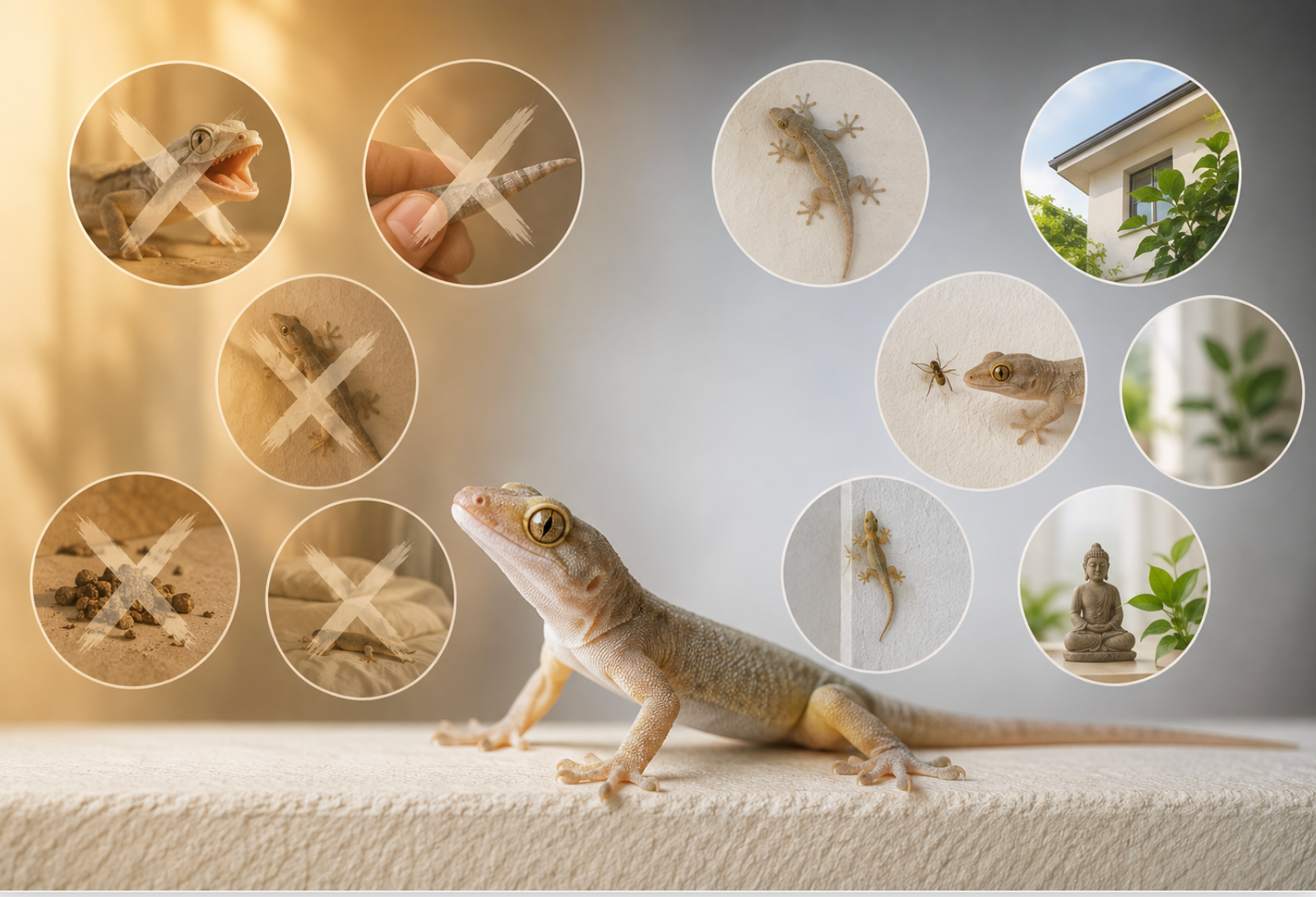
If you grew up in India, you’ve probably heard a dozen scary lizard myths from parents, neighbours, and WhatsApp forwards. Some sound harmless, some sound terrifying, and a few can actually lead to bad decisions about safety and pest control.
This guide cuts through the rumours and separates lizard myths from real reptile facts, so you know which creatures to ignore, when to stay cautious, and when it’s time to call a professional.
Myth 1: All House Lizards Are Poisonous
This is the biggest fear in most Indian homes: the idea that one touch or bite from house lizards will send you straight to the hospital. In reality, the common lizards on your walls and ceilings are not poisonous to humans.
The regular house lizards you see near tube lights are timid, soft-bodied reptiles that run away the second you move. They don’t inject venom into food or water, and accidental contact is rarely dangerous unless there’s an infection from an open wound, just like with any animal scratch.
Myth 2: Geckos Spit Poison Into Food
In many families, people panic if a lizard is anywhere near the kitchen, because they believe gecko myths about poison spit. There is no scientific evidence that Indian geckos spit venom or poison into food.
What can happen, and should be taken seriously, is contamination from droppings or bacteria if a lizard walks over uncovered food. That’s a hygiene problem, not venom. Cover food, wipe surfaces, and clean up droppings, but don’t let imaginary “poison spit” control your life.
Myth 3: Lizards Are A Sign Your Home Is Dirty
Many people feel embarrassed when guests notice reptiles in homes and assume it means the place isn’t properly cleaned. Lizards actually come in because they’re hunting insects, not because they enjoy dust or mess — the same reason covered in our look at why lizards enter homes in the first place.
If you have mosquitoes, flies, or small insects around tube lights and windows, house lizards will follow the easy food source. Yes, regular cleaning helps reduce hiding spots for insects, but even a spotless flat in a modern apartment block can have one or two lizards at night.
Myth 4: Wall Lizards Drink Your Blood At Night
This one belongs firmly in the horror story category. The typical wall lizard in Indian homes can’t drink human blood. Their jaws and teeth are built for catching insects, not biting through human skin on purpose.
On the rare occasion a lizard feels trapped or grabbed, it may give a small defensive nip. That’s uncomfortable, not life-threatening. Clean the area with soap and water and watch for signs of infection, the same way you would for a small scratch.
Not sure what's causing the problem? Get a professional inspection before you decide on treatment.
Book Free Inspection Call NowMyth 5: Killing Lizards Is The Only Way To Control Them
A lot of pest myths come from frustration. Someone sees a lizard near a light every night and assumes the only option is to kill it. That usually creates more mess than relief, and it does nothing to fix what attracted the lizard in the first place.
If you want fewer lizards, focus on their food source. Fix window gaps where insects enter, use mesh on windows, manage outdoor lights that attract bugs, and clean up crumbs that pull ants and small insects inside. When the insect buffet disappears, most lizards move on — our guide to natural lizard control for kitchens and bathrooms walks through exactly how.
Myth 6: Lizards Will Lay Eggs Inside Your Ears
Every so often, a story goes around about a lizard crawling or breeding inside someone’s ear. It spreads fast because it’s exactly the kind of thing people love to scare each other with. In real life, lizards avoid humans unless cornered.
They prefer dark corners behind cupboards, clock backs, photo frames, and gaps in furniture. If a lizard falls on you while you sleep, it’s almost always by accident. It wants to get away from you just as much as you want it gone.
Myth 7: One Lizard Means An Infestation
Spotting a single lizard on the ceiling doesn’t automatically mean your home is crawling with them. Unlike ants or termites, lizards don’t behave like a colony, and most house lizards are solitary.
If you routinely see several in one room, that’s usually a sign of plenty of insects rather than a lizard invasion. Reducing those insects through simple lizard control steps will usually bring their numbers down without any harsh action.
Myth 8: Lizards Spread Deadly Diseases
Lizards aren’t clean, but they’re not the primary health threat many people imagine. Scientific studies focus far more on rodents and cockroaches for disease spread than on lizard safety concerns.
That said, lizards can carry bacteria like Salmonella in their droppings. Don’t handle them with bare hands, and always clean surfaces where droppings are found. Basic hygiene goes a long way toward lowering any realistic risk.
Myth 9: Home Remedies Can Drive Out All Lizards
From eggshells on window sills to coffee-powder-and-tobacco balls, Indian homes are full of “guaranteed” tricks. Some may briefly disturb house lizards, but they rarely solve the real problem.
A more reliable approach is boring but effective: seal cracks, use door sweeps, fix torn window screens, and keep outside lights limited or yellow-toned so they attract fewer insects. Those simple steps cut down both the bugs and the lizard visits over time.
Ready to get this sorted? Ask us about a structured, documented treatment plan.
Book Free Inspection WhatsApp UsMyth 10: Professional Pest Control Always Targets Lizards
Many people hesitate to call pest control because they assume any treatment will focus on killing lizards first. In reality, most pest professionals treat lizards as part of a bigger picture of home pest awareness, as our professional lizard control vs. home remedies comparison explains.
The priority is usually cockroaches, ants, termites, and mosquitoes. When those are managed, lizard sightings naturally reduce. Good technicians will share prevention tips and only use targeted methods for lizards when there’s an ongoing, serious concern.
How To Reduce Lizards Humanely At Home
Once you stop believing scary stories, you can look at practical steps. Instead of chasing every lizard with a broom, work on changing the environment inside your house.
Start with the basics: repair gaps around windows and doors, reduce clutter near ceilings and shelves, and wipe up food spills quickly. Simple changes like these make your home less attractive without harsh chemicals aimed directly at reptiles in homes.
Simple Changes That Make A Big Difference
Small, consistent habits often work better than one big “treatment” that you forget about after a week. You don’t need to turn your home into a fortress, just remove the big comforts lizards enjoy.
- Use LED or yellow bulbs near balconies to attract fewer insects.
- Install fine mesh on kitchen and bathroom windows.
- Keep storage areas dry to reduce damp corners where insects hide.
- Close food containers instead of leaving them open overnight.
When To Call A Professional
Most homes can manage the odd lizard with cleaning and minor repairs. But if you see many lizards daily, or you’re extremely anxious around them, professional help can give peace of mind.
Experts will look at the full picture, not just lizard facts in isolation. They’ll check moisture levels, cracks, drain openings, and nearby vegetation where insects breed, then recommend safe treatments suited to your building and family. Our complete guide to lizard control covers what that full inspection typically involves.
Clearing Up Lizard Myths For Safer Homes
Sorting truth from fiction helps you respond calmly instead of reacting out of fear. When you know which lizard myths are false, you’re less likely to harm harmless creatures or waste money on pointless sprays.
The right balance is simple: respect wildlife, keep your home clean and well-sealed, and pay more attention to real threats like rodents and dirty drains than to one shy wall lizard on the ceiling.
Frequently Asked Questions
Are house lizards poisonous?
No. Common house lizards seen on Indian walls and ceilings are not poisonous to humans. They are timid, soft-bodied reptiles that don't inject venom into food or water.
Do geckos spit poison into food?
No, there is no scientific evidence that Indian geckos spit venom or poison into food. The real risk is contamination from droppings or bacteria if a lizard walks over uncovered food, which is a hygiene issue, not venom.
Does seeing lizards mean my home is dirty?
No. Lizards come indoors hunting insects, not dust or mess, so even a clean apartment can have one or two lizards at night if insects are present near lights and windows.
Can a wall lizard bite or drink blood?
Wall lizards can't drink human blood. Their jaws are built for catching insects, and they may only give a small defensive nip if grabbed or trapped, which is uncomfortable but not dangerous — clean it with soap and water like any small scratch.
Does one lizard sighting mean an infestation?
No. Lizards are solitary and don't behave like a colony. Seeing several in one room usually points to plenty of insects nearby rather than a lizard invasion.
Do lizards spread deadly diseases?
Lizards are not the primary disease threat compared with rodents and cockroaches, though they can carry bacteria like Salmonella in their droppings, so avoid handling them and clean surfaces where droppings are found.
Conclusion
Lizards in Indian homes trigger strong reactions, but most lizard myths collapse once you compare them with basic science and real-world experience. Focus on removing insects, sealing entry points, and keeping surfaces clean instead of panicking every time you see a tail disappear behind a photo frame.
If you still feel uncomfortable or suspect a wider pest problem, reach out to a trusted local expert such as Standard Pest Control to assess the situation, explain the real lizard facts, and suggest practical, safe solutions for your home.
Related reading: Best Ways to Keep Lizards Out of Kitchens and Bathrooms Naturally | Why Lizards Enter Your Home and 12 Proven Ways to Keep Them Away | Complete Guide to Lizard Control in Bangalore: Safe & Effective Solutions for Every Home | Professional Lizard Control vs Home Remedies: Which Solution Works Best? | Why Cockroaches and Other Insects Attract Lizards into Your Home | Are Lizards Dangerous? Health Risks, Diseases & Prevention Tips