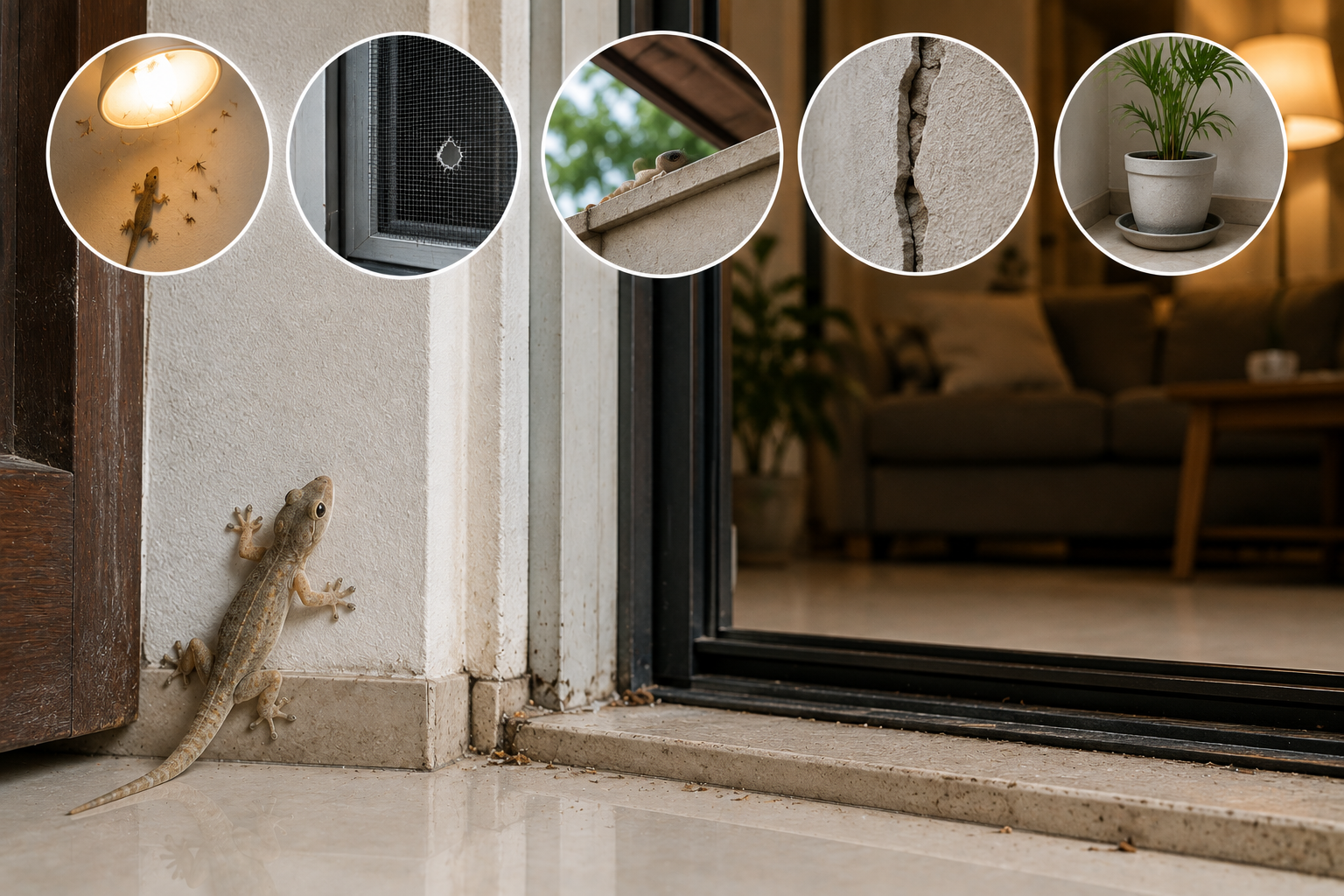
If you keep spotting small reptiles on your walls and wondering why lizards enter homes so often in India, you're not alone. Warm weather, open windows, and plenty of insects make our houses the perfect hangout spot for them — for a fuller treatment plan, pair this with our complete guide to lizard control in Bangalore.
The good news is you don't have to live with lizards in every corner. With a few practical changes and some simple home pest control habits, you can make your space a lot less appealing to them without using harsh chemicals.
Why Lizards Enter Homes In The First Place
House lizards don't come in because they love humans; they come for three things: food, water, and shelter. If your home has bright lights at night, you're attracting insects, and those insects are what lizards are really chasing.
They also slip inside through gaps in windows, exhaust fans, and door frames when outdoor temperatures are too hot or during the monsoon, turning your walls into a safe hunting ground for kitchen lizards.
Tried a few tricks and still seeing lizards daily? Get a full inspection from Standard Pest Control before the problem grows.
Book Free Inspection Call NowSigns You May Have A Lizard Infestation Starting
One or two wall visitors a week isn't usually a big deal, but regular sightings, droppings on shelves, and small eggs behind frames can suggest a growing lizard infestation — lizards are consistently one of the common household pests reported across Bangalore homes. Look for black pellets with white tips on ledges and high corners.
You may also notice scratching sounds at night, especially in quiet rooms, which often means house lizards are active when the lights are off and the insects are moving around more freely.
Home Conditions That Attract House Lizards
Unscreened windows, open balcony doors, and gaps around pipes create easy entry points for house lizards. They prefer calm rooms where they won't be disturbed, like storerooms, puja rooms, and little-used guest bedrooms.
Cluttered spaces with cardboard boxes, stacked newspapers, and forgotten items make excellent hiding and nesting spots for wall lizard removal to become more complicated later.
Not sure which entry points lizards are using? Let a technician map the gaps you can't spot yourself.
Book Free Inspection WhatsApp Us12 Proven Ways To Keep Lizards Away
Getting rid of lizards is less about chasing them with a broom and more about changing the environment so they stop choosing your home. Here are 12 methods that work well in Indian homes.
1. Cut Off Their Food Supply First
Lizards stay where insects are plenty, so start with basic lizard prevention by targeting mosquitoes, flies, and small bugs. Install tight mesh on windows, switch to yellow or warm LED lights on balconies, and keep outdoor tube lights off when not needed.
Wipe kitchen counters every night, empty dustbins before bed, and don't leave uncovered food out, since crumbs and spills attract the insects that feed kitchen lizards.
2. Seal Gaps, Cracks, And Entry Points
Walk slowly around your house at night with the lights off and a torch in hand. Any place where you can see outside light around a door or window is an open invitation for gecko control to become harder.
Use silicone sealant for small cracks, metal mesh for vents, and door sweeps at the bottom of doors. Even a half-inch gap is enough for a young lizard to slide in comfortably.
3. Keep Kitchens Extra Clean And Dry
Lizards love warm, humid rooms, so keeping your stove area clean is a big step for lizard control tips that actually stick. Wipe oil splashes from tiles, clean under the gas range, and degrease the chimney filters regularly.
Store grains, dal, and snacks in airtight containers, and avoid open plastic covers or plates left on the slab, which tend to draw both ants and small insects.
4. Tackle Damp Bathrooms And Drains
Bathrooms are a common entry point because of open vents, exhaust fans without covers, and constant moisture that attracts flies and moths, which then bring in bathroom lizards.
Keep windows closed at night or covered with mesh, fix leaky taps, and pour a bit of phenyl or disinfectant down rarely used drains weekly so they don't become insect breeding spots.
5. Use Natural Repellents That Actually Work
Strong smells can make your home less friendly to reptiles, and many people in India use simple home pest control tricks with ingredients already in the kitchen. Onion and garlic paste, placed in small open bowls on shelves, can help deter lizards.
Another option is naphthalene balls in cupboard corners and under sinks, which can discourage reptile control problems from building up, but keep them away from kids and pets.
6. Keep Walls And Corners Less Comfortable
Lizards rest on rough surfaces where their feet can grip easily, so smooth, clean walls give them fewer spots to stay. Regular dusting and wiping of wall corners and frames interrupts their hiding places for house lizards.
Move furniture a few inches away from the wall so there are fewer dark, untouched gaps where they can hide and hunt insects without being noticed.
7. Declutter Storage Areas And Shelves
Piles of old newspapers, cardboard, and unused clothes create a perfect shelter for lizards to quietly lay eggs. A simple rule for reptile control is to avoid keeping anything you haven't touched in six months.
Use plastic bins with lids instead of open cartons, and schedule one weekend every month to clear corners, lofts, and under-bed spaces where they like to hide.
8. Use Sticky Traps And Physical Barriers
For stubborn lizards that keep returning to the same wall or tube light, place insect glue traps nearby and reduce lighting there. This lowers insects and gently encourages wall lizard removal without harsh sprays or poisons.
You can also fit door-bottom brush strips and proper window frames to act as a long-term barrier against both crawling insects and lizards.
9. Change Your Night-Time Lighting Habits
Lizards are mostly active at night, and bright white lights turn your balcony and staircase into feeding zones. One of the simplest lizard control tips is to switch exterior lights to warmer shades or dimmer options.
Close curtains early in the evening so indoor lights don't attract insects to your window glass, and switch off unnecessary lights in unused rooms.
10. Keep Pet Food And Water Bowls Tidy
Uncovered pet food, especially at night, attracts ants, cockroaches, and flies that tempt lizards to hang around. Good home pest control habits include picking up leftover dog or cat food and rinsing bowls after feeding.
Try to feed pets at fixed times instead of leaving food out for hours, and wipe any spills on the floor so insects don't gather there.
11. Use Safe Repellent Sprays Where Needed
If you're dealing with stubborn visitors on specific walls, you can use mild, ready-made lizard repellent sprays designed for indoor use. They often combine natural oils and help home pest control without heavy pesticide smells.
Spray lightly around window frames, ventilators, and behind appliances, but avoid direct contact with food surfaces and always keep the room ventilated afterward.
12. Know When To Call Professional Help
If you're spotting lizards daily in several rooms, finding plenty of droppings, or suspect eggs behind cupboards, it may be time to bring in experts from a licensed pest control company for home pest control support before the problem grows further.
Professional teams can check roof gaps, external cracks, and garden areas, giving you a complete plan that tackles both insects and reptiles in one visit.
Common Myths About Lizards In Indian Homes
Many people believe that lizards are always a sign of bad hygiene, but even tidy homes can attract them if insects are present. They're drawn more to light and flying bugs than to dust or clutter alone.
Another myth is that strong phenyl alone will keep them away long term; in reality, pest control works best when you combine cleaning, sealing entry points, and consistently managing insects.
Frequently Asked Questions
Are lizards dangerous to have at home?
In most Indian homes, common geckos are not aggressive and rarely bite. The bigger issue is their droppings on utensils, shelves, and near food, which can carry bacteria.
How long does it take to see fewer lizards after making changes?
If you reduce insects, seal gaps, and follow the key prevention steps consistently, you'll usually see noticeably fewer lizards within two to three weeks.
What's the single biggest thing that attracts lizards indoors?
Insects drawn to bright lights at night. Reducing insect activity with window mesh and warmer, dimmer lighting is usually the most effective first step in lizard prevention.
What are the early signs of a lizard infestation?
Regular sightings, black droppings with white tips on ledges and high corners, small eggs behind picture frames, and scratching sounds at night in quiet rooms.
Does keeping the house spotless guarantee I won't get lizards?
No. Even very clean homes can attract lizards if insects are present, since lizards are drawn more to light and flying bugs than to dust or clutter alone.
When should I call a professional instead of continuing home remedies?
If you're spotting lizards daily in several rooms, finding droppings regularly, or suspect eggs behind cupboards, it's time to bring in professional help rather than relying only on DIY steps.
Conclusion
Keeping lizards away is mostly about understanding why lizards enter homes and making small, consistent changes that remove what attracts them. Focus on insects, moisture, and easy entry points first, then use repellents and traps only where needed.
If you've tried the basic steps and still feel overrun, a quick inspection from Standard Pest Control can help you take back your walls with a plan tailored to your space and routine.
Related reading: Complete Guide to Lizard Control in Bangalore: Safe & Effective Solutions for Every Home | Top 20 Common Household Pests Found in Bangalore Homes and How to Eliminate Them | Why Government-Licensed Pest Control Companies Are the Safest Choice for Your Home | How to Choose the Best Pest Control Company in Bangalore: 12 Expert Tips | Safe Pest Control for Babies, Pets & Senior Citizens: Everything You Need to Know | Monsoon Pest Control Checklist for Bangalore Homes: Protect Your Family from Seasonal Pests | Safe Lizard Control for Homes with Children, Pets & Elderly Family Members | Why Cockroaches and Other Insects Attract Lizards into Your Home | Best Ways to Keep Lizards Out of Kitchens and Bathrooms Naturally