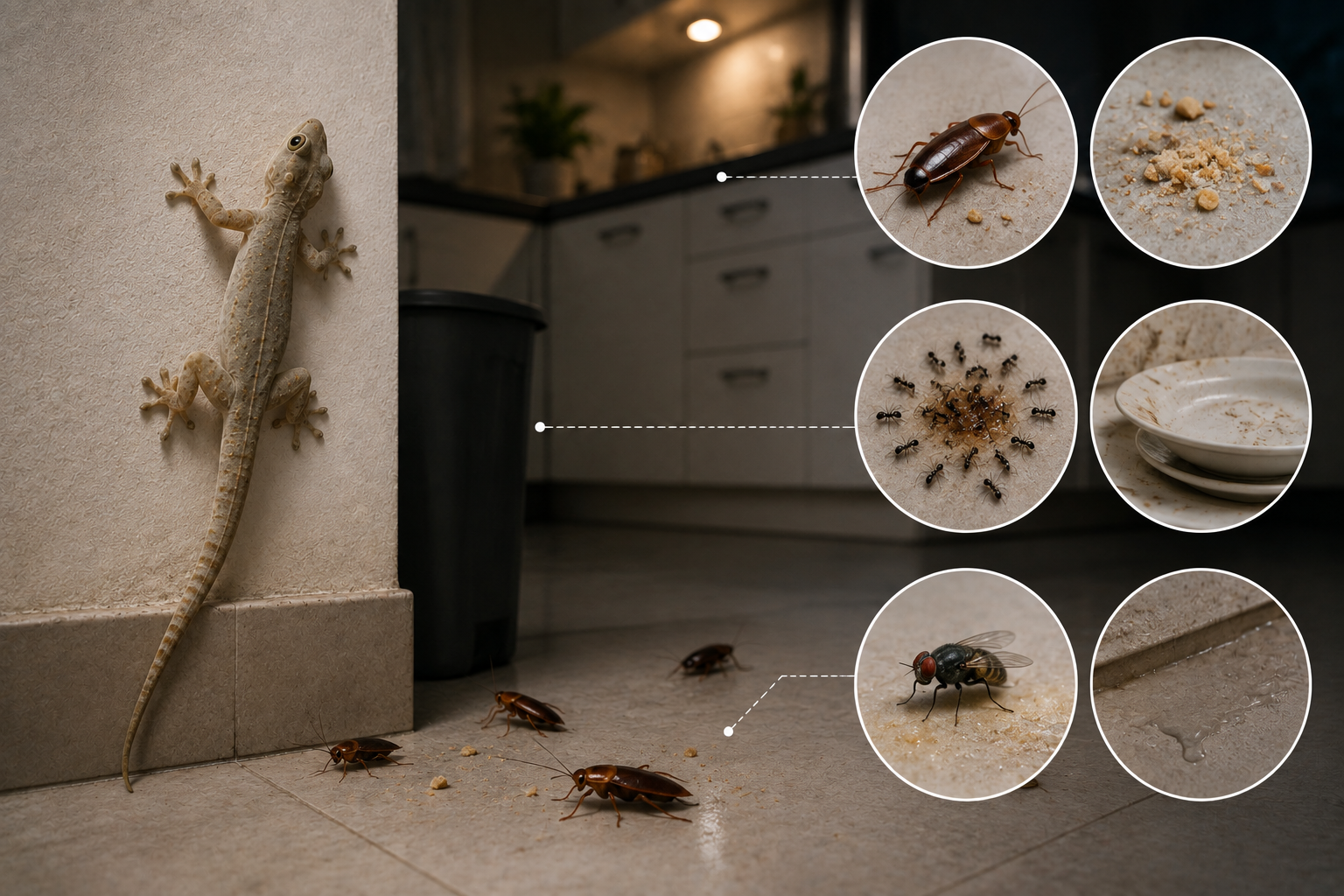
If you keep spotting lizards on your walls and cupboards, you've probably wondered what attracts lizards into your home in the first place. It's not random bad luck; certain pests, habits, and conditions are practically an open invitation — our piece on why lizards enter homes covers the broader entry-point side of this if you want the full picture.
Once you understand what's pulling them in, stopping them becomes much easier and far cheaper than constantly chasing them out with a broom or calling someone late at night.
How Cockroaches Attract Lizards Into Your Home
Let's start with the big one: cockroaches attract lizards far more than you think. For a house lizard, a roach is a full, high-protein meal, and your kitchen can feel like a buffet if roaches are breeding behind cabinets or under the sink.
Roaches come out at night, which is exactly when lizards are active. If your floor has food crumbs, your dustbin stays open, or there's leaked oil behind the gas stove, roaches gather there and the lizards quickly learn this is a reliable feeding spot.
That's why homes that only spray for lizards but ignore roaches usually see them return within a week or two — the same pattern we cover in when to call a professional for cockroach control. The food source is still there, so the predators keep coming back.
Other Insects And Lizards: The Hidden Food Chain At Home
Roaches are only part of the story; the relationship between insects and lizards in your house is much wider. Lizards love small soft-bodied insects like moths, mosquitoes, ants, and flies, especially around tube lights and windows.
If your balcony light is always on at night, you'll see insects swarming around it. For a lizard, that light becomes a predictable hunting ground, so you'll often spot them waiting exactly where insects gather.
Stagnant water in plant trays, leaking taps, and uncovered drains all help mosquitoes and flies multiply, which then creates a regular food supply for lizards without you realising it.
Why House Lizards Prefer Some Rooms Over Others
Many people notice that house lizards love the kitchen and bathroom more than the bedroom or living room. That's because these rooms provide the three things any creature wants: food, water, and shelter.
Bathrooms usually have damp corners, small flying insects, and plenty of cracks in tiles or behind pipes where lizards can hide during the day. At night they come out, feed, and rush back into these narrow gaps the moment you turn on the light.
In kitchens, open food, unwashed vessels, and overflowing dustbins bring in insects, and insects bring in reptiles. If your home layout allows, closing the kitchen door at night and keeping the platform dry can sharply reduce nightly visitors.
Seeing both roaches and lizards in the same rooms? Get one coordinated treatment plan instead of chasing two pests separately.
Book Free Inspection Call NowCommon Myths About What Attracts Lizards
People often focus on all the wrong things when they think about what attracts lizards. A very common belief is that lizards come inside because of certain colours on the wall or because they "like" cool tiles.
In reality, they're hunting, resting, or escaping from predators outside. Tubelights and CFLs attract insects, and lizards simply follow the food, using your walls as safe pathways.
Another myth is that lizards enter only dirty homes. Even clean flats in gated communities can have lizard activity if balcony doors stay open at night and insects fly in around the lights.
Practical Lizard Prevention Steps For Indian Homes
If you want effective lizard prevention, you must cut off both food and shelter — the same combined approach behind our 12-step lizard prevention guide. Trying to scare or chase them only works for a day or two before they return, usually from the same corners.
Start with food control. Clear the sink before sleeping, wipe kitchen counters so no oil film remains, and tightly cover all food containers. This drops insect activity, which then makes the space less attractive to lizards.
Next, focus on shelter. Seal small gaps around window frames with silicone, repair broken tile edges, and close cracks near electrical conduits where reptiles hide during the day.
How Pest Infestation Draws Lizards Indoors
Any long-running pest infestation acts like a long-term food contract for lizards. Termites in wooden cupboards, ants in sugar shelves, and flies near the dustbin all create mini-ecosystems that feed reptiles regularly.
When neighbours in your building allow garbage to pile up outside their doors, you may notice more lizard movement along the common corridor walls, as they move between floors following insects.
What Attracts Lizards To Light And Moisture
Bright white light and moisture are two major signals of what attracts lizards in residential buildings. White tube lights and LEDs pull insects in from balconies and corridors, giving lizards a constant supply of easy prey.
Moist areas near leaking taps, under-sink cabinets, and bathroom corners don't just support insects; they also stay cooler, which lizards enjoy during hot Indian summers.
Cleaning every night but lizards keep showing up? Let Standard Pest Control find the insect source you're missing.
Book Free Inspection WhatsApp UsKitchen Habits That Invite Pests
Small daily habits can turn a clean-looking kitchen into a magnet for pests. Leaving plates overnight, keeping fruits in the open, or ignoring that slightly sticky patch near the gas stove creates ideal food traces for ants, roaches, and other kitchen pests.
Try a simple one-week experiment: clear the dustbin every night, keep the sink empty, and store all food in containers. Many people see a visible drop in both insects and lizards within days.
Home Pest Control Vs. Living With Lizards
Some people treat lizards as harmless and let them stay, hoping they'll eat all the insects. The problem is they rarely clear a heavy pest load on their own, and then you still live with droppings, shed tails, and the constant startle of seeing one run across the wall.
Structured home pest control targets the root problem: insect breeding — the same principle covered in our complete guide to lizard control. When you break that cycle, lizards stop seeing your house as a reliable hunting ground and simply move on to places where food is easier to find.
A good routine usually combines sanitation, simple repairs, and targeted, safe treatments instead of just spraying harsh chemicals in panic every time you spot a reptile.
Managing Gecko Infestation On Walls And Balconies
Flat complexes in Indian cities often face a different problem: gecko infestation on outer walls, staircases, and parking areas. These geckos are drawn to tube lights, open drains, and the insects that breed in bushes and garbage corners.
Start by changing bright white lights at entrances and balconies to warmer shades, which attract fewer insects. Keeping staircases and parking areas clean and dry also cuts much of the food source geckos rely on.
For individual flats, installing fine mesh on balcony railings and keeping balcony doors closed during peak insect hours in the evening can sharply reduce wall lizard control headaches inside the home.
When To Call Professional Pest Management Services
If you're constantly seeing multiple lizards each night despite cleaning, it usually means the insect load is higher than what basic home methods can handle. In such cases, professional pest management brings structure and proper equipment — our comparison of professional lizard control vs home remedies can help you decide if you're at that point.
Trained technicians don't just spray randomly; they inspect drain lines, lofts, loft storages, and behind fixed cabinets to find the exact pockets sustaining insects and reptiles. Then they plan treatments over a few visits so that eggs and larvae are also handled.
This is especially important for families with small children, elderly parents, or anyone with respiratory issues, since the right products and application methods matter as much as the results.
Frequently Asked Questions
Do cockroaches really attract lizards?
Yes. Roaches are a high-protein meal for house lizards, and both are active at night, so kitchens with crumbs, open dustbins, or oil residue behind the stove become reliable feeding spots that keep drawing lizards back.
What other insects besides cockroaches attract lizards?
Moths, mosquitoes, ants, and flies, especially around tube lights and windows where they swarm at night. Stagnant water and leaking taps that breed mosquitoes and flies also create a steady food supply for lizards.
Why do lizards prefer kitchens and bathrooms over bedrooms?
These rooms offer food, water, and shelter together. Bathrooms have damp corners, small flying insects, and cracks in tiles or pipes to hide in, while kitchens have open food, unwashed vessels, and dustbins that draw insects.
Is it true that lizards only enter dirty homes?
No. Even clean flats in gated communities get lizard activity if balcony doors stay open at night and insects fly in around bright lights — it's about light and insect activity, not cleanliness alone.
Do lizards help control household pests on their own?
Not reliably. They rarely clear a heavy pest load by themselves, so you're still left with droppings, shed tails, and lizards running across walls unless you break the insect-breeding cycle with structured pest control.
When should I call a professional instead of continuing to clean?
If you're constantly seeing multiple lizards each night despite cleaning, the insect load is likely higher than basic home methods can handle — especially worth acting on quickly in homes with small children, elderly parents, or respiratory issues.
Conclusion
Lizards don't walk into your home by chance; your lighting, moisture levels, and insect activity decide what attracts lizards and keeps them coming back. Once you cut off food and hiding spaces, they quickly move on to easier hunting grounds.
If the problem feels bigger than basic cleaning and small repairs can solve, calling a trusted local expert like Standard Pest Control can help you fix both insects and reptiles in one coordinated plan so your walls stay calm, clean, and lizard-free.
Related reading: Why Lizards Enter Your Home and 12 Proven Ways to Keep Them Away | Complete Guide to Lizard Control in Bangalore: Safe & Effective Solutions for Every Home | When to Call a Professional for Cockroach Control: Signs of a Serious Problem | Cockroaches and Food Contamination: Protecting Your Kitchen | Professional Lizard Control vs Home Remedies: Which Solution Works Best? | Safe Lizard Control for Homes with Children, Pets & Elderly Family Members