If lizards are darting across your walls every night, you've probably tried quick fixes already and wondered if professional lizard control is really necessary or just a sales pitch. Maybe the sprays, naphthalene balls, and DIY tricks helped for a week, then the geckos came right back.
This guide walks you through what actually works, what rarely does, and when home remedies are enough versus when you need expert help for long-term lizard management in an Indian home — it pairs well with our piece on why lizards enter homes if you want the full picture of what draws them in.
What Attracts Lizards To Indian Homes?
Before you compare professional help with DIY lizard control, you need to understand why lizards picked your house in the first place. They're not there by accident; they're following food, warmth, and hiding spots.
Common house geckos are drawn to areas with plenty of insects, moisture, and small gaps to hide in during the day. Tube lights, balcony lights, and kitchen lights attract moths and mosquitoes, which attract lizards. Open windows without mesh and cracked tiles around sinks give them easy entry and safe shelter.
What Home Remedies For Lizards Actually Do
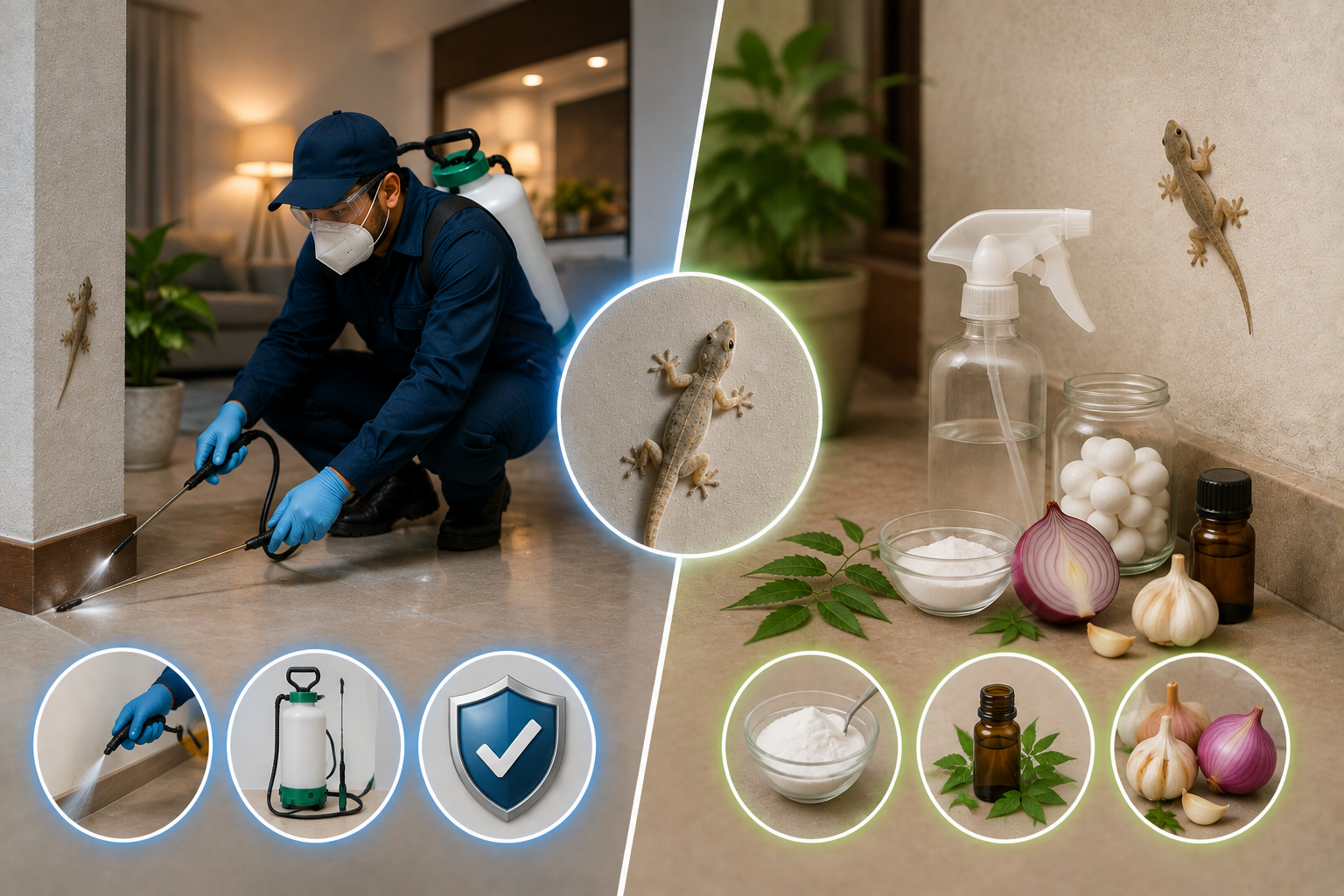
Most popular home remedies for lizards fall into three categories: smell-based repellents, contact sprays, and physical barriers. The problem is that very few of these address the main cause of infestation, which is your home's insect population.
Strong odours from garlic, coffee, or chillies may make one corner uncomfortable for a while, but they don't stop new lizards from entering from another side. Using glue boards or homemade traps can catch a few, but unless you cut off food and entry points, they're more of a short-term fix than real house lizard treatment.
Tried the home remedies and still seeing lizards nightly? Get a proper inspection instead of another experimental spray.
Book Free Inspection Call NowDIY Lizard Control: Pros, Cons, And Limits
DIY methods appeal for a reason: they're cheap, quick to try, and don't involve letting a technician into your home. Basic steps like cleaning food spills, fixing window gaps, and switching to warm lights outside already reduce lizard activity.
Where DIY lizard control runs into trouble is consistency and coverage. Most people do a deep clean once, spray some home mix on the walls, then go back to normal routines. Lizards and insects, on the other hand, don't take a break, so the problem quietly returns in a few weeks.
When DIY Efforts Are Usually Enough
There are cases where you don't need a lizard removal service at all. If you only see one or two geckos occasionally, usually in the balcony or near a tube light, changes in lighting, installing simple mesh, and better insect control often solve the problem.
If you live on a higher floor with minimal surrounding vegetation, focusing on sealing gaps around windows and balcony doors and removing night-time insect attractants gives decent results without outside help.
What Professional Lizard Control Really Involves
Most people picture a technician spraying chemicals everywhere and leaving. Proper professional lizard control from a licensed pest control company is more structured than that, and in a good company, the spray is actually the final step, not the first.
A trained inspector starts with a detailed survey: where lizards are nesting, which walls they prefer, where insects are breeding, and what structural issues are helping them. They assess lighting, drainage, gaps in tiles, and vents that most homeowners don't notice.
Methods Used In Lizard Pest Control
Once the inspection is done, the technician decides on a mix of methods. Targeted insect control is almost always part of effective lizard pest control, because if the food disappears, lizard numbers naturally drop over a few weeks.
Professionals also use selective repellent sprays, physical exclusion measures like sealing cracks, and advice on long-term hygiene changes so the situation doesn't return the next season.
Professional Lizard Control Vs Home Remedies: Key Differences
The biggest difference is that experts treat the entire system rather than chasing one visible lizard at a time. A home remedy might drive one gecko from a wall; a structured reptile control plan focuses on insects, harborages, and entry routes to bring numbers down across the property.
Another difference is product choice and safety. In a professional setup, chemicals and bait placements are selected based on surface type, room use, and the presence of children or pets, not just whatever spray was available at the supermarket.
Not sure if your case needs a professional? Run through our quick checklist, then ask Standard Pest Control if it's still not enough.
Book Free Inspection WhatsApp UsCosts, Safety, And Results: What To Expect
For many families, cost is the deciding factor between home hacks and calling a service. DIY sprays and ingredients might cost a few hundred rupees spread over months, especially if you keep experimenting with new ideas and repeat home pest control treatments again and again.
Lizard-focused pest control services in Indian cities often start around ₹800–₹1,500 for a small flat, with higher costs for villas or repeated follow-up visits. The benefit is that you're paying for a plan, not just a product, and usually get a defined service period and support.
Is Professional Treatment Safe For Kids And Pets?
This is one area where guessing isn't a good idea. Imported sprays and homemade mixes can be irritating if misused, especially in closed rooms. Reputable gecko removal services train their staff to apply products away from food surfaces, fish tanks, baby cots, and pet bowls — the same standard we cover in safe lizard control for homes with children, pets and elderly family members.
You should still ask about safety data sheets, recommended re-entry periods, and what ventilation is needed after treatment. Responsible technicians are transparent about these details and will adapt the method to your household.
Choosing Between DIY And Professional Help
So how do you decide which path makes sense for your home? Start with scale. If you see multiple lizards every evening, droppings along the walls, and hear them behind cupboards, it's a sign of a larger problem that casual wall lizard control tricks alone rarely fix — our complete guide to lizard control covers the full range of options either way.
Consider your building, too. Ground-floor flats near gardens, drains, or open plots tend to have higher lizard and insect activity. In such cases, one-time sprays don't last long, and a planned house-wide approach saves you frustration over the season.
Simple Checklist Before You Call A Professional
Run through these basics first, since fixing them yourself often resolves light activity on its own.
- Have you installed window and balcony mesh where practical?
- Are outside lights attracting huge swarms of insects every night?
- Do you see gaps around exhaust fans, pipes, or cracked tiles?
- Is food left uncovered or the sink area damp for long hours?
- Have your neighbours also complained about heavy lizard activity?
If you've fixed these basics and the problem continues, that's usually when professional lizard control offers better value than yet another experimental remedy.
Questions To Ask A Lizard Control Provider
Once you decide to bring in experts, don't just book the first number you see online. A few targeted questions tell you quickly if the company understands lizard-specific work or is just generalising from other pests and calling it lizard removal service as a label.
Ask how they identify nesting sites, what products they use for lizards versus insects, and how long before you can expect to see a visible reduction. Clarify follow-up visit terms and what support they provide if lizards reappear within the warranty period.
Red Flags To Watch Out For
Be cautious of anyone promising that one spray will eliminate lizards forever. That's not realistic, especially in humid Indian conditions with open drains and shared building structures influencing your flat.
Also be wary of vague answers about treatment chemicals, refusal to inspect before quoting, or unwillingness to explain how their wall lizard control method differs from ordinary cockroach spraying.
Frequently Asked Questions
What actually attracts lizards to Indian homes?
Insects drawn to tube lights, balcony lights, and kitchen lights, along with moisture and small gaps around windows, cracked tiles, and sinks that offer easy entry and shelter.
Do home remedies for lizards work long-term?
Usually not on their own. Smell-based repellents and contact sprays can make one corner uncomfortable temporarily, but they don't stop new lizards entering from elsewhere or address the underlying insect population.
When is DIY lizard control usually enough?
If you only see one or two geckos occasionally, especially on a higher floor with minimal surrounding vegetation, changes in lighting, mesh installation, and better insect control often solve the problem without outside help.
What does professional lizard control actually involve?
A detailed inspection first — checking nesting sites, insect breeding, lighting, drainage, and gaps — followed by targeted insect control, selective repellent sprays, physical exclusion like sealing cracks, and long-term hygiene advice.
How much does professional lizard control cost in India?
Services often start around ₹800–₹1,500 for a small flat, with higher costs for villas or repeated follow-up visits. You're paying for a defined plan and service period, not just a single product.
Is professional lizard treatment safe for kids and pets?
Reputable services train staff to apply products away from food surfaces, fish tanks, baby cots, and pet bowls. Ask about safety data sheets, recommended re-entry periods, and ventilation needs before booking.
Conclusion
Persistent lizard problems rarely disappear with scattered remedies alone, and that's where thoughtful, professional lizard control makes a difference, especially when it tackles insects, entry points, and habits together. Light infestations can often be handled with simple changes, but ongoing activity, droppings, and nesting signs call for structured help.
If you've run through home tricks and still find geckos sharing your walls, consider speaking to a trusted provider like Standard Pest Control to discuss practical options tailored to your rooms, building, and routine so you can choose the balance of DIY and expert support that feels right for your home.
Related reading: Complete Guide to Lizard Control in Bangalore: Safe & Effective Solutions for Every Home | Why Lizards Enter Your Home and 12 Proven Ways to Keep Them Away | Safe Lizard Control for Homes with Children, Pets & Elderly Family Members | Why Government-Licensed Pest Control Companies Are the Safest Choice for Your Home | DIY Ant Control vs Professional Ant Treatment: Which One Works Better? | Ant Control Cost in Bangalore (2026): Complete Pricing Guide for Homes & Businesses | Lizard Control Cost in Bangalore (2026): Complete Price Guide