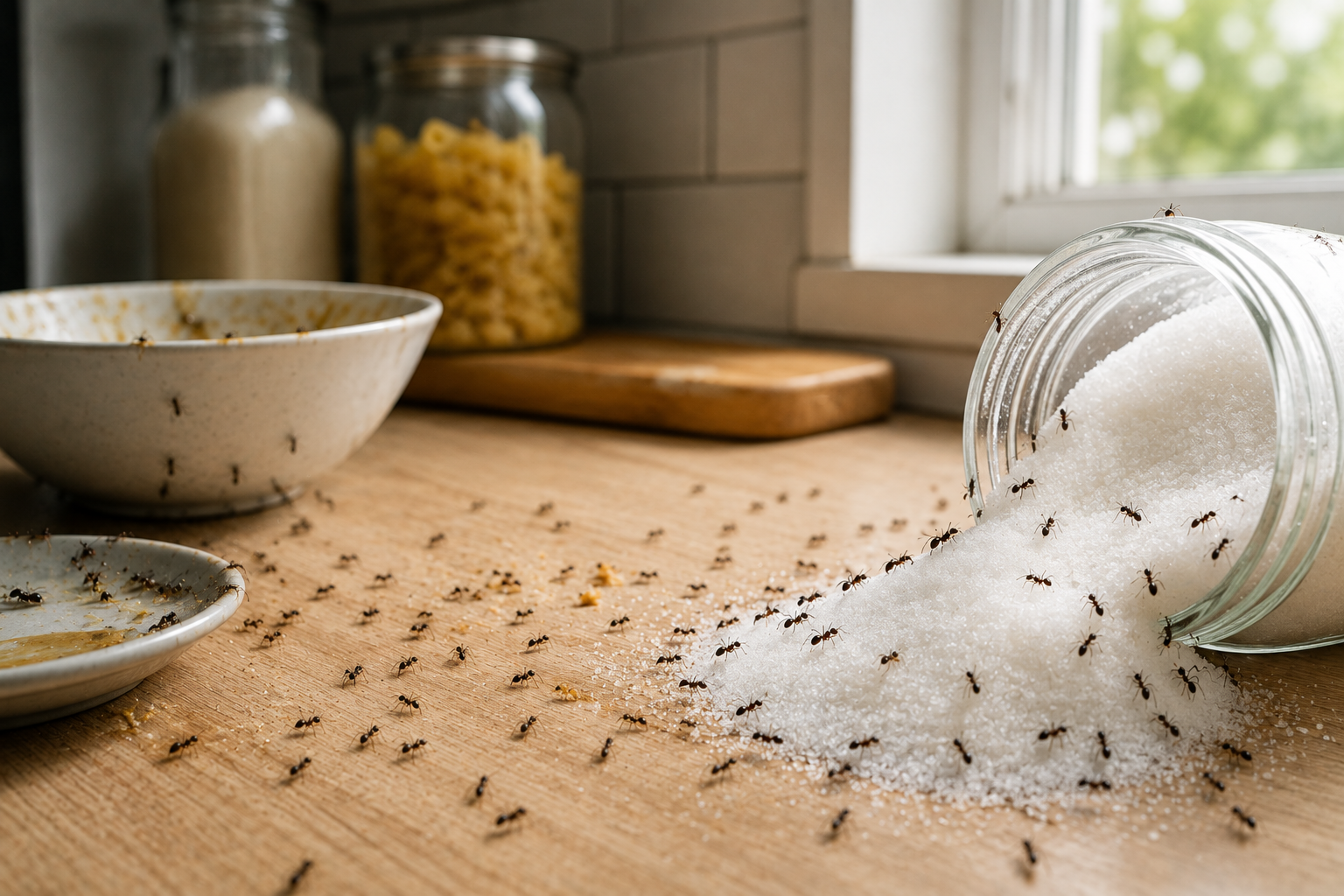
Sugar ants marching across your kitchen counter aren't just annoying, they're telling you something about your home. When you start seeing sugar ants near the sink, stove, or biscuit tin, it usually means a whole colony has already mapped out your kitchen and marked it as a reliable food stop — the same species covered in our guide to common types of ants found in Bangalore homes.
If you're in India, you've probably tried quick fixes—spraying whatever you have at home, wiping them away, maybe using some chalk—and then watched the lines of kitchen ants come back a few days later. Let's break down why they keep returning, what actually works, and how to stop the problem so it doesn't turn into a full ant infestation.
What Sugar Ants Really Want In Your Kitchen
Sugar-loving ants don't walk randomly. They move in trails because one worker finds food, then leaves a chemical path for the rest to follow. Every time you leave open sweets, biscuit crumbs, juice spills, or even a sticky teaspoon of tea sugar, they update that trail and send more workers.
Most people only see a few food ants, but those are just the "scouts." The real population is hidden behind tiles, under cabinets, inside wall cracks, or outside in the garden. So if you only kill the ants you can see, you're treating the symptom, not the source.
Why Homemade Sprays Rarely Fix Kitchen Ants
Many households respond with strong-smelling cleaners, phenyl, or over-the-counter aerosol sprays. These can knock down the visible ants in seconds, but they rarely count as effective sugar ant treatment. The hidden nest remains untouched, so the queen keeps laying eggs and sending new workers — this is the exact trap covered in why ants keep coming back even after spraying.
Worse, some sprays can break the trail for only a short time. The ants simply move a few inches away and restart the line, which is why you'll often see them reappear on another part of the counter or wall after a day or two.
Sugar ants back again despite cleaning and spraying? Let Standard Pest Control target the colony, not just the trail.
Book Free Inspection Call NowStep 1: Cut Off The Food Supply
The first real step in ant control is taking away what attracts them in the first place. That means being slightly more disciplined with food storage and cleaning, especially in the evenings when you're tired and tempted to "leave it for the morning."
Start by sealing sweets, jaggery, biscuits, and dry fruits in airtight containers. Don't leave used cups with sugar at the bottom in the sink overnight, and wipe down counter edges where sticky spills tend to collect. This alone can make a visible difference to home ant removal over a week.
Smart Cleaning Habits That Actually Matter
You don't need to obsessively scrub the entire house. Focus your effort where ants are already active. Clean under gas cylinders, near dustbins, and around the water filter, because small spills and crumbs collect there and attract an ant infestation quickly.
Empty the dustbin daily, especially in hot and humid weather, and rinse or wipe the area around it. A simple routine of sweeping after dinner and a quick wipe with normal detergent is usually enough for basic pest control in the kitchen.
Step 2: Use Baits, Not Just Sprays
If you want to do more than chase ants from one corner to another, you have to target the colony. That's where ant baits come in. Instead of killing ants on contact, baits attract them so they carry the poison back to the nest and spread it to the queen and other workers.
Set small bait stations along active trails but away from direct food-prep areas. Don't spray over the bait, and don't keep wiping that spot every hour. Let the ants come, feed, and return to the nest. This approach works slowly but is far more effective for long-term ant control.
Common Mistakes With Ant Baits
Many people give up too early because they expect overnight results. For most home ant removal efforts using baits, you should watch for 5–7 days. Initially, you may even see more ants as they discover the new food source.
If there's no interest in the bait, it might be placed too close to strong-smelling cleaners, or you may be offering the wrong type for your local sugar ants. Sometimes switching brands or moving the bait a few inches along the trail solves the problem.
Step 3: Seal Entry Points And Moisture Zones
Once you've reduced trails and hit the colony, you need to block how they enter. In many Indian kitchens, ants slip in through tiny gaps around windows, cracked tile grout, pipe holes under the sink, and even electrical conduits that open onto balconies or exterior walls.
Use silicone sealant, white cement, or appropriate filler to close visible gaps. Pay special attention to the area under the sink where small leaks create damp spots, because these moist corners are prime spots for kitchen pests to stay and breed.
Not sure why your bait isn't working? Get a professional placement plan built around how your ants actually move.
Book Free Inspection WhatsApp UsWhen DIY Fixes Are Not Enough
If you find ants in multiple rooms, see them emerging from electrical switchboards, or notice flying ants during the monsoon, your home ant removal plan might need backup — our DIY vs professional ant control comparison walks through this decision in more detail. These are clues that the nest is deep inside walls or in shared building structures.
In such cases, professional ant control with targeted gels, dusts, and low-odor sprays is usually more effective than repeating the same home method every weekend.
How Professionals Handle Stubborn Sugar Ant Colonies
Professional technicians start by identifying the species, checking how the ants move, and tracing trails to possible nesting zones. This site inspection matters because different sugar ants respond better to different bait formulas and placement methods, the same standard you should expect from a government-licensed pest control company.
Once they understand the layout of your home, they apply specialized gels in cracks and crevices, use non-drip sprays where needed, and advise on simple changes that support long-term kitchen pest control without turning your home into a chemical zone.
What To Expect During A Service Visit
A typical service for ant control in an apartment or small house doesn't take very long. The team focuses on the kitchen, balconies, bathrooms, and utility areas, because these are the main moisture and food zones ants rely on.
You may be asked to clear the counter and cover utensils while they treat specific corners. After that, they'll usually recommend a follow-up visit or monitoring, especially in buildings with a history of recurrent ant infestation problems.
Simple Habits To Prevent Ants Returning
Stopping an existing problem is one thing; keeping ants from coming back is another. A few small habits, done consistently, make a big difference to long-term ant prevention in Indian homes, especially across summer and monsoon when activity peaks.
- Store sweets, fruits, and snacks in closed containers, not open plates.
- Wipe spills of tea, coffee, and juice as soon as they happen.
- Rinse used plates and cups instead of stacking them dirty overnight.
- Clear the dish rack and sink area so no sticky water collects.
- Sweep food crumbs from under the dining table and gas stove.
These actions don't take much time, but they remove the reward that keeps sugar ants coming back to explore your kitchen again and again.
Frequently Asked Questions
Why do sugar ants keep coming back to the same spot in my kitchen?
Once a scout finds food, it leaves a chemical trail that recruits more workers, and every fresh spill or crumb refreshes that trail. The real colony hides behind tiles, under cabinets, or in wall cracks, so killing the visible scouts doesn't stop the source.
Why don't homemade sprays or phenyl fix a sugar ant problem?
They kill the ants you can see in seconds but don't touch the hidden nest, so the queen keeps laying eggs and sending new workers. Ants often just shift a few inches and restart the trail within a day or two.
How long should I wait for an ant bait to start working?
Give it 5–7 days. You may even see more ants at first as they discover the new food source before activity starts dropping.
Why isn't my ant bait attracting any ants?
It may be placed too close to strong-smelling cleaners, which can repel ants, or it might be the wrong bait type for your local sugar ants. Try switching brands or moving the bait a few inches along the trail.
What are the most common ant entry points in Indian kitchens?
Gaps around windows, cracked tile grout, pipe holes under the sink, and electrical conduits opening onto balconies or exterior walls — especially where small leaks under the sink create damp spots.
When should I call a professional instead of continuing DIY sugar ant control?
If ants show up in multiple rooms, emerge from electrical switchboards, or you notice flying ants during monsoon, it usually means the nest is deep inside walls or shared building structures that need professional access.
Conclusion
When you understand why sugar ants enter your kitchen—food trails, hidden nests, and tiny entry gaps—you can attack the real cause instead of wiping away lines of ants every day. A mix of better cleaning habits, smart bait use, and sealing entry points usually solves the problem for good.
If the trails still keep returning or you're dealing with a larger infestation, a professional service like Standard Pest Control can step in with targeted treatment and advice so sugar ants stop treating your kitchen as their favourite food court.
Related reading: Complete Guide to Ant Control in Bangalore: Treatment, Prevention & Cost | Why Ants Keep Returning Even After Spraying: Common Reasons & Permanent Solutions | Common Types of Ants Found in Bangalore Homes and How to Identify Them | DIY Ant Control vs Professional Ant Treatment: Which One Works Better? | How to Get Rid of Black Ants and Red Ants Permanently from Your Home | How to Prevent Ant Infestations During Summer and Monsoon in Bangalore