Commercial lizard control is one of those food safety jobs that stays invisible until a guest spots a lizard on the wall or a chef finds droppings near the prep counter. By then, the problem has already turned into a hygiene risk, a reputation issue, and usually a compliance headache.
If you run a restaurant, hotel, or food processing unit in India, you already fight flies, rodents, and cockroaches. Lizards feel minor by comparison, but they contaminate surfaces, damage your brand, and are tricky to remove once they settle into warm kitchens and store rooms.
Why Lizards Are A Serious Food Safety Risk
Most food businesses treat lizards as just an eyesore until something goes wrong. The real problem is that lizards carry bacteria from drains, outdoor walls, and insect-rich corners straight onto food-contact surfaces.
Their droppings can end up on racks, plates, or open dough trays. In a busy restaurant pest control schedule, these spots often get missed because teams focus only on insects and rodents.
Typical Hotspots In Restaurants, Hotels And Food Units
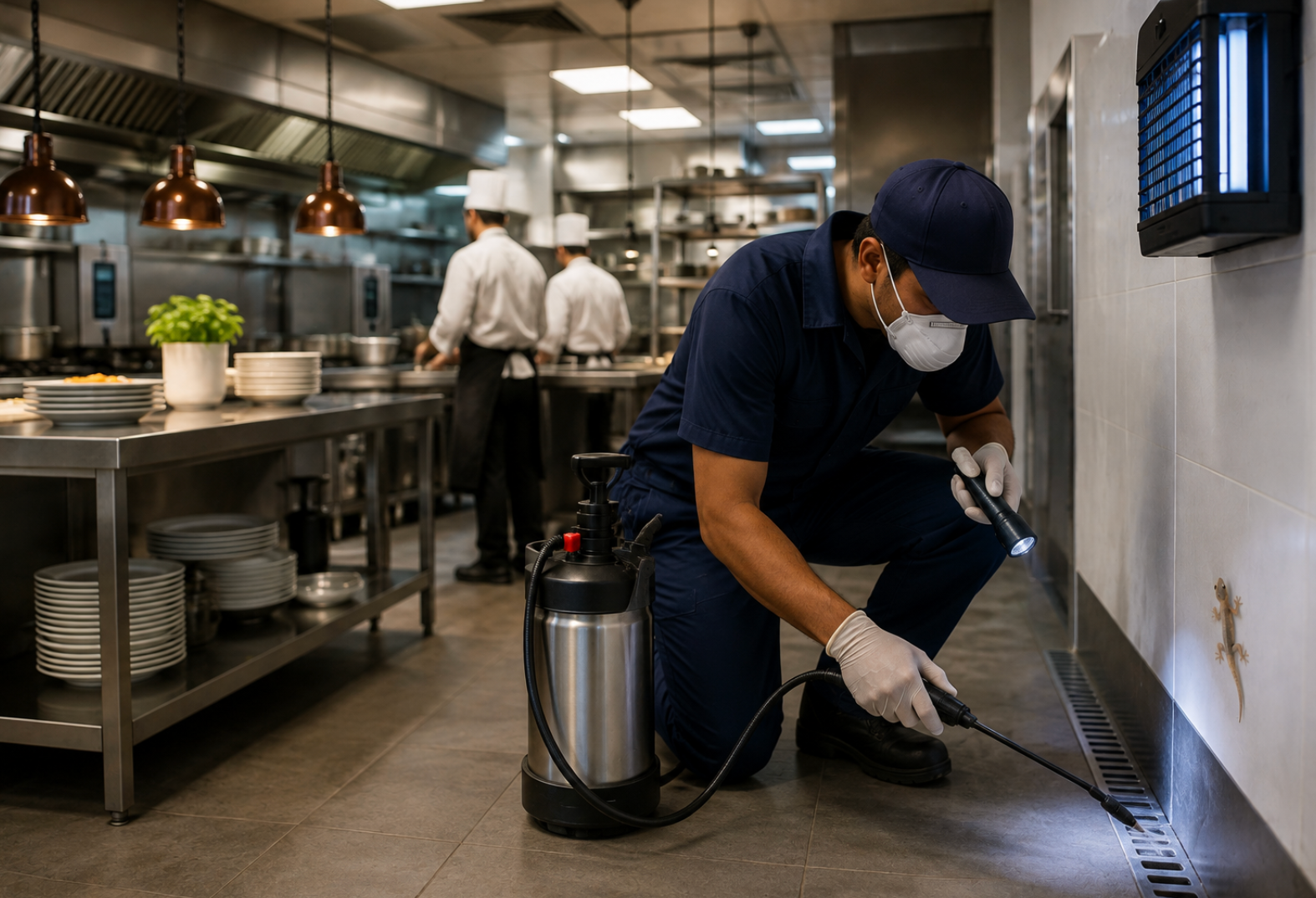
Lizards follow food and warmth, so they show up exactly where you don’t want them. False ceilings above hot kitchens, exhaust ducting, and cable gaps behind refrigerators are all common hiding areas.
In guest-facing zones this becomes a front-of-house disaster, especially for properties that already spend heavily on hotel pest control to protect their rating on booking sites.
Not sure what's causing the problem? Get a professional inspection before you decide on treatment.
Book Free Inspection Call NowWhy DIY Lizard Remedies Fail In Commercial Kitchens
Most managers start with quick fixes: phenyl sprays, naphthalene balls, chilli pastes on walls, or sticky pads. These work for a day or two at best, then the lizards adapt or simply move to another corner of the premises.
Home tricks don’t stand up to the heat, steam, and constant washing in a professional kitchen. For serious food industry pest control, you need structured monitoring, a log of sightings, and treatments that survive daily cleaning.
What Effective Commercial Lizard Control Really Involves
Good commercial lizard control is less about chasing reptiles and more about changing the conditions that attract them. In practice, that usually means combining exclusion work, lighting changes, habitat reduction, and targeted trapping.
This is where a specialised commercial pest management plan pays off, because lizards rarely come alone. They follow insects, and both need to be brought under control together.
Step 1: Inspection And Evidence Mapping
Any serious programme starts with a night-time survey. That’s when lizards are active, insects are flying around lights, and true activity levels show up.
For accurate kitchen pest control, technicians map droppings, egg shells, and shed skin along wall corners, beams, and service ducts, then mark them on a layout so you know exactly which zones to prioritise.
Step 2: Exclusion And Physical Modifications
Once hotspots are identified, the next task is to block easy entry. Fine mesh on exhaust vents, door brushes on rear exits, and sealing gaps where pipes enter the wall make a big difference.
Many sites spend money on repeat lizard removal visits but never fix simple structural gaps, so the same problem returns every few weeks.
Step 3: Targeted Control Methods
Because lizards are protected in many regions, responsible providers avoid indiscriminate killing. Instead, they use approved repellents, trapping where permitted, and habitat disruption.
These tools are integrated into wider pest control services that also bring down flying insect populations, cutting off the lizards’ main food source. Our complete guide to lizard control covers the same principles for residential settings.
Compliance: FSSAI Expectations On Reptiles And Pests
Food safety audits rarely list lizards by name, but they’re covered under general contamination and pest clauses. A single photograph of droppings near prep tables is enough to trigger observations during inspections.
Serious facilities treat FSSAI pest control requirements as a hygiene baseline, maintaining records of visits, bait maps, monitoring sheets, and corrective actions tied to any reptile sightings.
Ready to get this sorted? Ask us about a structured, documented treatment plan.
Book Free Inspection WhatsApp UsDesign And Maintenance Changes That Keep Lizards Out
Lizard problems tend to fade quickly once the building stops feeding and sheltering them. Simple changes in lighting and storage go a long way when they’re applied consistently.
In locations with heavy outdoor vegetation, managers sometimes ask if full reptile control is even realistic. The answer is that you may not stop them entering the compound, but you can make food zones extremely unattractive.
Lighting, Insects And Night-Time Attraction
Bright white lights beside external doors or windows act as magnets for insects, and then for the lizards that hunt them. Swapping to warm or yellow-toned LEDs and moving fixtures away from doors can cut activity surprisingly fast.
For many commercial pest control contracts, a simple lighting review has more long-term impact than adding extra chemical treatments.
Housekeeping And Stock Storage Practices
Open sacks of grains, cluttered dry stores, and seldom-cleaned ledges under shelving all create perfect hunting grounds for small reptiles. Once food debris and insects collect there, lizards quickly follow.
Teams that take restaurant pest control seriously standardise raised pallets, wall gaps for cleaning access, and documented weekly deep-clean schedules.
Staff Training And Reporting Culture
Many front-line staff ignore lizard sightings because they assume nothing can be done or worry they’ll be blamed during audits. That silence lets small problems grow.
A clear rule that every sighting in food zones must be reported, logged, and checked during hotel pest control visits encourages early action instead of last-minute crisis calls.
Choosing The Right Partner For Commercial Lizard Control
Not all providers take reptiles seriously, and some still rely on unapproved chemicals that create more risk than they solve. You want a partner who focuses on long-term hygiene, not just monthly spray rounds.
When you assess food industry pest control quotes, ask specific questions about inspection timing, reporting format, and what structural recommendations they include instead of just listing treatments — our guide to choosing a commercial pest control provider covers the same checks in more depth.
Questions To Ask Before Signing A Contract
- Do you conduct inspections after dark to map actual lizard activity?
- How do you document reptile sightings and link them to follow-up visits?
- What physical modifications do you recommend before chemical steps?
- How will this plan support our FSSAI and client audit requirements?
These basic questions help you separate real commercial pest management expertise from commodity spraying services that treat every site the same way.
Frequently Asked Questions
Why are lizards a food safety risk in restaurants and hotels?
Lizards carry bacteria from drains, outdoor walls, and insect-rich corners onto food-contact surfaces, and their droppings can end up on racks, plates, or open dough trays.
Where do lizards typically hide in commercial kitchens?
False ceilings above hot kitchens, exhaust ducting, and cable gaps behind refrigerators are common hiding areas, since lizards follow food and warmth.
Why do DIY remedies like sprays and sticky pads fail in commercial kitchens?
Home tricks don't hold up against the heat, steam, and constant washing in a professional kitchen — lizards adapt or simply move to another corner within a day or two.
What does effective commercial lizard control actually involve?
A structured programme combining night-time inspection and evidence mapping, exclusion work such as mesh, door brushes and sealed gaps, targeted control methods, and ongoing insect control, since lizards follow their food source.
Are lizards covered under FSSAI food safety audits?
Audits rarely name lizards specifically, but they fall under general contamination and pest clauses. A single photograph of droppings near prep tables can trigger observations, so records of visits, bait maps, and monitoring sheets matter.
What should I ask a pest control provider before signing a commercial contract?
Ask whether they inspect after dark to map real lizard activity, how they document sightings and follow-up visits, what physical modifications they recommend before chemical treatment, and how the plan supports FSSAI and client audit requirements.
Conclusion
Lizards in food environments don’t disappear with one round of spray; they leave when conditions stop favouring them. A structured programme that combines hygiene, structural fixes, and smart lighting with professional support gives you reliable commercial lizard control instead of recurring surprises during service.
For restaurants, hotels, and processing units that care about inspections as much as guest experience, partnering with a specialist like Standard Pest Control keeps pest risks under control and builds confidence before every audit. If lizard sightings are starting to show up in your incident log, this is the time to act, not after a guest complaint.
Related reading: Pest Control for Restaurants: Maintaining Health Code Compliance | HACCP and Pest Control: Ensuring Food Safety Compliance | Choosing a Commercial Pest Control Provider: What to Look For | Complete Guide to Lizard Control in Bangalore: Safe & Effective Solutions for Every Home | IPM for Commercial Properties: A Strategic Approach to Business Protection